
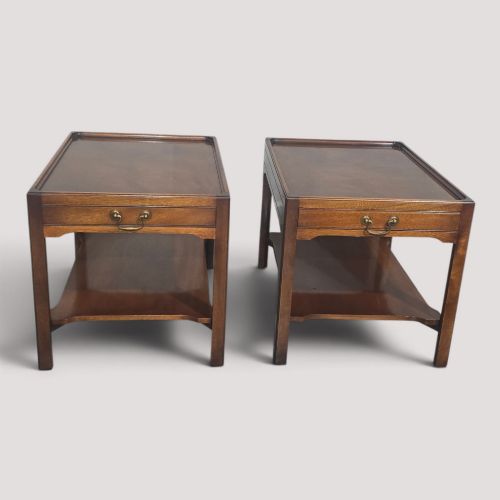
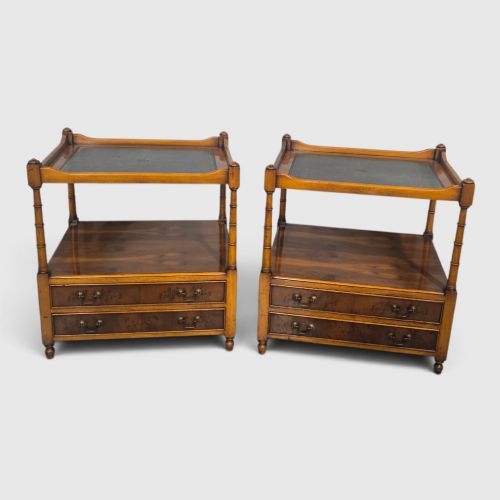

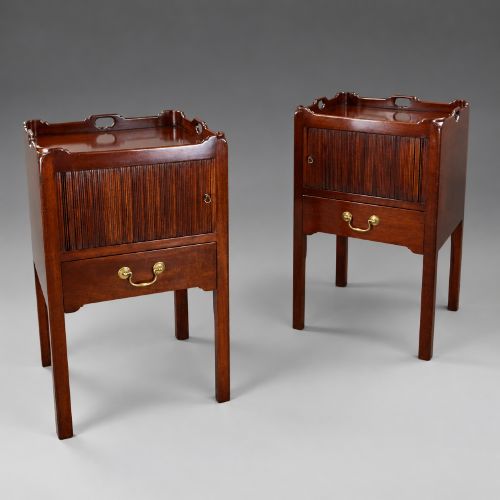
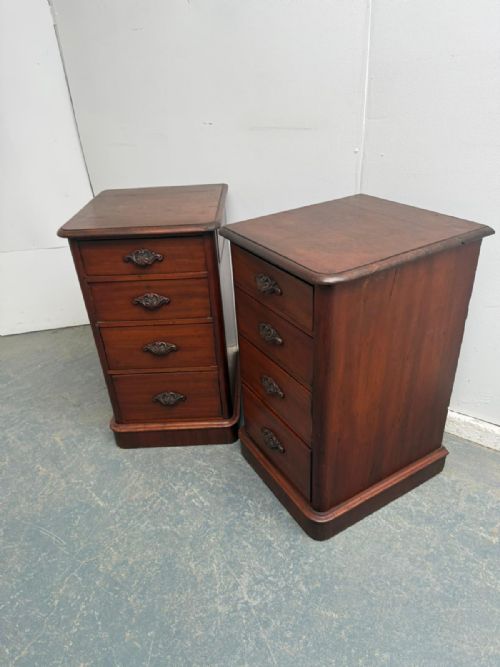
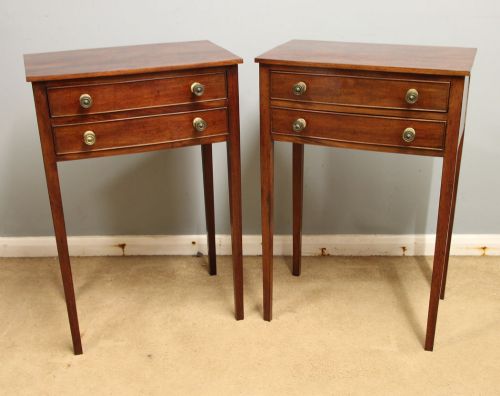
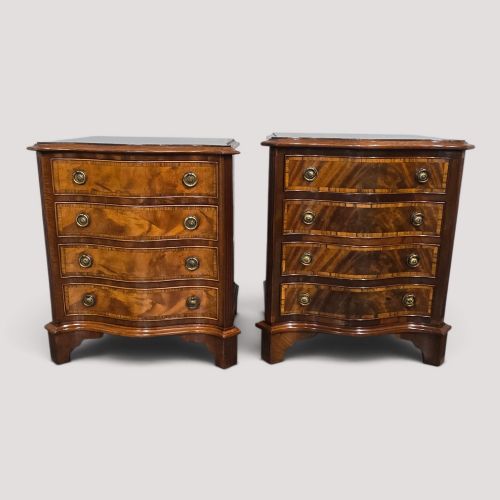
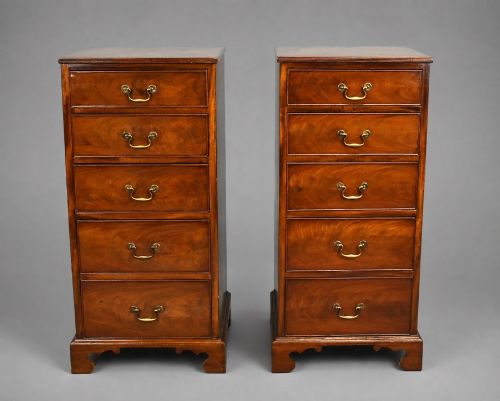
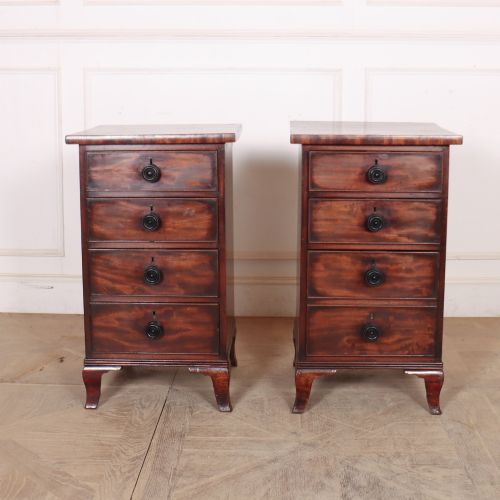
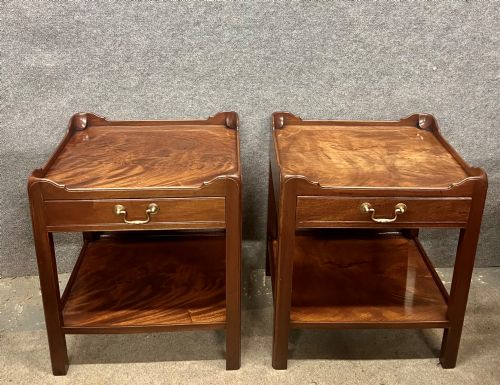
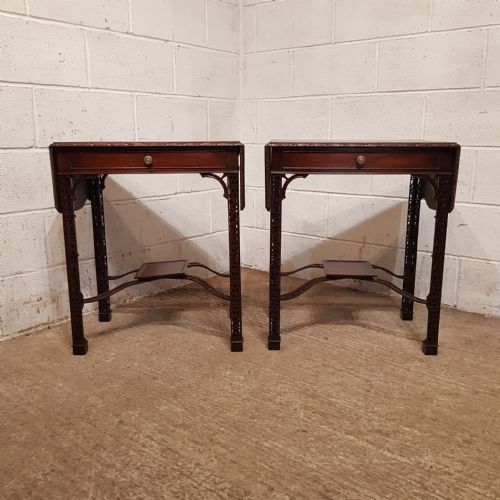
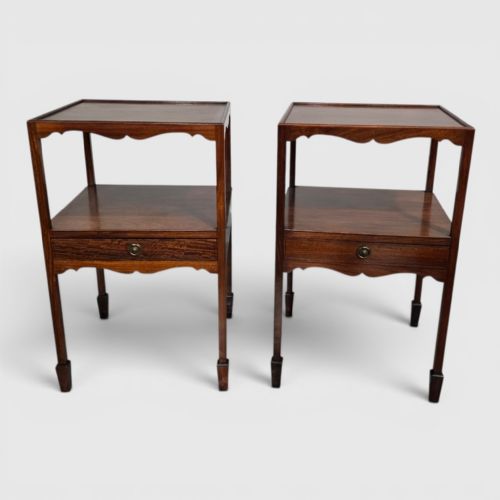
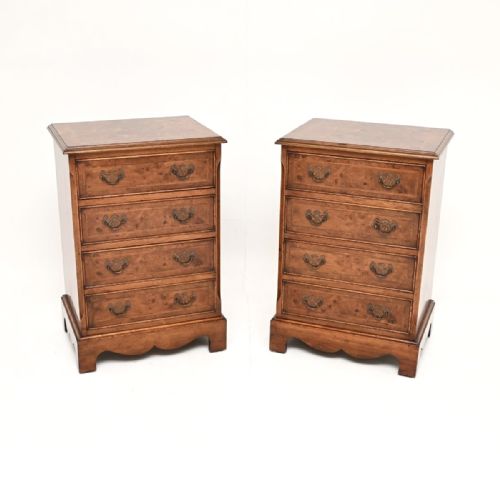
Pair of Georgian Nightstands
A pair of georgian nightstands brings symmetry to a bedroom while offering practical bedside storage.
Pair of Georgian Nightstands
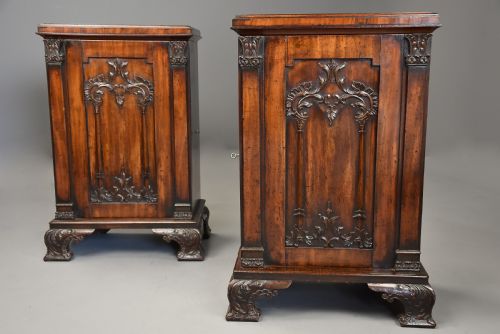
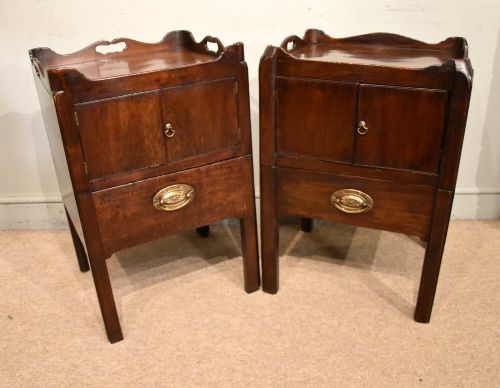
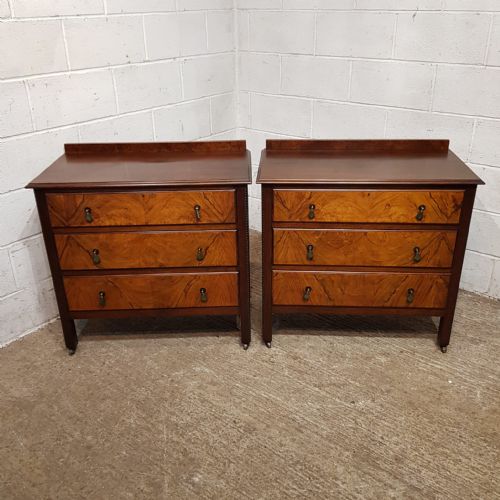
A pair of georgian nightstands comprises matching bedside furniture designed to hold chamber lighting and personal items. The selection ranges from authentic eighteenth-century examples to later revivals produced across the nineteenth and early twentieth centuries.
Forms include pedestal cupboards, tray top commodes, lamp tables and small chests of drawers. Most pieces encountered on this page date from the Georgian period through to the nineteen-thirties revival eras utilising classic proportions.
Assessing quality
Quality rests upon the choice of timber and the precision of the cabinet work. Finely figured mahogany and rich burr walnut elevate a piece, especially when matched across both items in the pair.
Proportion and crispness of carving also divide standard items from exceptional ones. Cabinets with intact original brassware, harmonious grain patterns and well-executed stylistic details such as serpentine fronts command greater interest.
Mahogany and burr walnut dominate the material palette, supported by satinwood inlay and brass hardware across both original and revival periods.
Gillows·Holland & Sons
The Pair of Georgian Nightstands Glossary
- Nightstand
- A small bedside table or cabinet designed to hold nighttime necessities. These pieces evolved from eighteenth-century commodes and bedside cupboards.
- Commode
- A low enclosed piece of furniture with drawers or cupboards. In the context of nightstands, this often refers to tray top models used for similar domestic purposes.
- Tambour
- A flexible shutter door made from narrow strips of wood glued to canvas. This mechanism allows smooth access to enclosed bedside storage.
- Tray top
- A raised rim around the upper surface of a table or cabinet. This feature prevents items from rolling off the edges.
Pair of Georgian Nightstands: Frequently Asked Questions
How do I spot a true Georgian nightstand from a revival piece?
Authentic eighteenth-century pieces exhibit construction methods, timber ageing and hand-cut joinery characteristic of the period. Revival pieces from the nineteen-twenties or nineteen-thirties imitate these classic styles but display later secondary woods and machine-assisted work.
Examining the drawer linings, backboards and interior surfaces helps reveal the actual age of the timber and construction.
Were these tables originally made as pairs?
Many early nightstands were produced individually or as single commodes rather than matching sets. Dealers often assemble very close matched pairs later by pairing pieces of identical height, timber and proportion.
True original pairs share identical construction traits and wear patterns from creation, while matched pairs bring symmetrical balance to a modern bedroom layout.
How do I care for antique mahogany and walnut furniture?
Protect wooden surfaces from direct sunlight and extreme humidity fluctuations to prevent veneer cracking or fading. Regular dusting with a soft cloth maintains the finish without needing heavy polishes.
Applying occasional traditional wax preserves the natural lustre of the timber and protects the grain over time.