
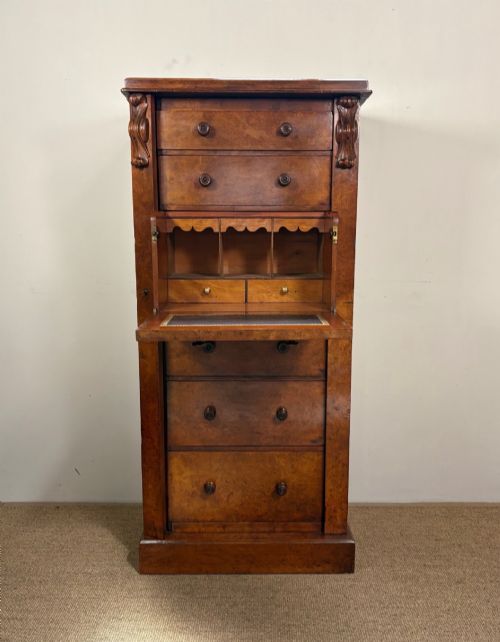

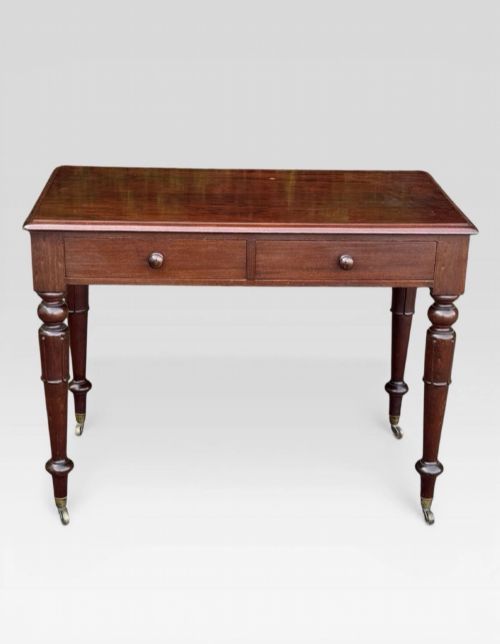


Traditional Mahogany Side Cabinets
Traditional mahogany side cabinets bring warmth and utility to a room, offering rich timber surfaces and discreet storage designed to anchor a traditional interior.
Traditional Mahogany Side Cabinets
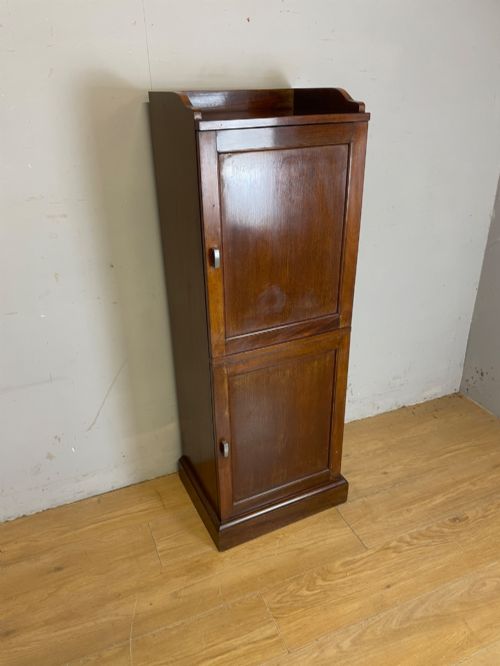
Traditional mahogany side cabinets encompass a variety of case furniture built to serve domestic spaces, ranging from bedside night tables to library cupboards and larger servers. When searching for traditional mahogany side cabinets, buyers most frequently encounter bedside cabinets, compact cupboards, and side tables dating from the nineteenth century through the early twentieth century.
The selection reflects both formal Georgian and Regency designs alongside later Victorian, Edwardian, and 1930s interpretations. These pieces often feature timber surfaces complemented by brass hardware, satinwood inlay, or marble tops depending on their specific period and intended function within the home.
How they were made
Makers utilised solid mahogany and flame mahogany veneers over secondary timbers to construct these cabinets, often selecting figured grain for drawer fronts and cupboard doors. Surface enrichment frequently included satinwood inlay to create geometric borders or contrasting panels.
Hardware selection played a crucial role in construction, with brass handles, hinges, and locks fitted to secure drawers and doors. Select pieces incorporated marble tops or leather writing surfaces to provide durable working areas.
Several bedside tables double as library steps or retain secretive locking bars, proving that practical Victorians loved a hidden compartment.
What varies in quality
The grade of timber selected for the carcase and drawer fronts distinguishes finer examples, particularly where richly figured flame mahogany veneers align symmetrically across doors and drawers. Finer construction also shows in the precision of satinwood inlay work and the weight of the brass fittings utilised.
Proportion and execution of period revival styles dictate distinction, with master cabinet makers achieving crisp carving details on legs and mouldings. The structural integrity of the joints and the smooth operation of drawers and drop-flap mechanisms reflect the original workshop standards.
J A Mein Edinburgh Cabinet Maker
The Traditional Mahogany Side Cabinets Glossary
- Mahogany
- A durable tropical hardwood prized for its deep reddish-brown colour and stability in furniture construction. It accepts polish exceptionally well and forms the primary material for these cabinets.
- Flame mahogany
- A veneer cut from timber where the grain creates a distinctive undulating, flame-like pattern. Makers reserved this decorative wood for prominent surfaces such as drawer fronts and cabinet doors.
- Satinwood inlay
- A contrasting light-coloured timber inserted into recesses within the mahogany surface to form geometric lines or decorative motifs. This technique highlights the borders of panels and tabletops.
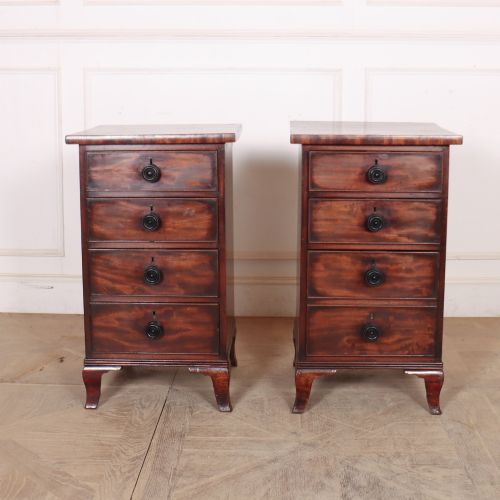
- Wellington chest
- A tall, narrow chest of drawers secured by a vertical locking sidebar that fastens with a key. This form originated in the nineteenth century to maximise storage within a compact footprint.
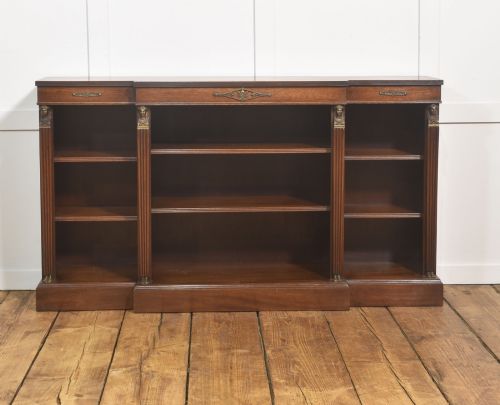
- Breakfront
- A piece of furniture where the central section projects forward from the flanking outer sections. This architectural arrangement creates depth and visual rhythm on bookcases and side cabinets.
Traditional Mahogany Side Cabinets: Frequently Asked Questions
What rooms suit these cabinets?
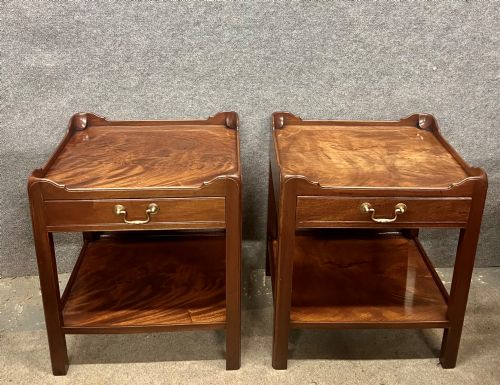
Traditional mahogany side cabinets function naturally beside a bed or sofa, providing a stable surface for a lamp and enclosed storage for personal items. Their compact footprints allow them to fit into hallways, studies, and drawing rooms without dominating the floor space.
The rich tones of the timber coordinate easily with existing antique or traditional furnishings. Smaller cupboards and night tables also serve effectively as lamp tables in reception rooms.
How do I date a cabinet?
Dating relies on examining the construction methods, timber selection, and hardware style characteristic of specific periods like the Georgian, Victorian, or Edwardian eras. Regency pieces often incorporate specific classical revival motifs, whereas later Edwardian examples may show lighter proportions and satinwood inlay.
Internal timber choices, drawer dovetailing techniques, and the type of fixings used provide further physical evidence. Comparing these details against documented period styles helps establish the likely decade of manufacture.
How do I care for mahogany?
Maintain mahogany furniture by dusting regularly with a soft, dry cloth and avoiding placement near direct heat sources or strong sunlight. Excessive temperature fluctuations can cause the timber and veneers to dry out or split over time.
Apply a traditional beeswax polish occasionally to nourish the wood and preserve its warm lustre. Avoid silicone-based sprays, which can build up on the surface and damage the antique finish.
What is flame mahogany?
Flame mahogany is a decorative veneer obtained from specific cuts of wood where the grain creates a dramatic, rippling pattern resembling flickering flames. Cabinet makers positioned these figured sheets carefully on drawer fronts and doors to create symmetrical visual effects.
This labour-intensive method was reserved for higher quality pieces intended for principal rooms in country houses and town residences. The resulting grain movement catches the light differently as you walk around the room.