


Pair Georgian Bedside Tables
A pair georgian bedside tables brings symmetry and proportion to a bedroom, functioning primarily as compact storage alongside a bed.
Pair Georgian Bedside Tables
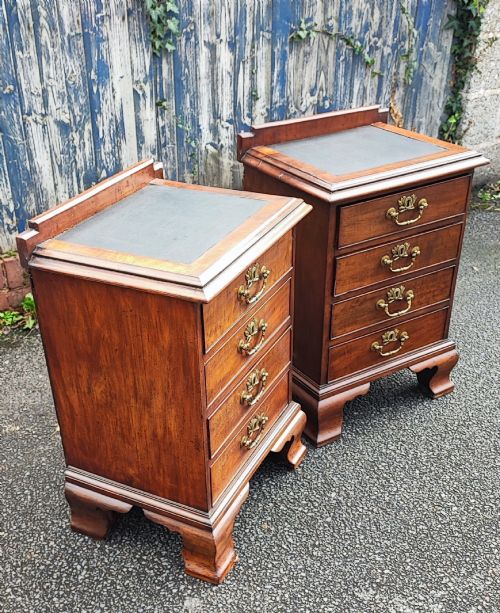
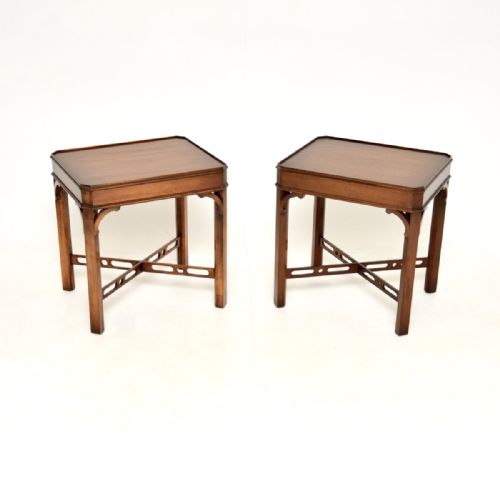
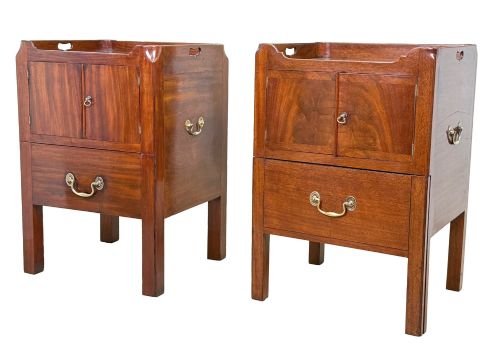
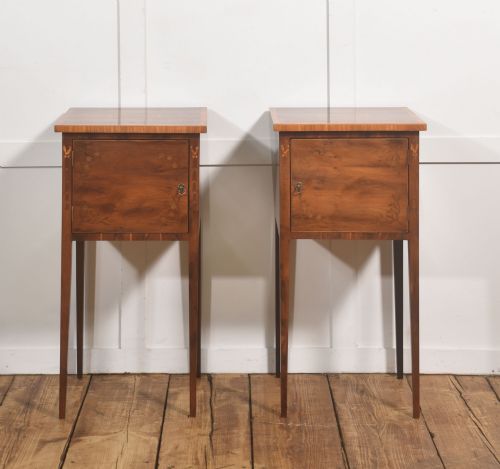
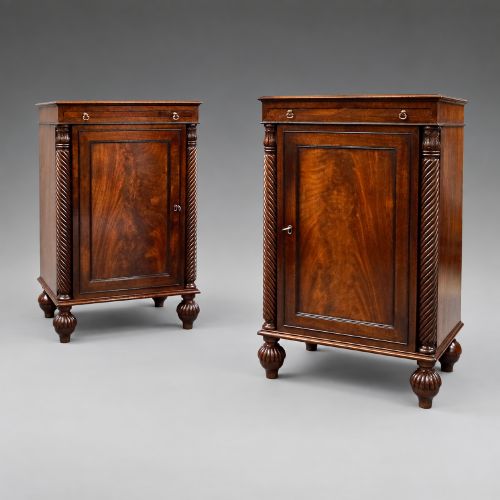
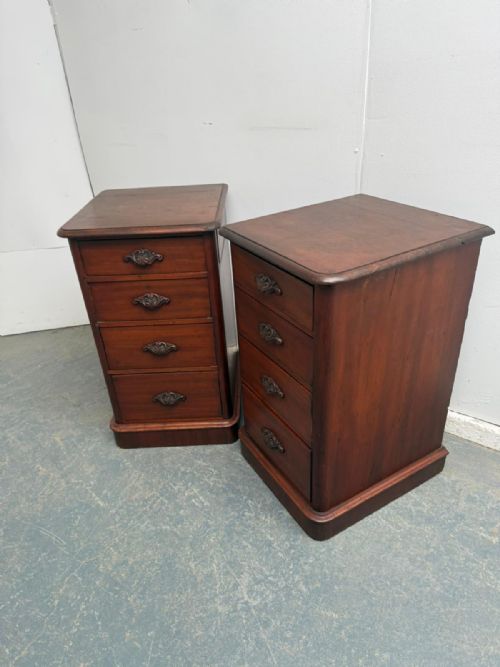
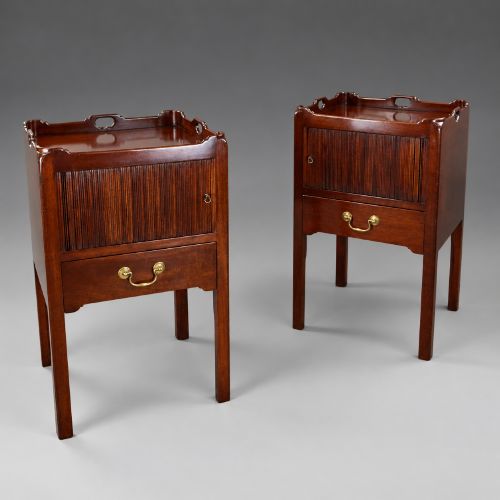
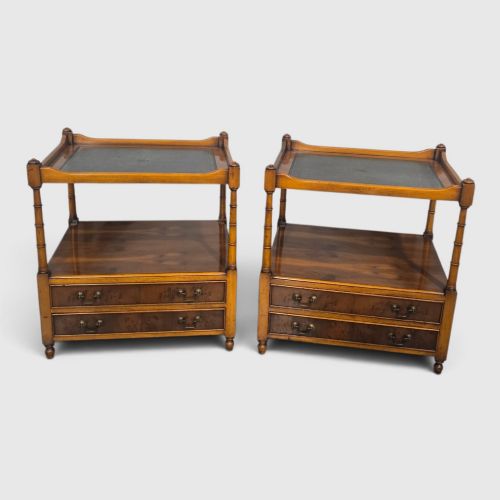
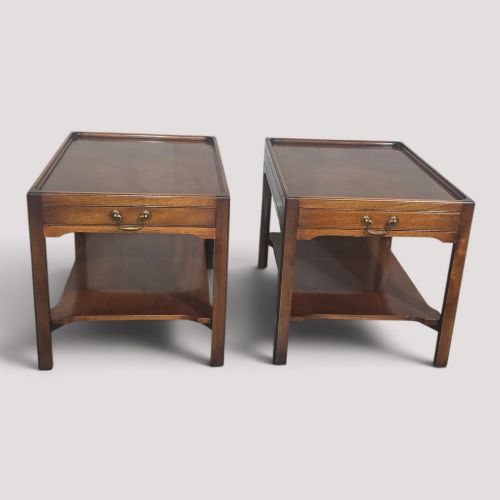
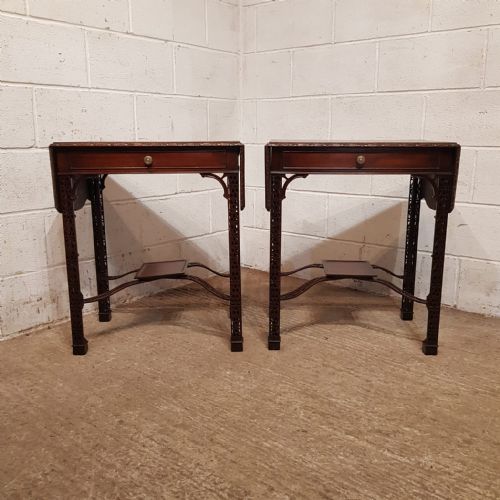
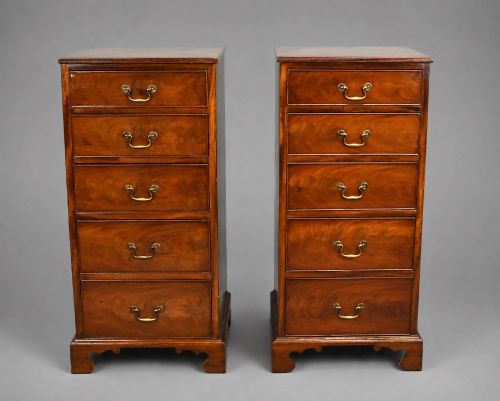
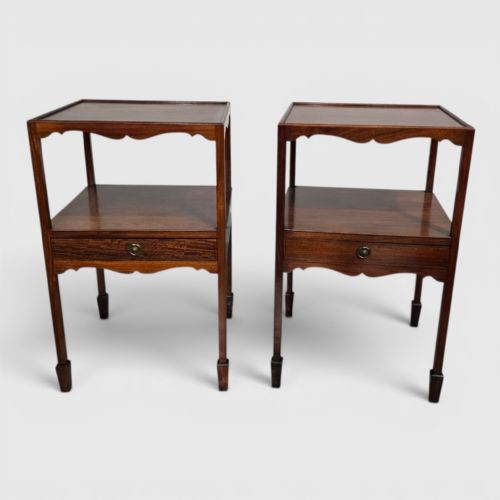
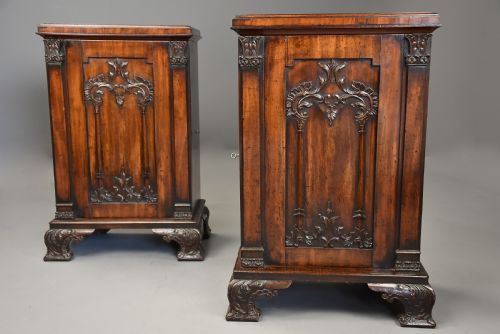
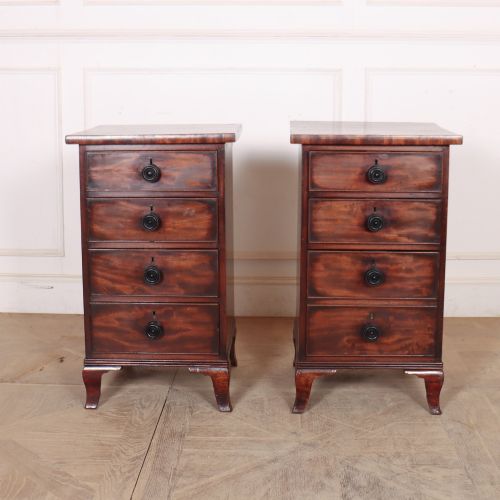
When searching for a pair georgian bedside tables, a buyer encounters forms ranging from authentic 18th century pieces to later revivals from the 19th and early 20th centuries. The selection spans bedside cupboards, tray top commodes, pedestal cabinets, and small chests of drawers intended for domestic use.
Original pieces from the Georgian period sit alongside later interpretations built in the Georgian style or Regency manner during the 1920s and 1930s. These variations offer similar functional proportions while utilising the woods and styles characteristic of British cabinet making.
How They Were Made
Makers relied heavily on solid mahogany and flame mahogany veneer, often enhanced by satinwood, walnut, burr walnut, and intricate inlay work. Structural elements frequently incorporated brass hardware, leather inset tops, and tambour fronts to secure enclosed compartments.
Construction techniques included dovetailed drawer boxes and tray top edges designed to prevent items from rolling off the surface. Wax finishes were applied to protect the timber while highlighting the natural grain and colour of the wood.
Pair Georgian Bedside Tables Retail Price Guide 2026
Typical asking prices for pair georgian bedside tables among the pieces listed under this phrase on Sellingantiques today, from the lower quarter to the upper quarter. They describe what is for sale here now, not the wider market.
Listings feature bedside tables spanning the 18th century through to the 1930s, constructed in mahogany, walnut, and satinwood.
What Varies in Quality
The degree of fidelity to historical proportion and the selection of timber dictate the standing of individual pairs. Matched sets require consistent grain patterns and uniform fading across both cabinets, which separates carefully assembled pairs from random combinations.
Detailing such as hand-cut dovetails, crisp carving on Chippendale revival pieces, and quality brass mounts indicate superior workmanship by the cabinet maker.
Holland and Sons·Gillows
The Pair Georgian Bedside Tables Glossary
- Commode
- A bedside cabinet or chest, often featuring a enclosed cupboard or drawer arrangement below a tray top. These pieces originated to serve domestic needs in upper-class bedchambers.
- Tambour
- A sliding door constructed from narrow vertical strips of wood glued to a canvas backing. This mechanism allowed access to cabinet interiors without requiring clearance for swinging doors.
- Tray top
- A raised rim around the upper edge of a table or cabinet designed to retain small objects. This feature appears frequently on bedside tables from the Georgian era.
- Serpentine
- A curved outline featuring a convex centre flanked by concave sides. Cabinet makers utilised this shape on drawer fronts to add visual movement and complexity.
- Pedestal cabinet
- A tall, narrow freestanding cupboard standing on a plinth or bracket feet. These items maximise vertical storage within a minimal floor footprint.
Pair Georgian Bedside Tables: Frequently Asked Questions
What is a tray top commode?
A tray top commode is a small bedside cabinet featuring a raised wooden gallery around the top surface to secure items placed upon it. These pieces often incorporate enclosed cupboards or pull-down drawers.
Cabinet makers designed them for bedroom use during the 18th century, combining decorative proportions with practical enclosed storage.
How do you style bedside tables?
Pair georgian bedside tables work best flanking a bed where their matching wood tones and proportions create visual balance. They provide a surface for lighting and books while concealing personal items within drawers or cupboards.
Keeping the styling simple allows the grain of the mahogany or walnut to remain the focal point of the bedroom scheme.
Are these tables authentic Georgian?
The selection includes both genuine 18th century pieces and later revivals produced during the Edwardian era and the 1920s or 1930s. Genuine period examples date from the reigns of the Georges, while revival pieces replicate those classic proportions.
Examining the construction methods, secondary timbers, and wear patterns helps determine the exact age of each cabinet.
What woods were commonly used?
Mahogany served as the primary timber for these tables, often utilised in both solid form and as flame mahogany veneer. Cabinet makers also incorporated satinwood, walnut, and burr walnut for contrast and decorative inlay.
Secondary woods like oak or pine appear in drawer linings and internal framing on older pieces.