



Vintage Wooden Bed Steps
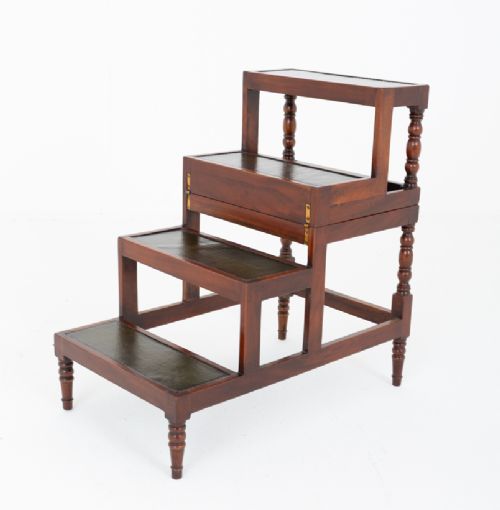
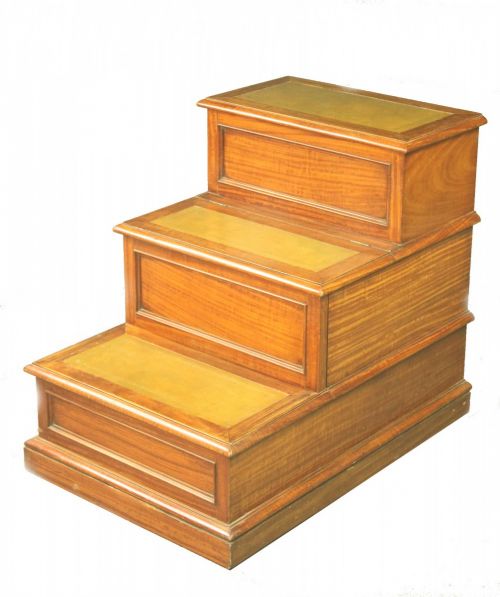
These vintage wooden bed steps are sturdy flights once used to climb into high historic sleeping quarters, offering a practical climb and rich cabinet timbers.
Vintage Wooden Bed Steps
Vintage wooden bed steps are compact sets of tiers designed to assist with mounting high sleeping furniture, though inventory also shows related library steps used for reaching high shelves. The examples here span from the 1800s and late Georgian period through the Victorian era into the 1920s and 1930s.
Most pieces encountered on this page belong to the nineteenth century, including specific Victorian and late Victorian items. The form relies on ascending treads that occasionally double as storage compartments or fold into alternative configurations depending on the maker's design.
While the primary function was domestic assistance, many surviving pieces share construction traits with library steps from the same eras. Buyers will find items catalogued variously as bed steps, library steps, and broader period furniture.
How they were made
Cabinetmakers utilised dense hardwoods such as mahogany, walnut, burr walnut, oak, satinwood, fruitwood, and general timber to construct these stepped frames. These woods provided the structural integrity required to support weight while allowing for polished finishes.
Surviving pieces frequently incorporate secondary materials like leather inserts on the treads to provide grip and reduce wear from footwear. Brass hardware and fittings also appear on select examples to secure hinges, joints, or folding mechanisms.
Vintage Wooden Bed Steps Retail Price Guide 2026
Typical asking prices for vintage wooden bed steps among the pieces listed under this phrase on Sellingantiques today, from the lower quarter to the upper quarter. They describe what is for sale here now, not the wider market.
Current listings span the 1800s, late Georgian, Victorian, 1920, and 1930 periods, constructed in mahogany, walnut, oak, satinwood, burr walnut, and fruitwood.
What varies in quality
The choice of primary timber fundamentally separates standard utility pieces from finer examples, with figured walnut, satinwood, and well-figured mahogany representing the upper tiers of craftsmanship. Grain selection and matching across the treads indicate the original maker's investment in the piece.
Construction detail, such as the neatness of dovetail joints and the integration of leather tread panels, distinguishes finer workshops from mass production. The survival of original polished surfaces and hardware without intrusive modern repairs maintains the integrity of the piece.
The Vintage Wooden Bed Steps Glossary
- Tread
- The horizontal upper surface of a step where the foot rests. On bed steps, these are frequently lined with leather.
- Satinwood
- A pale, highly reflective hardwood prized for its fine grain and golden lustre. It was often employed in late eighteenth and nineteenth-century cabinetmaking.
- Burr walnut
- Timber taken from the warted growth on a walnut tree, yielding highly decorative swirling grain patterns. It commands attention on elite case furniture.
- Library steps
- A larger relative of the bed step designed for reaching high bookshelves. They share identical construction methods and period styles.
Vintage Wooden Bed Steps: Frequently Asked Questions
What are vintage bed steps used for today?
Modern interiors utilise these compact tiered structures beside high contemporary beds or as display stands for plants and decorative objects.
Their small footprint also suits narrow hallways or living rooms where vertical space allows for layered ornamental placement.
How do I date a set of wooden steps?
Dating relies on identifying the primary timber, construction joints, and stylistic cues associated with periods like the Georgian or Victorian eras.
Examining the wear patterns on the treads and the presence of secondary materials such as brass fittings provides further chronological context.
Were these steps only used for beds?
Historical records and surviving inventory show significant overlap between bed steps and library steps used for reaching elevated shelves.
Both forms employ similar ascending tiers and cabinet timbers, making precise original placement difficult to confirm without provenance.
Are leather inserts on the treads original?
Many period steps incorporate leather panels on the flat tread surfaces to prevent slipping and soften the impact of footsteps.
While some examples retain their antique leather, later replacements remain common due to the heavy friction these areas endured.