




Regency Bedside Chests
Regency bedside chests bring architectural dignity and compact practicality to a bedroom, combining figured timber with precise proportions.
Regency Bedside Chests
Regency bedside chests span compact drawer units, commodes, and small cabinets designed to sit beside a bed. The pieces appearing here range from authentic Regency period examples to later Victorian interpretations and Georgian precursors.
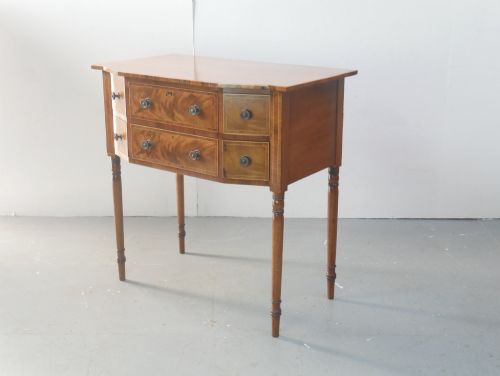
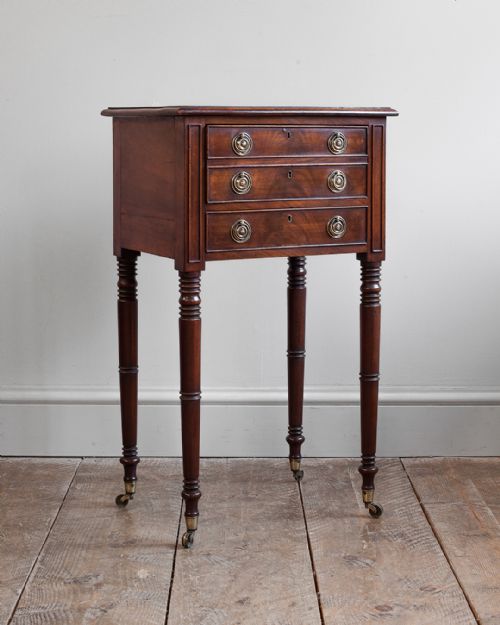
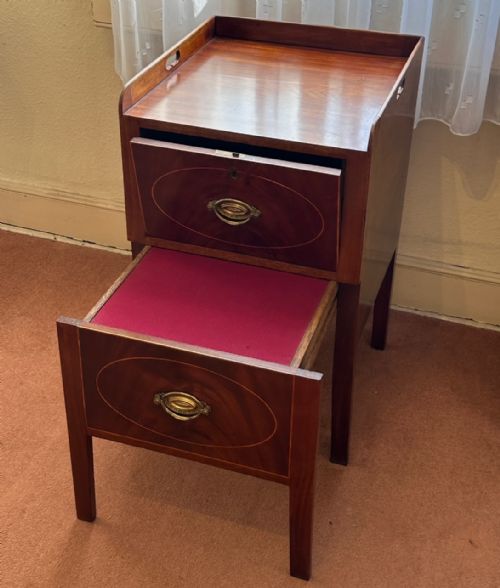
The most common form met on this page is the mahogany bedside cabinet or small chest of drawers, often featuring figured veneers or bow fronts. Cabinets with cupboards, pull-out steps, and drop flaps also appear frequently across the selection.
Buyers will encounter variations in style nomenclature, including Late Georgian, Grand Regency, and English Country House. Despite these varied labels, the core function remains the storage of nighttime necessities within a refined domestic scale.
Materials and construction
Mahogany forms the primary structural and visual language of these pieces, frequently enhanced by highly figured flame mahogany veneers and contrasting wood inlay such as ebony lines. Oak and pine often appear as secondary timbers used for interior drawer linings and backing boards.
Metal hardware plays a functional and decorative role, with brass handles and drop pulls defining the aesthetic of the period. Joinery relies on traditional techniques suited to small-scale cabinetry, accommodating curved bow fronts and concave forms.
One exceptional piece includes a pull-out step, proving that early morning dignity required architectural assistance.
Distinctions in quality
The caliber of a piece is determined by the selection of the timber and the handling of the veneer. Superior examples display symmetrical flame mahogany or crisp wood inlay that follows the structural contours without disruption.
Proportion and the integration of functional elements, such as pull-out steps or well-fitted doors, separate standard utility pieces from finer cabinet work. The crispness of the carving and the original state of the brass fittings further distinguish the upper tier of the range.
The Regency Bedside Chests Glossary
- Flame mahogany
- A veneer cut from the branch junctions of the mahogany tree, producing a distinctive flickering, flame-like pattern. It was highly prized for drawer fronts during the Regency period.
- Commode
- A low cabinet or chest, often featuring doors or drawers, which originated in France and was adopted by English cabinet makers. In this context, it often denotes a bedside storage piece.
- Bowfront
- A furniture front that curves outward in a convex shape. This style softens the corners of bedside chests and requires advanced woodworking skill to execute properly.
- Wellington chest
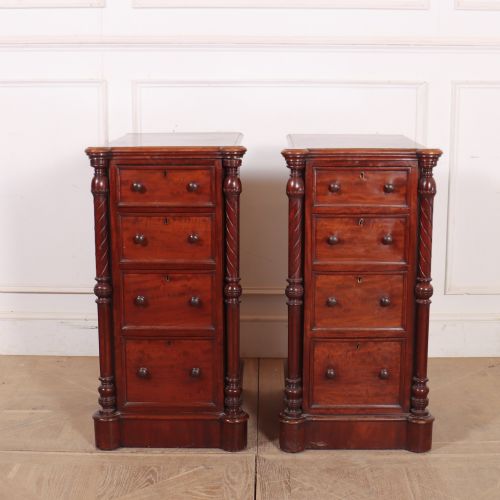
- A tall, narrow chest of drawers secured by a hinged locking stile on one side. Variations adapted for bedside use appear in nineteenth-century workshops.
- Line inlay
- Thin strips of contrasting wood embedded into the surface of a primary timber to create geometric borders. Ebony was frequently used for this purpose on Regency pieces.
Regency Bedside Chests: Frequently Asked Questions
What is a pot commode?
A pot commode is a specialised cabinet designed to enclose a chamber pot, typically featuring a cupboard door or a lifting top. During the Georgian and Regency periods, these served a discreet and essential function in the bedroom.
Today, they are commonly repurposed as bedside tables or small cabinets. Their enclosed storage makes them practical for holding modern items while maintaining a traditional aesthetic.
How do I tell Regency from Victorian pieces?
Regency pieces generally exhibit restrained classical lines, architectural proportions, and subtle decorative stringing or brass mounts. The timber selection prioritises figured mahogany with a warm, polished depth.
Victorian interpretations often display heavier proportions, darker finishes, and more robust construction. Comparing the secondary timbers and the crispness of the mouldings helps clarify the period of manufacture.
Where should I place a bedside chest?
These chests are proportioned to sit adjacent to a bed, serving as a surface for lighting and nighttime essentials. Their compact footprint also suits small hallways or tight corners as accent storage.
When pairing them, note that matching pairs appear alongside single cabinets, allowing for symmetrical placement on both sides of a bed or standalone use.
What maintenance do antique mahogany surfaces need?
Antique mahogany benefits from regular dusting with a soft, dry cloth and occasional treatment with quality beeswax to nourish the timber. Avoid placing them in direct sunlight or near heat sources to prevent the wood from drying out.
Keeping the surface dry protects the historic polish and veneer. Gentle care preserves the depth of the grain and the integrity of the original construction.