

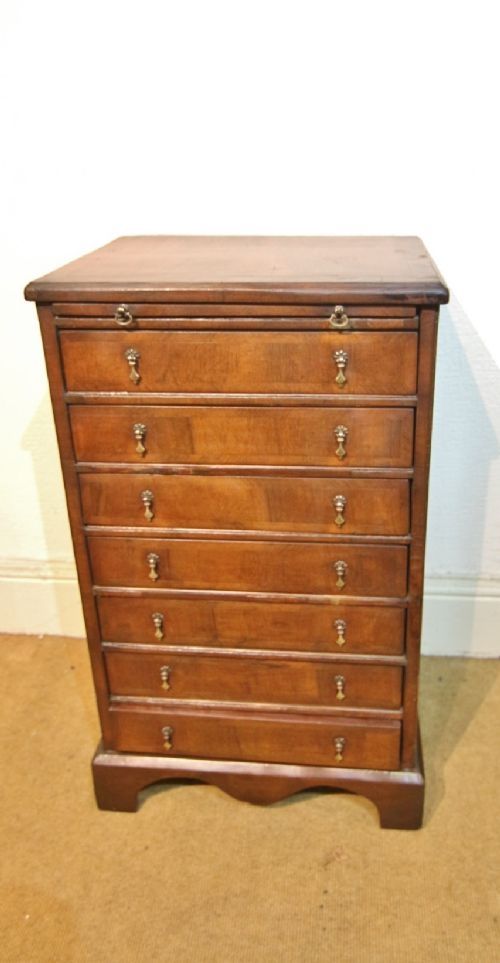
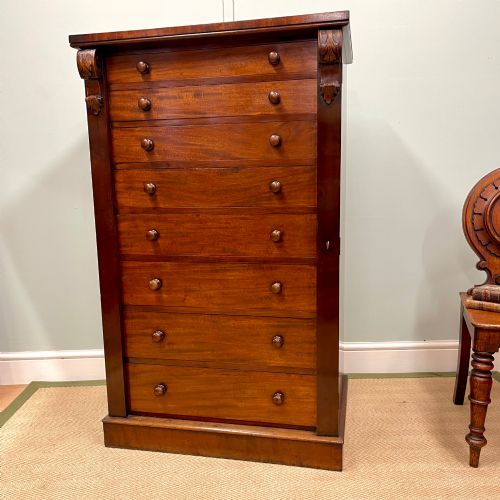

Brown Wellington Chest
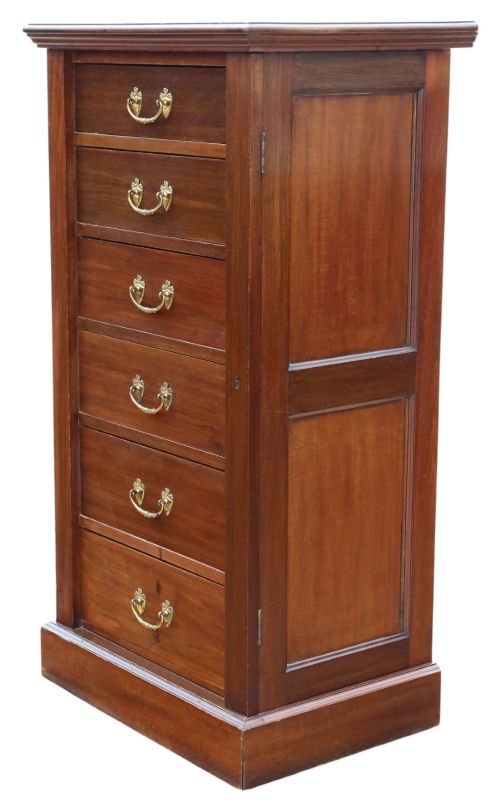
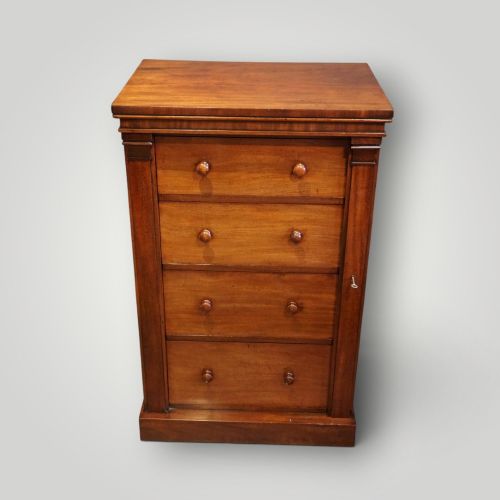
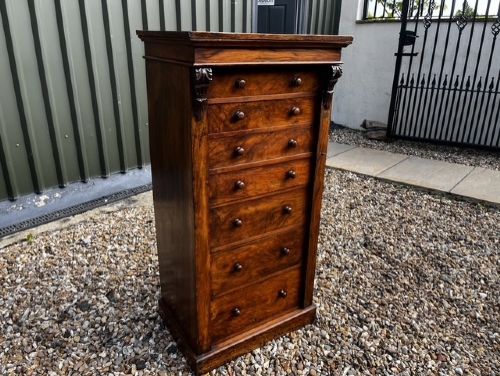
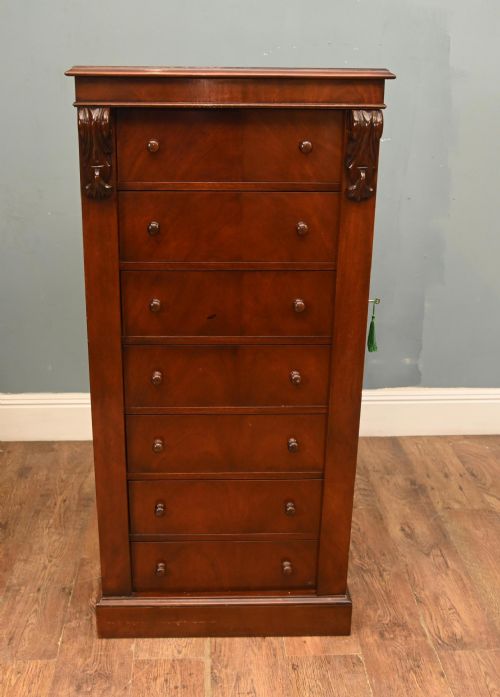
A brown wellington chest is a tall, narrow set of drawers secured by a locking side pilaster, offering clever vertical storage for a bedroom or study.
Brown Wellington Chest
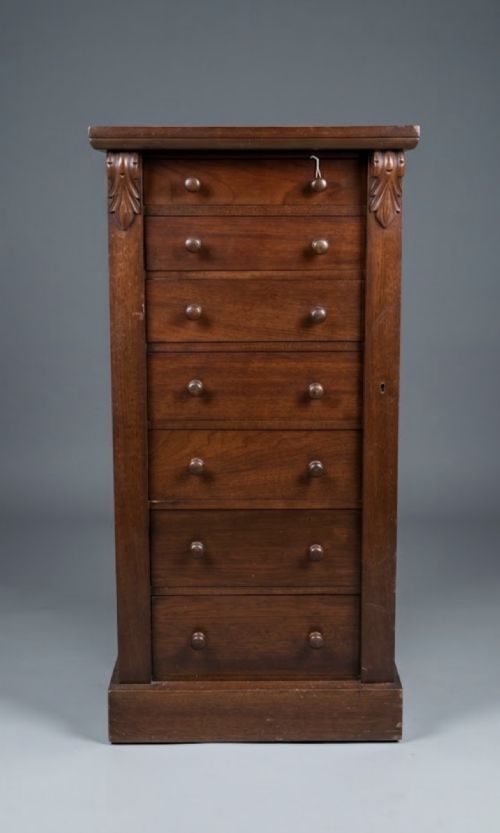
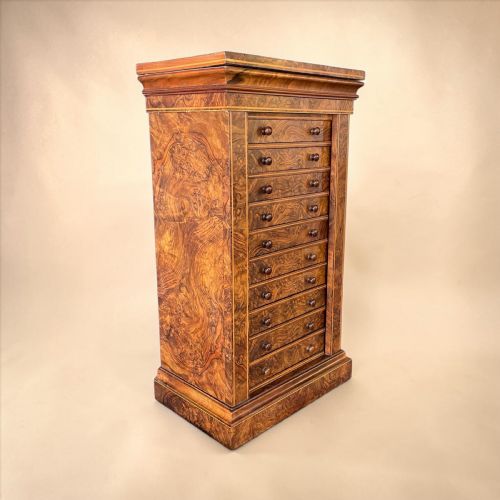
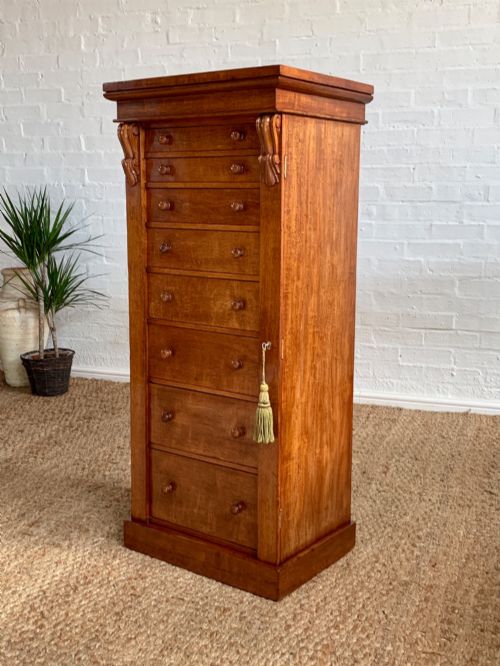
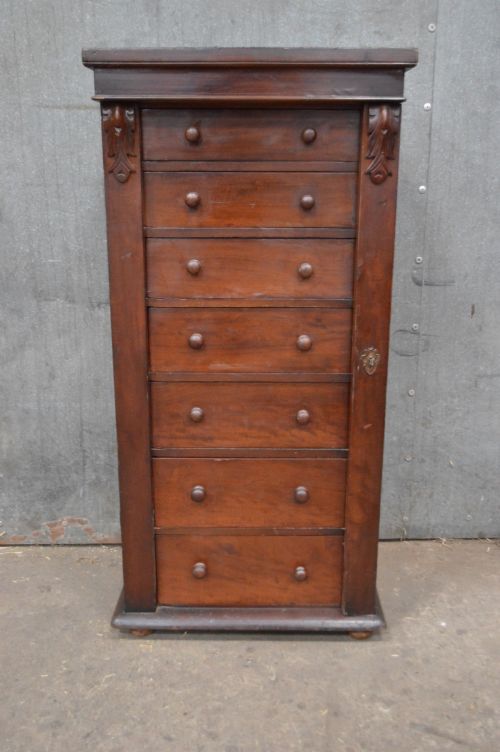
A brown wellington chest stands tall and narrow, traditionally housing six or seven drawers enclosed by a hinged locking stile on one side. This secure design protected private papers or precious items from prying eyes in nineteenth-century homes.
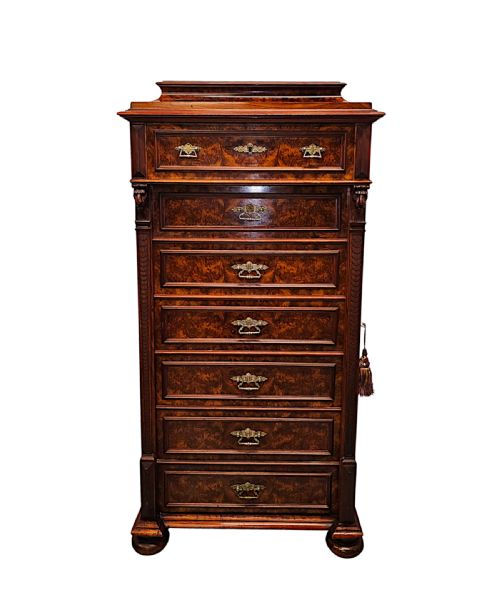
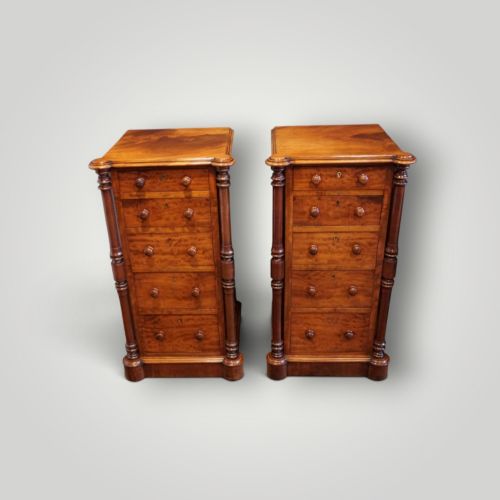
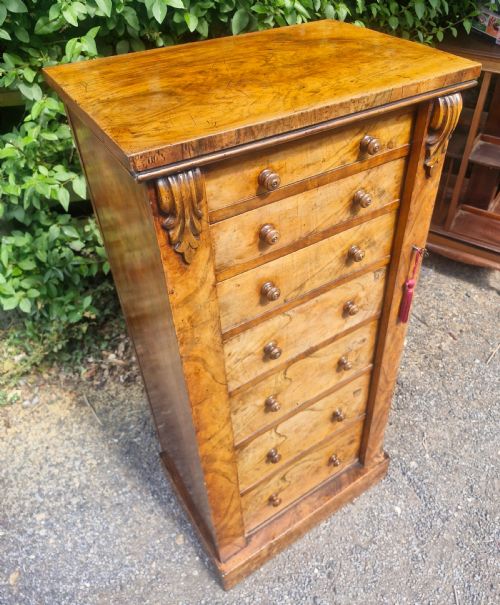
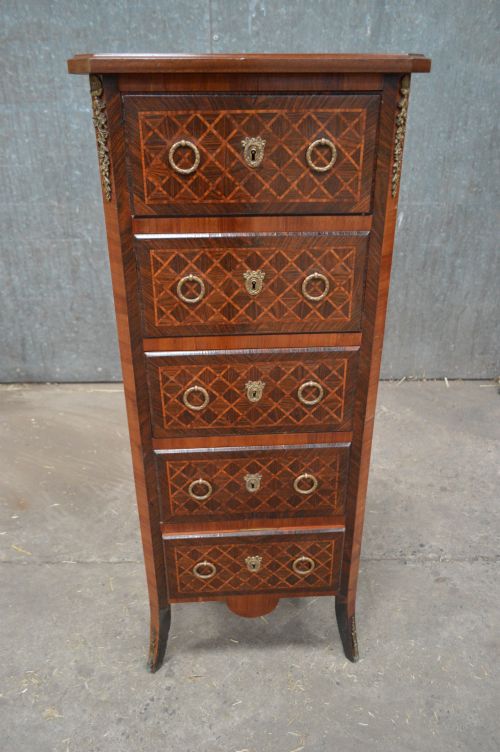
The pieces appearing here date predominantly from the Victorian and nineteenth-century periods, with occasional Edwardian and earlier Regency examples. Mahogany and walnut dominate the selection, often taking the form of narrow upright chests or bedside cabinets.
How they were made
Cabinet makers utilised dense hardwoods such as mahogany and walnut, frequently applying figured veneers or burr walnut to create rich surface patterns. Brass hardware, including drop handles and lock mechanisms, provides functional contrast to the dark timber.
Construction relies on deep, slender proportions designed to fit tight spaces without sacrificing drawer capacity. The characteristic locking pilaster swings away only when the top drawer is unlocked, securing the entire column.
Current listings feature mahogany and walnut timbers alongside brass hardware across the Victorian and Edwardian periods.
What varies in quality
The subtlety of the timber figure and the crispness of the drawer linings set finer examples apart from plainer workshop production. Matched grain patterns across drawer fronts demonstrate careful planning by the original maker.
Mechanism integrity dictates daily practicality, particularly the smooth operation of the locking side pilaster and its accompanying brass lock. Original turned knobs and well-fitted dust boards between drawers elevate a piece's standing.
Warings Liverpool·Holland & Sons·S Mordan & Co
The Brown Wellington Chest Glossary
- Pilaster
- A vertical architectural member projecting from the cabinet side that hinges outward to release the drawers. This locking bar is the defining mechanical feature of the form.
- Burr walnut
- A figured wood grain taken from the wart-like growths on walnut trees. It creates intricate, swirling patterns across drawer fronts.
- Secretaire
- A desk drawer fitted with a drop-front writing surface and small internal compartments. Some tall chests incorporate this feature into the upper section.
- Marquetry
- Decorative inlay work using various woods to form pictorial or geometric designs on the surface. It appears on select walnut and rosewood cabinet doors and tops.
Brown Wellington Chest: Frequently Asked Questions
Why do these chests have locking pilasters?
The hinged side bar originally served to secure confidential papers or valuables by blocking the drawer edges when locked.
This clever mechanism meant a single key secured the entire vertical stack of drawers.
Where do these fit in a modern room?
Their narrow footprint makes them ideal for tight spaces where standard chests cannot go, such as narrow hallways or beside a bed.
They provide substantial vertical storage capacity while occupying minimal floor area.
How do I distinguish Victorian from Regency examples?
Regency pieces lean toward cleaner architectural lines and earlier proportions, often dating from the early nineteenth century.
Victorian pieces frequently display richer figuring in walnut or mahogany and standardise the six-drawer vertical format.
What is a specimen or collector's chest?
These variants house shallow drawers specifically designed for organising small scientific samples, coins, or trinkets.
They share the tall locking profile of standard chests but contain internal arrangements built for tiny items.