
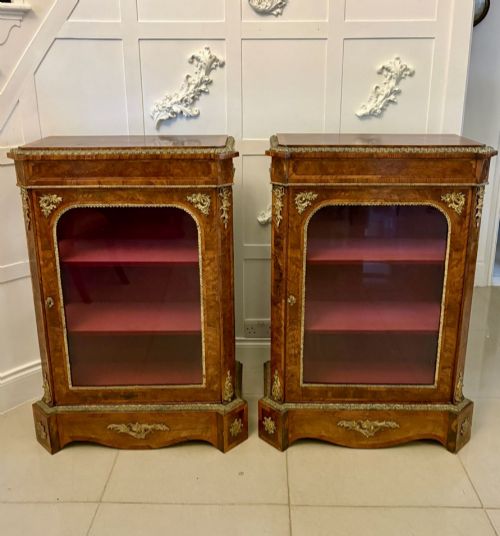
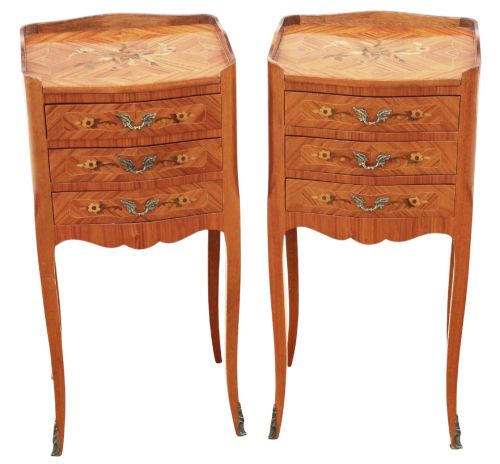
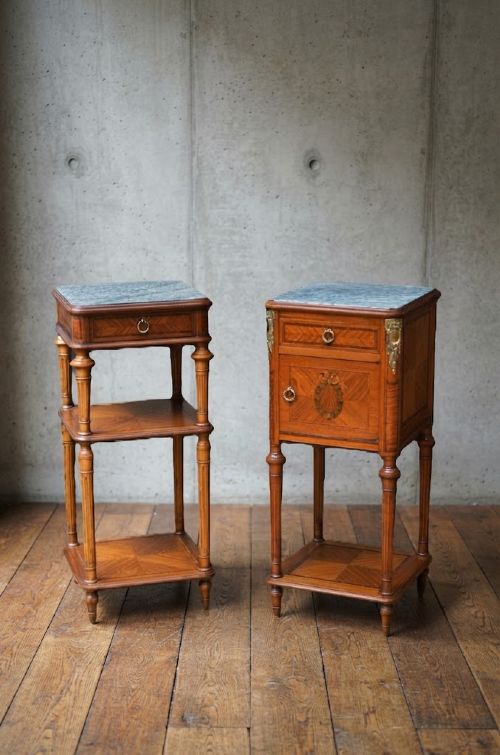
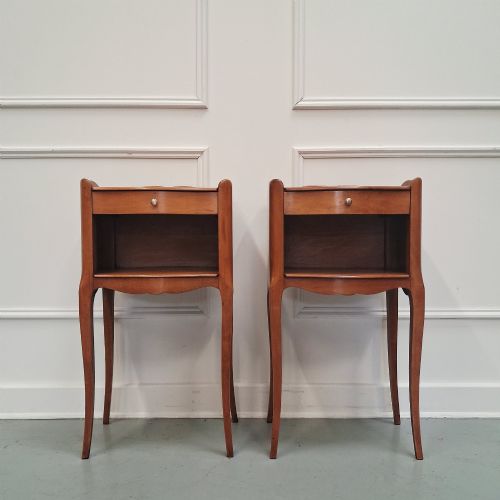
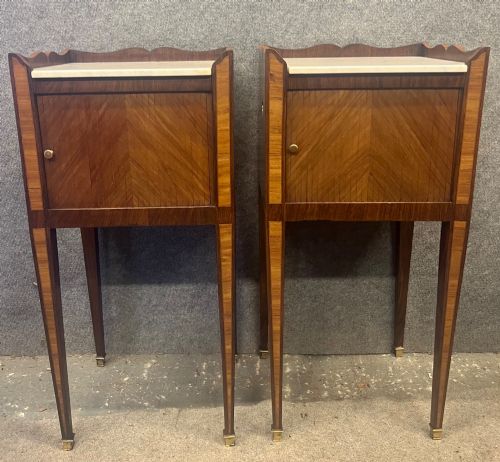
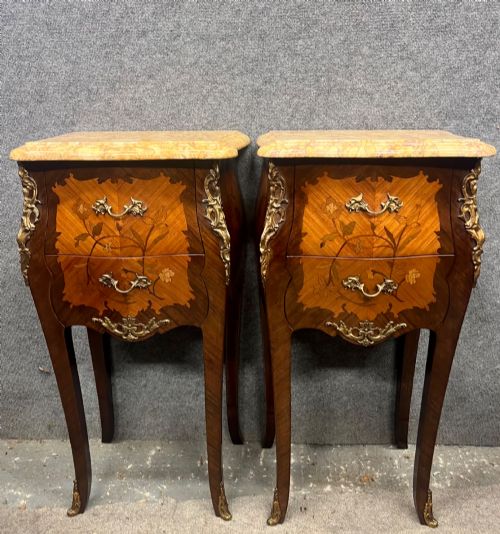
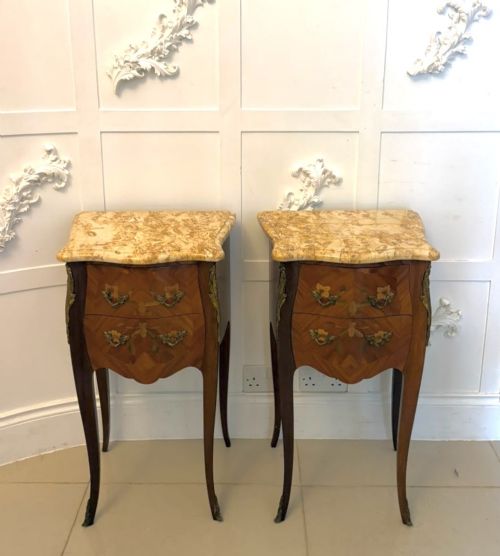
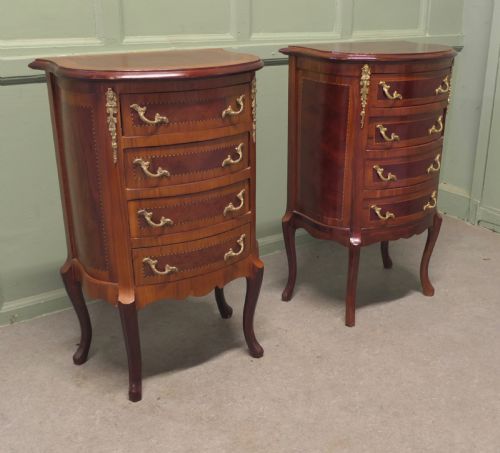

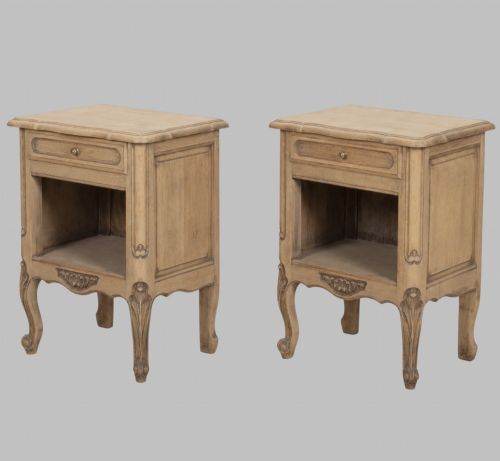
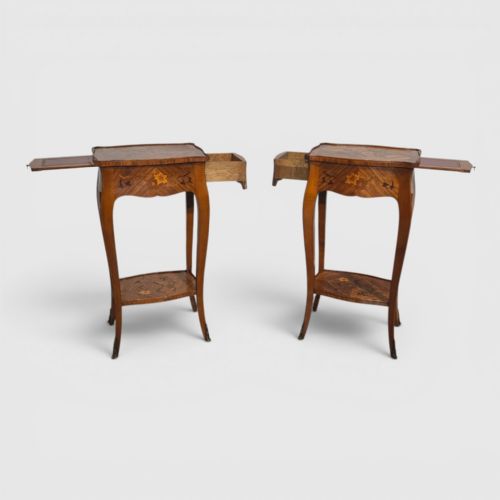

Pair French Side Cabinets
When you search for pair french side cabinets, you explore matched companions for bedside or salon use that bring continental symmetry to a room.
Pair French Side Cabinets
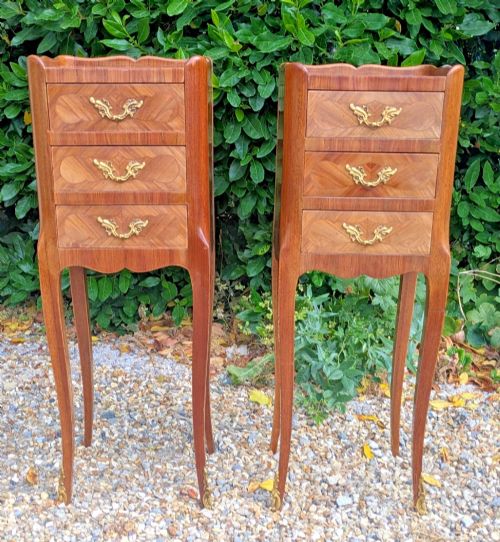
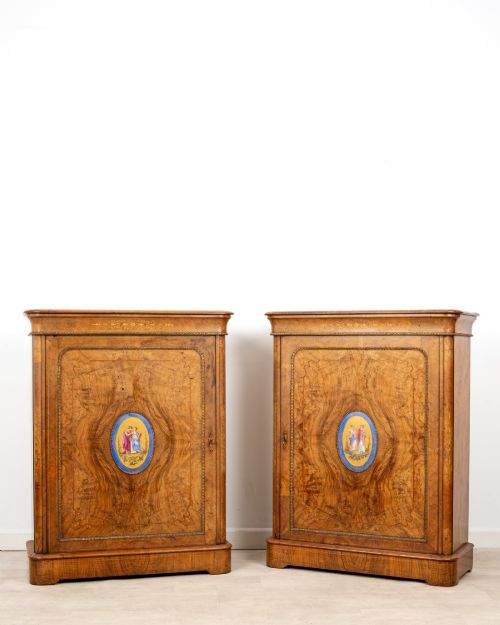
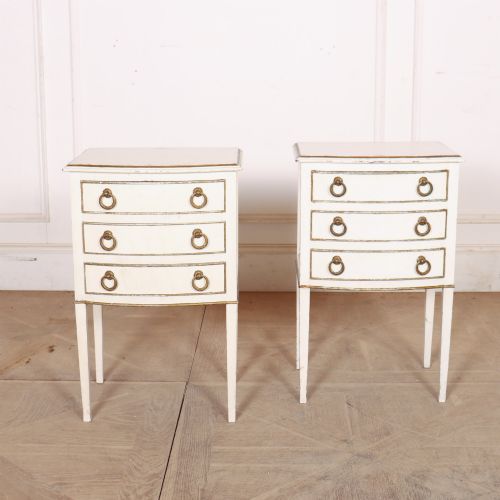
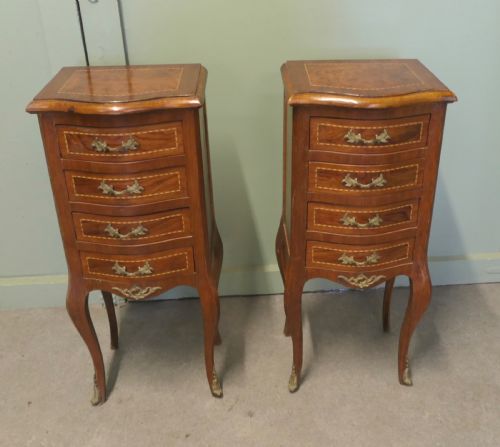
Pair french side cabinets encompass bedside tables, commodes, and small chests originating from the nineteenth and early twentieth centuries.
The version most frequently met on this page is the compact bedside cabinet or lamp table, often styled after Louis XV or produced during the art deco and interwar periods.
Makers shaped these dual pieces from walnut, oak, kingwood, and mahogany, frequently incorporating marble tops and fitted internal compartments.
Materials and Technique
Craftsmen built carcass structures in native and exotic timbers, applying intricate marquetry, parquetry, and fruitwood veneers to display contrasting grain patterns.
Many examples integrate polished marble slabs into the upper surface, paired with cast or chased ormolu, brass, and gilt bronze mounts secured to corners and drawer fronts.
Several diminutive tables hide tiny compartments designed specifically for nineteenth-century pocket watches.
Distinctions in Execution
The standard of timber selection and the precision of veneer work divide ordinary examples from exceptional ones, particularly where floral marquetry or geometric parquetry meets at the seams.
Hardware execution dictates overall grade, distinguishing heavy, detailed ormolu and hand-finished bronze mounts from simpler stamped brass elements.
E. Kahn
The Pair French Side Cabinets Glossary
- Ormolu
- Gilded bronze mounts applied to furniture edges and feet. This decorative technique adds metallic contrast to timber surfaces.
- Marquetry
- Fitted wood veneer pieces forming pictorial designs. Artisans utilise contrasting timbers to create floral or geometric motifs.
- Commode
- A low standing chest of drawers with decorative legs. These pieces typically feature marble tops and shaped aprons.
- Chevet
- A small bedside table or nightstand of French origin. These diminutive cabinets offer concealed storage beside a bed.
- Parquetry
- Geometric wood veneer patterns arranged in repetitive grids. The technique displays the natural grain direction of multiple small timber pieces.
Pair French Side Cabinets: Frequently Asked Questions
How were these cabinets originally used?
These small pieces served primarily beside beds to hold personal items, lighting, or night essentials within aristocratic and bourgeois homes.
Over time their utility expanded to drawing rooms and reception spaces as lamp tables or occasional surfaces for display.
What woods appear most often?
Walnut, oak, and mahogany form the structural core of many items, providing sturdy frames for daily use.
Exotic veneers like kingwood, rosewood, and satinwood appear alongside marquetry patterns to create decorative visual contrast.
Do marble tops indicate a specific period?
Marble surfaces feature across nineteenth-century and early twentieth-century pieces, prized for their durable and cool utility.
White and veined marble slabs were cut to follow the serpentine or straight contours of the cabinet tops beneath.
How do I distinguish Louis XV style pieces?
Louis XV style items display curved cabriole legs, serpentine fronts, and asymmetrical floral or scroll ornamentation.
This aesthetic emphasises flowing lines and naturalistic bronze mounts rather than strict geometric symmetry.