
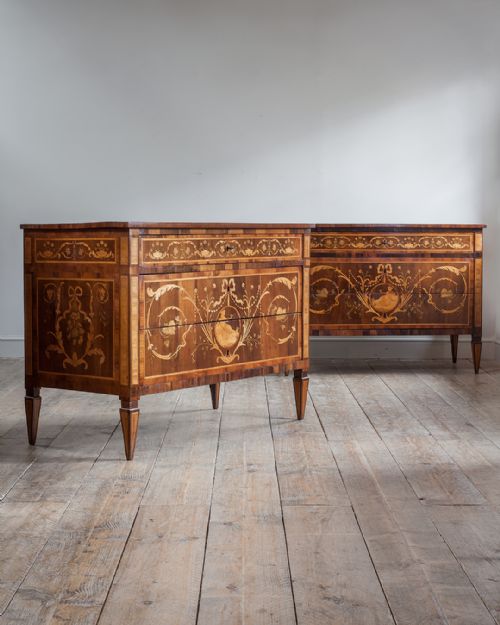
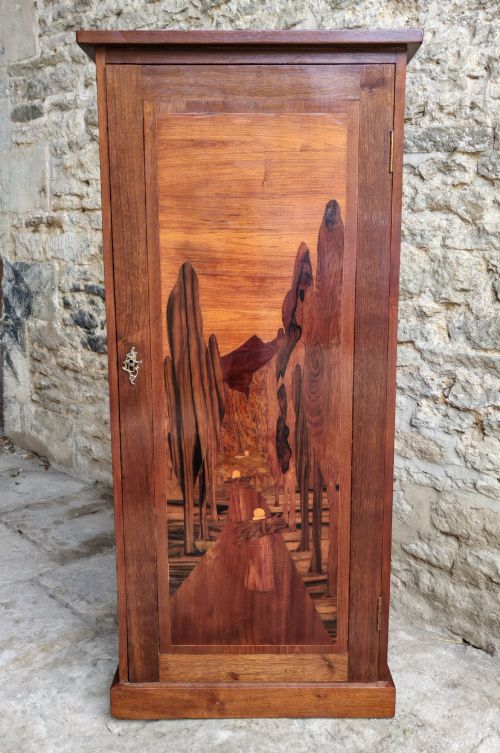
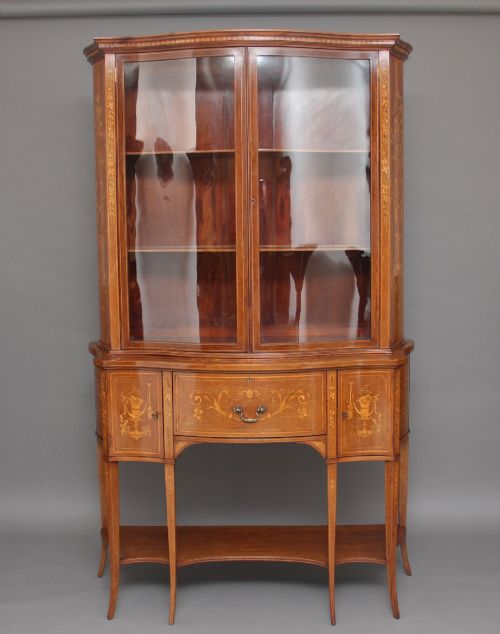


Warm Brown Marquetry Cabinet
A warm brown marquetry cabinet brings together rich timber tones and intricate floral or geometric veneers to anchor a room with distinct historical character.
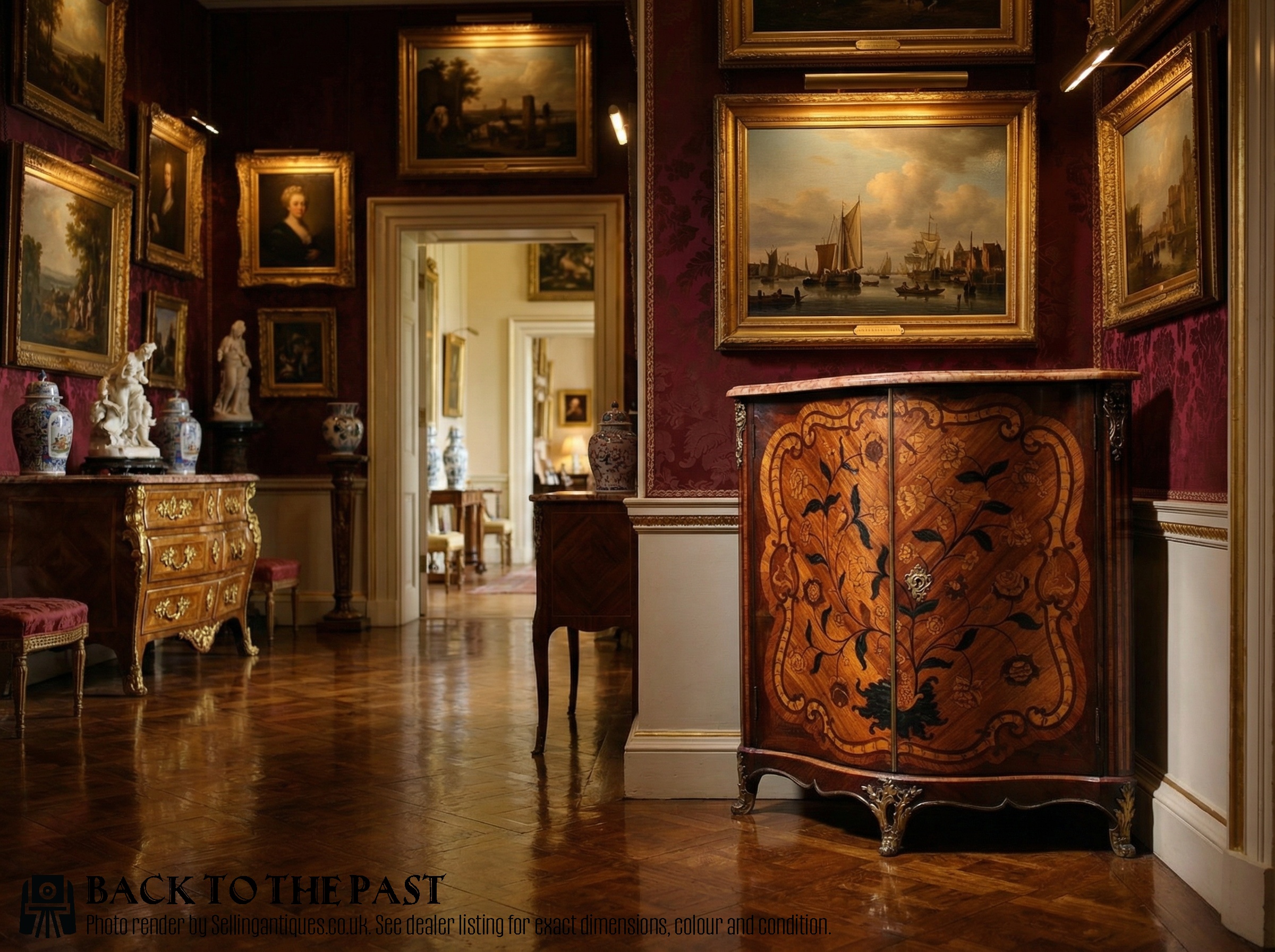
Warm Brown Marquetry Cabinet
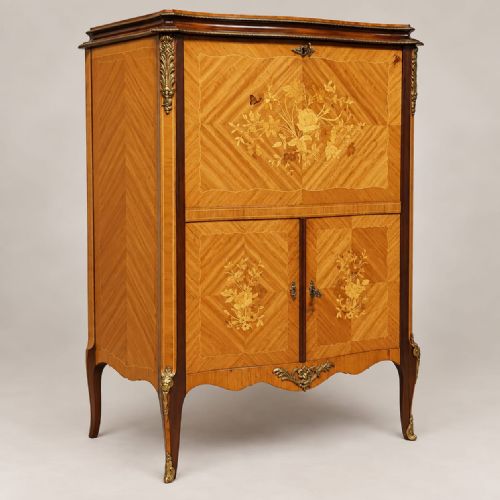
The dominant aesthetic relies on rich walnut, mahogany, and kingwood substrates embellished with contrasting inlaid veneers. These items function as practical storage or display vessels that simultaneously serve as focal points through their detailed wood patterns.
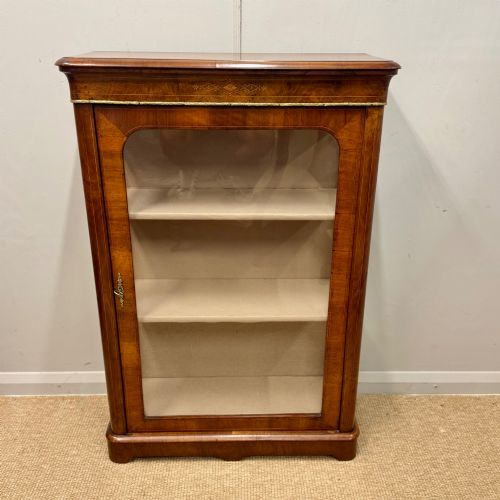
Origin influences form significantly, with English walnut pier pieces and mahogany bookcases appearing alongside French Louis XV and Louis XVI style commodes and side cabinets. Dutch marquetry cupboards and Italian Neoclassical demi-lune tables further broaden the available silhouettes.
Materials and construction methods
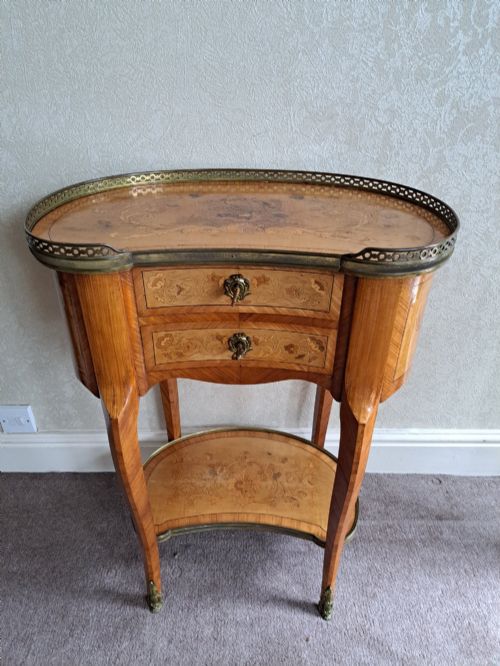
Cabinet makers utilised foundational timbers such as walnut, mahogany, and satinwood, applying sliced veneers of kingwood, tulipwood, and fruitwood to create detailed pictorial or geometric marquetry panels. Boxwood inlay frequently provides fine contrasting lines and borders around these central decorative motifs.
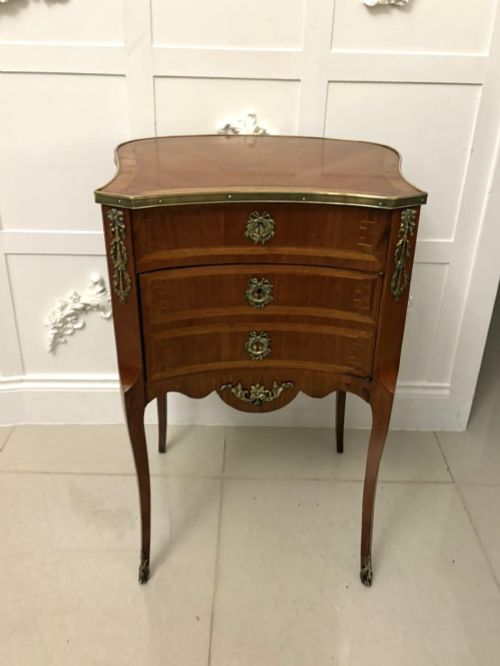
Structural embellishments often incorporate cast or gilt ormolu mounts, brass banding, and glazed doors, particularly on French-influenced display cabinets and credenzas. Marble tops appear on specific continental corner cupboards and commodes, adding weight and durable surface utility to the wooden chassis.
Walnut and mahogany serve as the primary structural timbers across nineteenth-century and Georgian listings, paired with satinwood and kingwood veneers.
Distinguishing quality across examples
Quality reveals itself primarily in the precision of the veneer cutting and the complexity of the marquetry design. Superior pieces display seamless integration of contrasting woods without excessive filler, maintaining sharp, clean lines in floral and scroll motifs.
The choice of primary timber and secondary framing timbers dictates the overall robustness and visual depth of the object. Finer items exhibit careful grain selection in the burr walnut or mahogany carcass, coupled with refined hardware such as original ormolu mounts and working brass locks.
Pietro Ferrario·Edwards and Roberts·Francois Linke·Galle
The Warm Brown Marquetry Cabinet Glossary
- Marquetry
- The art of forming decorative patterns by fitting together small pieces of veneer onto a structural surface. This technique allows cabinet makers to create elaborate floral, pictorial, or geometric designs using various coloured timbers.
- Pier cabinet
- A narrow cabinet designed specifically to fit against the wall space between windows. These pieces are common in Victorian interiors and frequently feature glass doors and velvet-lined interior shelving.
- Ormolu
- Gilded bronze ornamentation applied to furniture mounts, feet, and key escutcheons. This material gained widespread favour in French furniture design during the eighteenth and nineteenth centuries.
- Credenza
- A low cabinet or sideboard, often enclosed by three doors, used historically for storing and serving food or displaying plate. In nineteenth-century variants, the central door commonly opens to reveal fitted shelving.
- Kingwood
- A dense, heavy tropical timber featuring rich brown tones with darker violet-brown streaks. It is frequently utilised as a contrasting veneer in high-status cabinet making.
Warm Brown Marquetry Cabinet: Frequently Asked Questions
How do I care for walnut veneer?
Keep wooden cabinets away from direct sunlight and sudden temperature changes to prevent the veneer from drying out or lifting. Dust regularly with a soft, dry cloth and apply a quality microcrystalline wax sparingly to nourish the timber surface.
Avoid using silicone-based polishes or damp cloths, as excessive moisture penetrates old finishes and damages the delicate glues beneath the marquetry.
What rooms suit a pier cabinet?
Pier cabinets function well in living rooms, hallways, or studies where floor space is restricted against flat wall sections. Their narrow profiles allow them to hold books, ceramics, or glassware without dominating the room.
Pairing a walnut pier cabinet with traditional seating or placing it beneath a mirror creates a balanced focal point in a period interior.
How can I distinguish French styles?
French Louis XV style pieces typically feature curved cabriole legs, asymmetrical floral marquetry, and flowing ormolu mounts. Louis XVI style items introduce a transition toward neoclassical symmetry, featuring straight fluted legs and rectilinear proportions.
Examining the construction of the interior carcase and the style of the bronze mounts often confirms whether a cabinet follows provincial French tastes or metropolitan cabinet-making traditions.
Where were side cabinets placed?
Historical side cabinets found placement in dining rooms, drawing rooms, and hallways to hold tableware, linens, or writing materials. Their flat tops provided convenient surfaces for displaying decorative objects, lamps, or serving items during gatherings.
In modern settings, these versatile pieces serve similar functional roles while adding historical warmth and textural variety to contemporary room layouts.