

Antique Inlaid Cupboard Pair
An antique inlaid cupboard pair brings symmetrical balance and refined storage to a room, uniting matched timbers with detailed decorative work.
Antique Inlaid Cupboard Pair
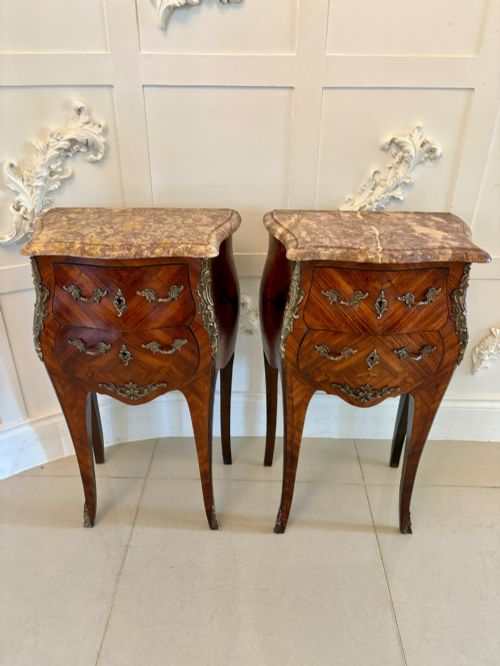
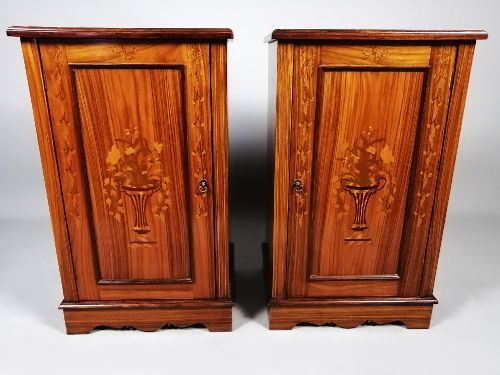
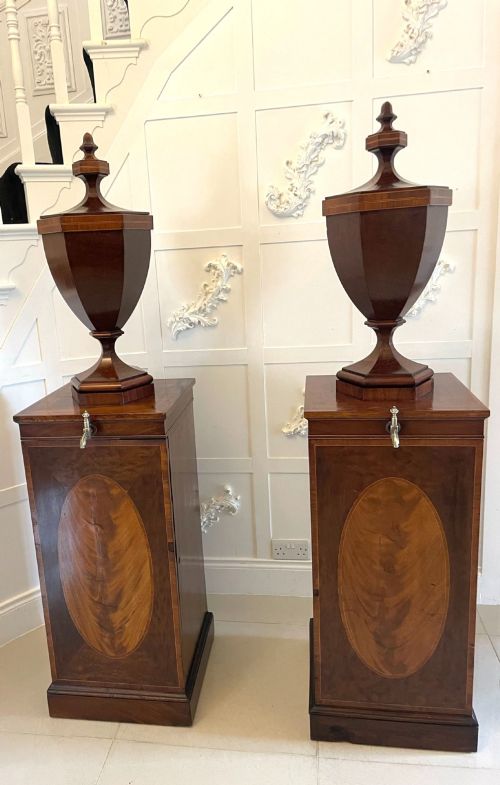
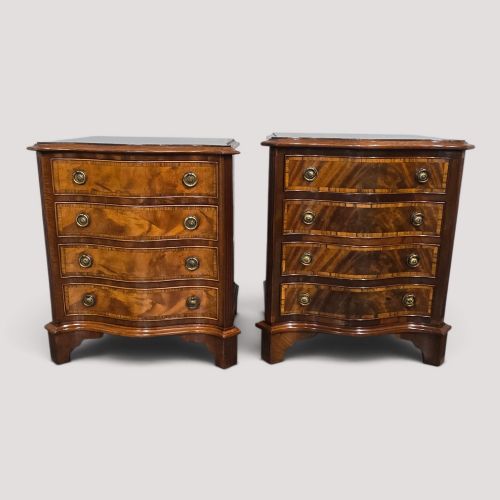
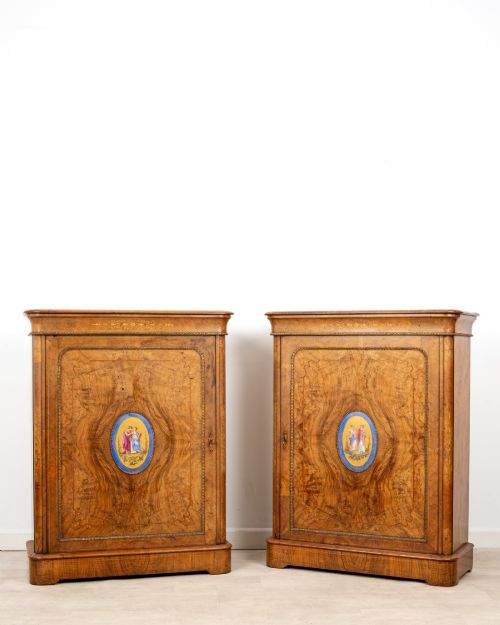
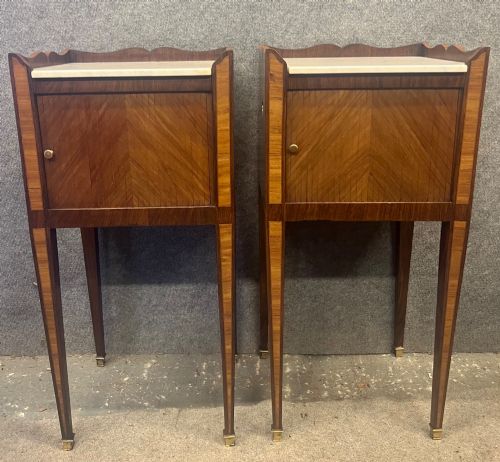
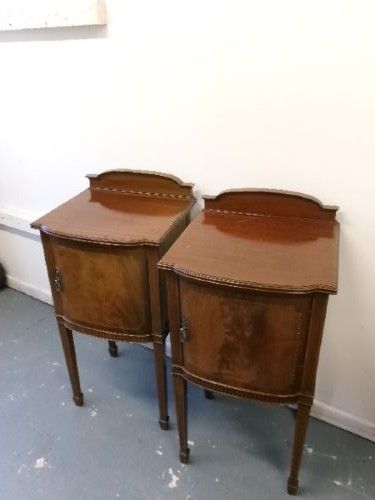
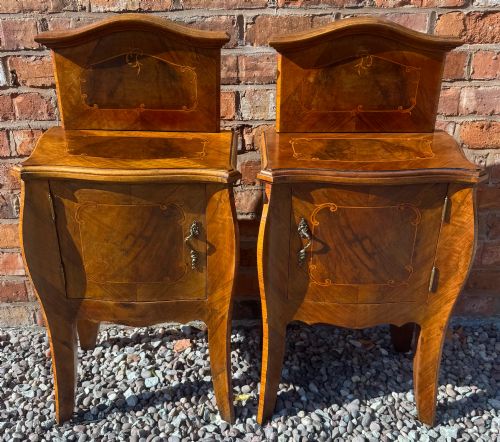
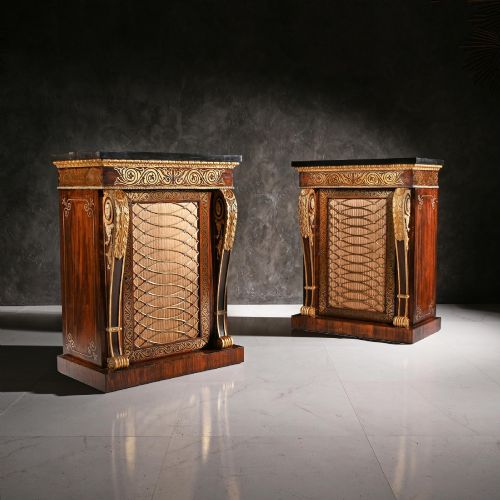
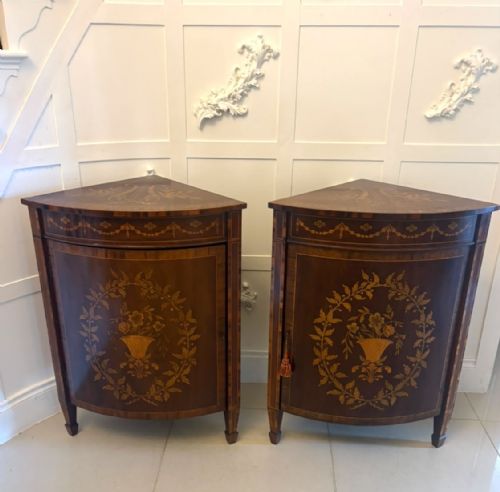
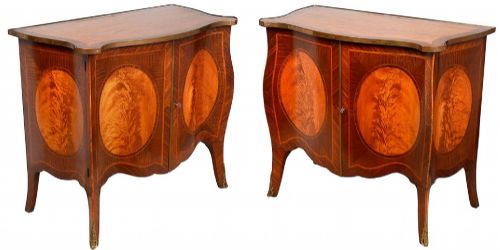
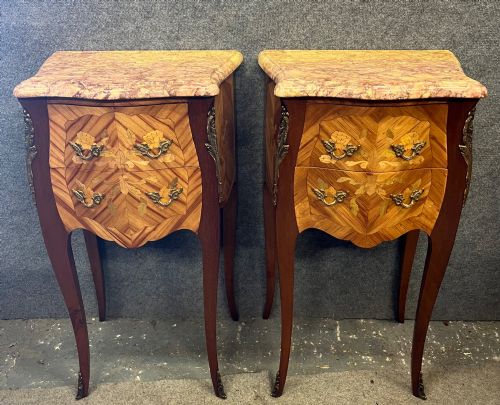
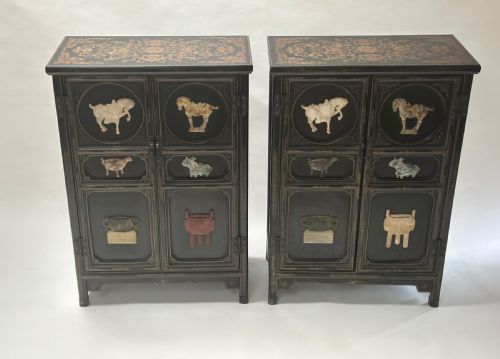
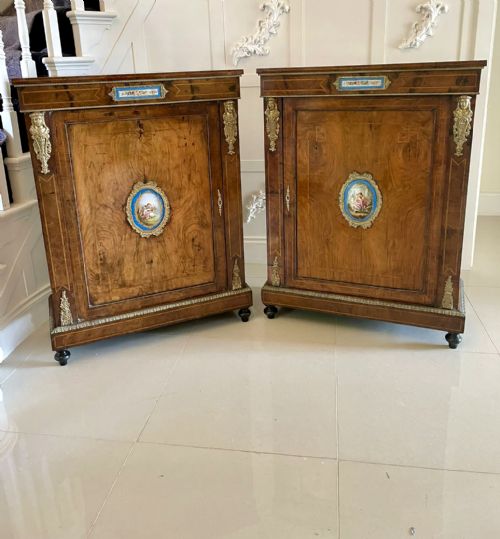
When searching for an antique inlaid cupboard pair, buyers encounter dual storage pieces designed predominantly for domestic use as bedside cabinets, lamp tables, side cabinets, and corner units. These items emerge chiefly from the nineteenth and early twentieth centuries, spanning Victorian, Edwardian, Regency, and Sheraton Revival styles alongside French influences.
The most common formats on this page are bedside cabinets and lamp chests constructed in pairs, offering matched aesthetics for symmetrical interior placement. Origin points span English workshops and French cabinet makers, utilising traditional cupboard configurations alongside drawer combinations.
Materials and Construction
Cabinet makers utilised dense hardwoods such as mahogany, walnut, rosewood, satinwood, and kingwood as the primary structural foundations for these items. Surfaces received decorative enrichment through contrasting wood veneers, parquetry, and pictorial marquetry patterns.
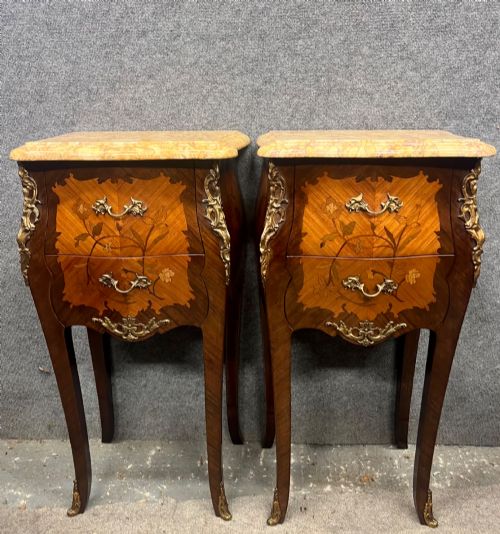
Detailing frequently incorporates cast brass handles, ormolu mounts, and inset marble tops, particularly on French pieces. Inlay work combines lighter woods set flush into darker timber grounds to delineate geometric borders or floral motifs.
Listings feature mahogany, walnut, rosewood, satinwood, and kingwood timbers alongside marble, brass, and porcelain elements across Victorian and Edwardian periods.
Evaluating Execution
Superior examples distinguish themselves through the precision of the timber matching and the sharpness of the inlaid veneer work. The integration of auxiliary materials, such as heavy marble slabs, porcelain plaques, or hand-chased ormolu mounts, separates standard production from exceptional pieces.
Structural integrity reveals itself in the drawer construction, door alignment, and the retention of original brass hardware. The fluidity of serpentine fronts and the complexity of multi-wood marquetry indicate higher workshop proficiency.
Louis Constantin Le Gaigneur·Edwards and Roberts
The Antique Inlaid Cupboard Pair Glossary
- Marquetry
- The art of forming decorative patterns from small pieces of wood veneer arranged on a ground. It frequently depicts floral or pictorial scenes across cabinet doors and tabletops.
- Ormolu
- Gilded bronze mounts applied to furniture for decorative accent. It appears on French pieces from the nineteenth and twentieth centuries.
- Parquetry
- Geometric mosaic woodwork formed by small veneer pieces arranged in grid or diagonal patterns. It is commonly found on French bedside tables.
- Encoignure
- A corner cabinet designed to fit flush into a room angle. These pieces often feature curved or bow fronts.
- Serpentine
- A furniture front characterised by a wavy contour that curves outward at the centre and inward at the sides. This shape demands advanced woodworking skill.
Antique Inlaid Cupboard Pair: Frequently Asked Questions
What is a pot cupboard?
A pot cupboard is a small bedside cabinet historically designed to house a chamber pot behind a single door. Many examples include an internal shelf or small drawer for related chamber accessories.
Today, these compact cupboards function primarily as bedside tables or lamp stands while retaining their historic compartment configurations.
How do I care for marble tops?
Marble surfaces require regular dusting with a soft cloth and immediate cleaning of liquid spills to prevent staining. Avoid acidic cleaners that etch the polished stone finish.
Applying a neutral stone wax periodically helps protect the surface from moisture marks while maintaining the natural sheen.
Are these cabinets truly matching pairs?
Most listings comprise original pairs built together in the workshop with corresponding timber grain and identical dimensions. Some listings feature very close matched pairs assembled later based on shared style and period characteristics.
Examining the internal construction and veneer patterns helps verify whether two independent cabinets were created as a set.
How do I identify Sheraton Revival pieces?
Sheraton Revival furniture dates mainly to the late nineteenth and early twentieth centuries, mimicking the neoclassical lightness of the eighteenth-century designer. These pieces feature satinwood or mahogany grounds with delicate floral marquetry and tapered legs.
Construction methods, secondary timbers, and hardware wear help distinguish these revival interpretations from original Georgian furniture.