
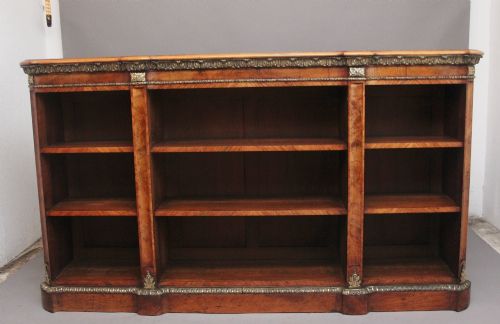
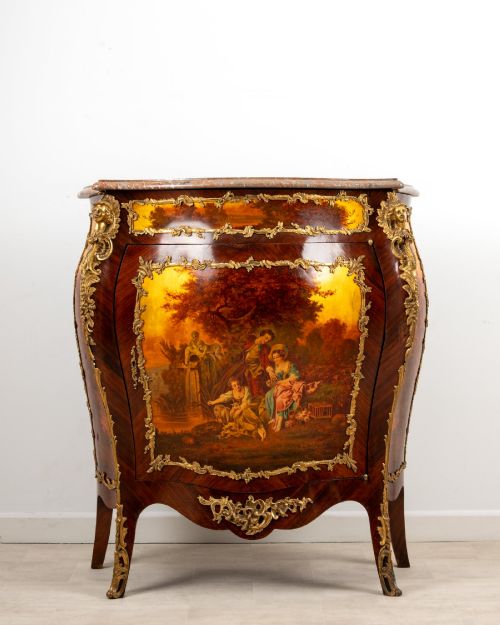
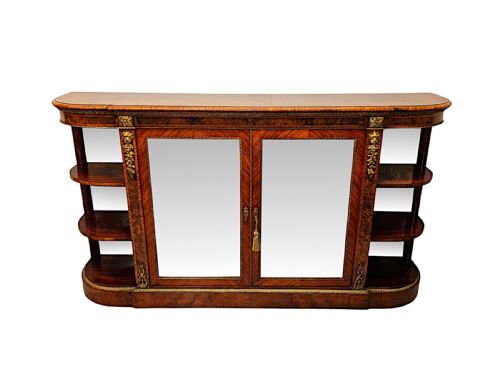
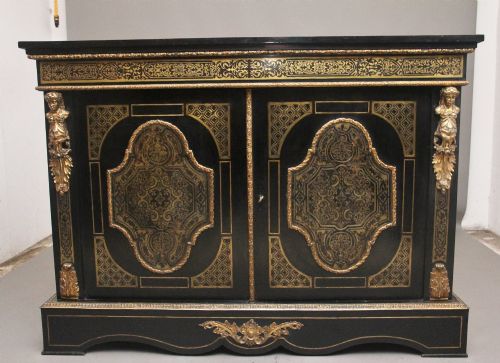
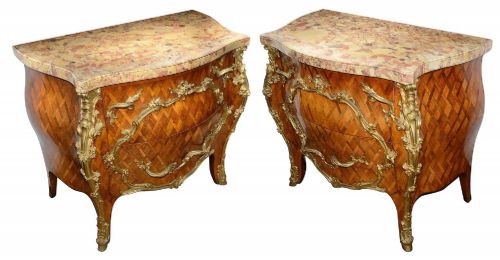
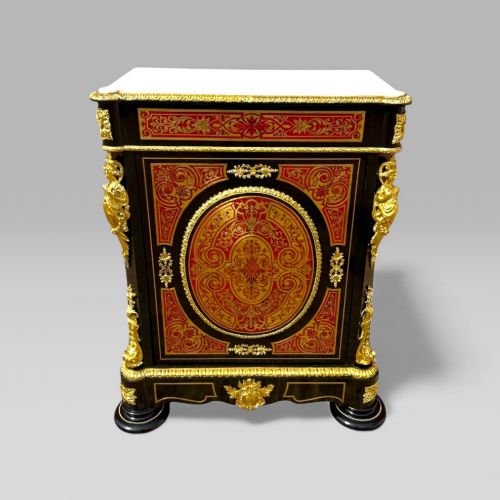


Gilt Bronze Side Cabinet
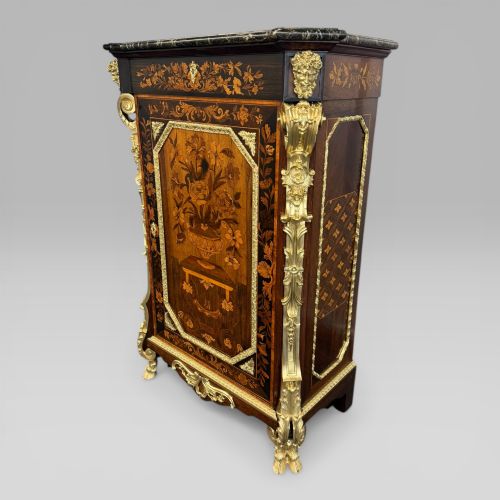
A gilt bronze side cabinet brings heavy nineteenth-century presence to a room through cast metal mounts and fine timber.
What these pieces are
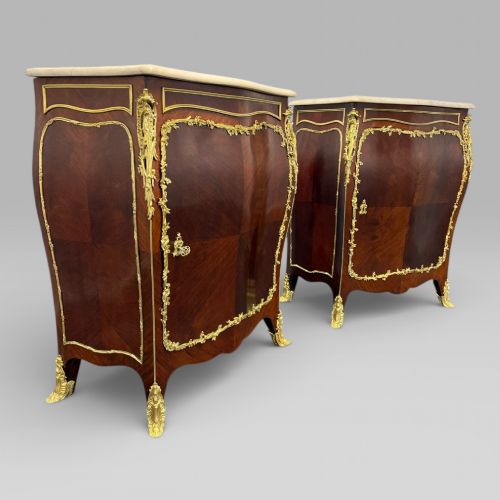
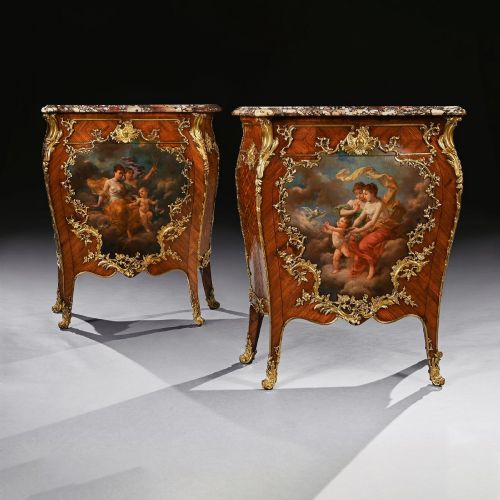
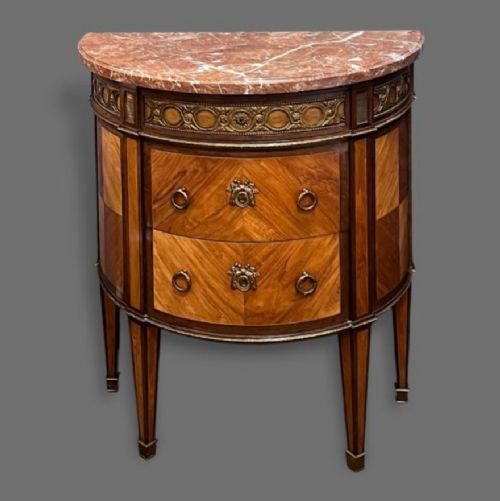
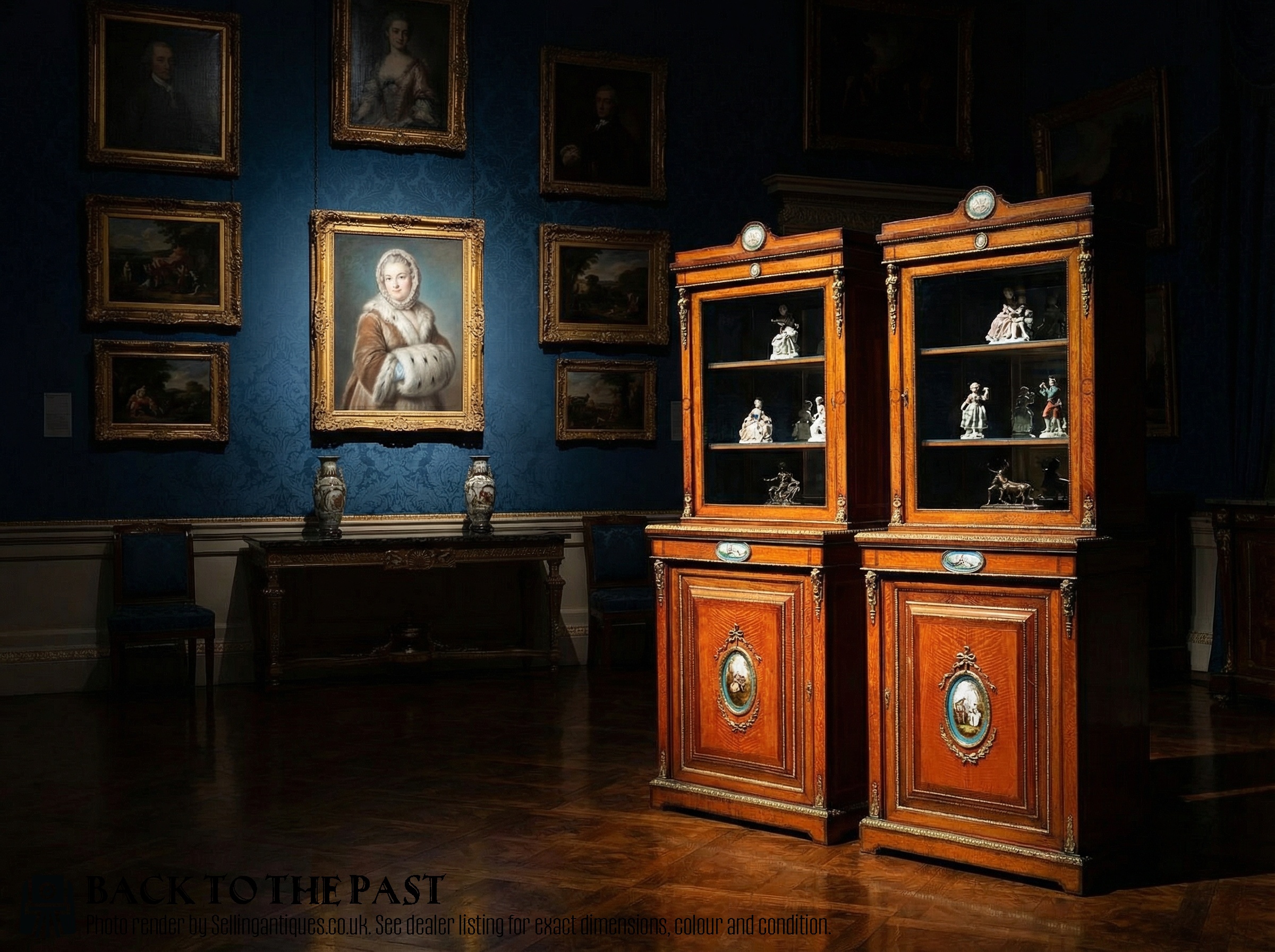
A gilt bronze side cabinet unites structural timber furniture with elaborate cast metal decoration, appearing most often in nineteenth-century French and English revival styles. These items function as display surfaces and enclosed storage, taking forms such as pier cabinets, credenzas, meubles d'appui, and narrow console vitrines. Buyers find pieces influenced by Louis XV and Louis XVI designs, alongside Victorian interpretations.
The construction typically incorporates a low-profile carcass designed to sit against a wall, frequently topped with marble. Marquetry and parquetry veneers feature heavily across the surfaces, framed by cast mounts at corners, feet, and friezes. Walnut, kingwood, satinwood, and ebony form the primary body timbers observed in these listings.
How they were made
Cabinetmakers applied decorative veneers of exotic timbers including kingwood, satinwood, ebony, and burr walnut onto sturdy carcases using intricate marquetry and parquetry patterns. Surfaces often incorporate porcelain plaques, glass panels, or boullework to enrich the visual texture. Timber preparation required careful cutting and matching of grain to achieve balanced geometric or floral designs.
Metalworkers cast bronze mounts using the lost-wax method or sand casting, then chased the details by hand before applying a gilt finish, also known as ormolu. These heavy mounts were secured to the wooden cabinets with brass screws or pins, accentuating the structural lines and protecting vulnerable corners.
Retail Price Guide 2026
Typical UK retail prices for gilt bronze side cabinet, calculated from the Sellingantiques database of over a million retail prices indexed since 2003. This retail price guide relies exclusively on Sellingantiques data; no external sources or auction records are used, so the figures do not describe the wider market.
Some nineteenth-century makers hid shallow velvet-lined drawers just beneath the marble top for secret correspondence.
What varies in quality
The refinement of the cast bronze ormolu mounts dictates much of the visual success, separating sharply detailed, hand-chased metalwork from softer, commercially cast alternatives. Crispness in the acanthus leaves, floral swags, and figural elements shows the hand of a skilled chaser working after the foundry process.
Timber selection and veneer execution define the body of the cabinet, with complex multi-wood marquetry requiring precise cutting and alignment. The integration between the heavy metal mounts and the wooden carcass reveals the maker's precision, where mounts sit flush against shaped contours without gaps.
Diehl·Maison Soubrier
The Gilt Bronze Side Cabinet Glossary
- Ormolu
- Gilt bronze mounts applied to furniture. The technique involves applying a gold amalgam to cast bronze before heating to drive off the mercury.
- Marquetry
- Inlaid wood veneers forming decorative pictures or patterns. Craftsmen piece together contrasting timber veneers to create floral or geometric designs.
- Parquetry
- Geometric wood inlay forming repeating patterns such as cubes or chevrons. This technique relies on precision cutting of small veneer blocks.
- Meuble d'appui
- A French term for a sideboard or low cabinet for supporting objects. These pieces typically feature doors enclosing shelves.
- Vitrine
- A glass-fronted cabinet designed for displaying collectibles. The construction emphasises visibility through glazed doors or side panels.
Frequently Asked Questions
What is a gilt bronze side cabinet?
A gilt bronze side cabinet is a nineteenth-century storage or display piece featuring cast metal mounts.
These items draw on French revival aesthetics and use fine timbers like kingwood and walnut.
How do I identify Louis XVI style?
Louis XVI style pieces show straight tapered legs, neoclassical symmetry, and restrained geometric mounts.
Cabinetmakers working in the nineteenth century revived these classical proportions for sophisticated drawing rooms.
Where were these cabinets used?
These cabinets stood against drawing room and parlor walls to display porcelain, glass, and small valuables.
The marble tops provided durable surfaces for decorative objects and lamps.
How do I care for ormolu mounts?
Ormolu mounts require gentle dusting with a dry, soft cloth to prevent abrasion to the gilt surface.
Avoid chemical polishes that strip the gold layer from the cast bronze beneath.