




Inlaid Wooden Corner Cupboard
An inlaid wooden corner cupboard makes economical use of difficult space while showing off cabinet-making skill.
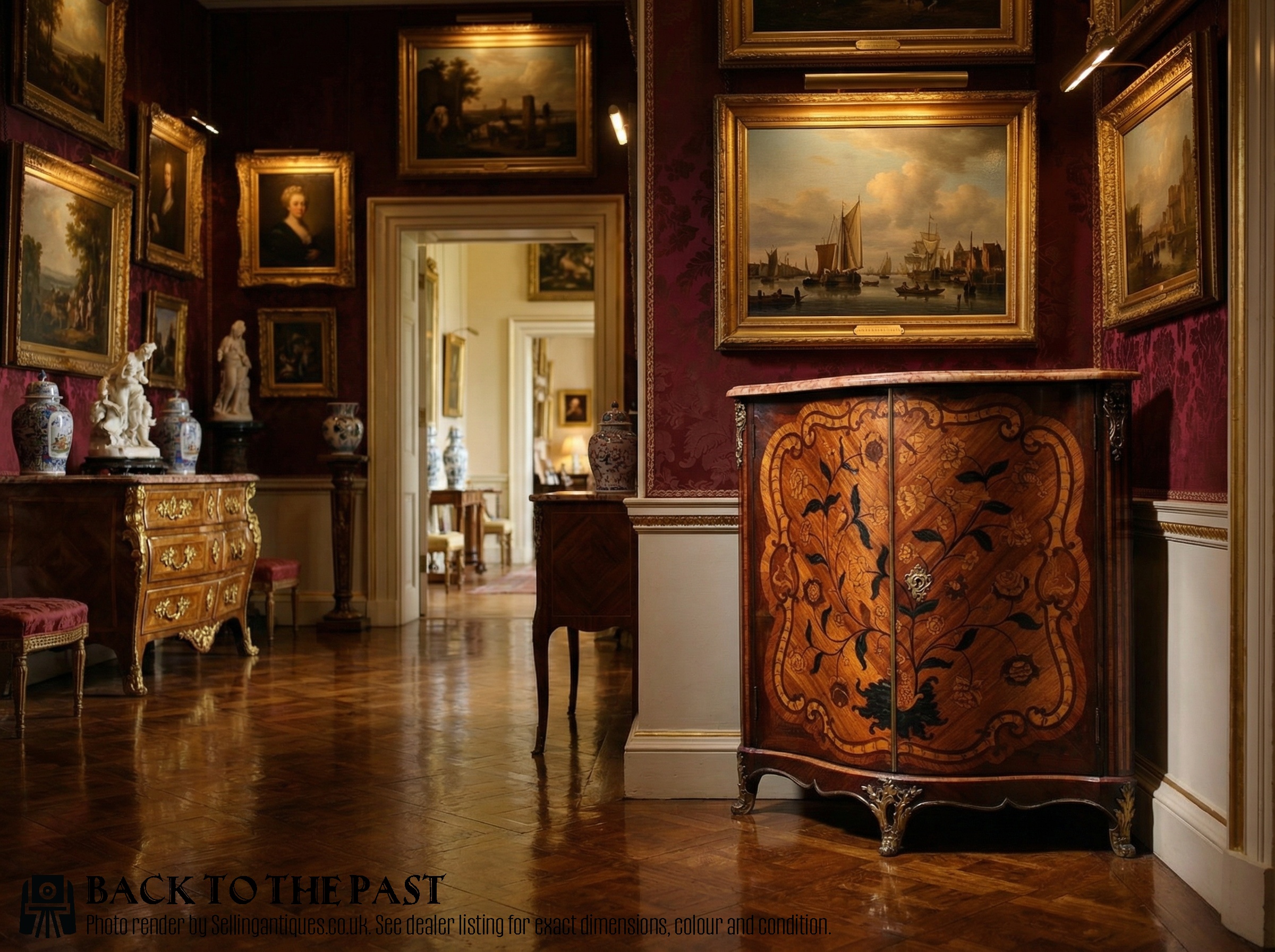
Inlaid Wooden Corner Cupboard
An inlaid wooden corner cupboard provides practical storage that fits neatly into the intersection of two walls, making use of otherwise redundant room. The selection here leans heavily towards Georgian and 18th century pieces, alongside later 19th century interpretations.
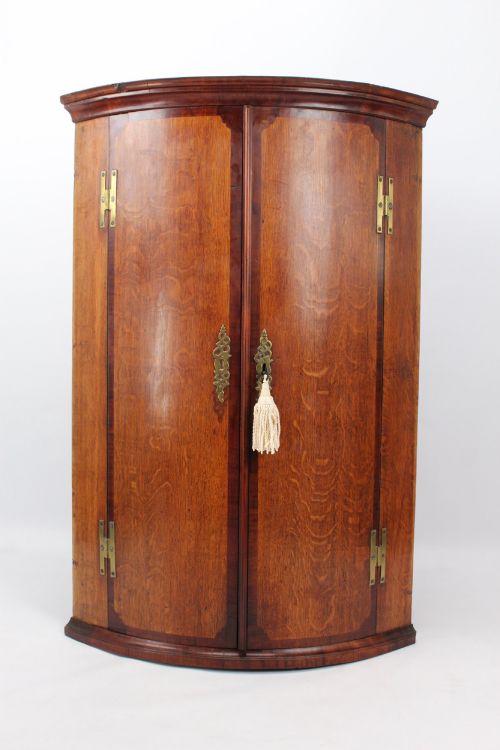
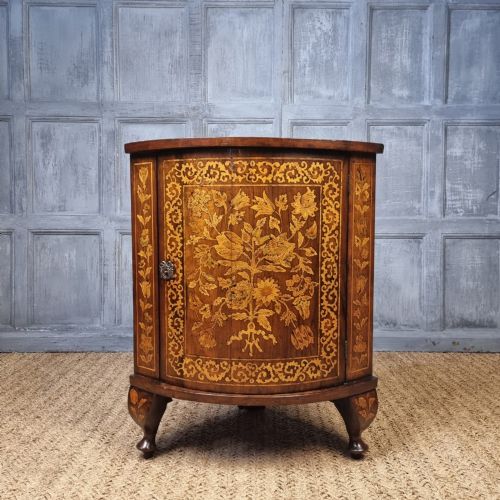
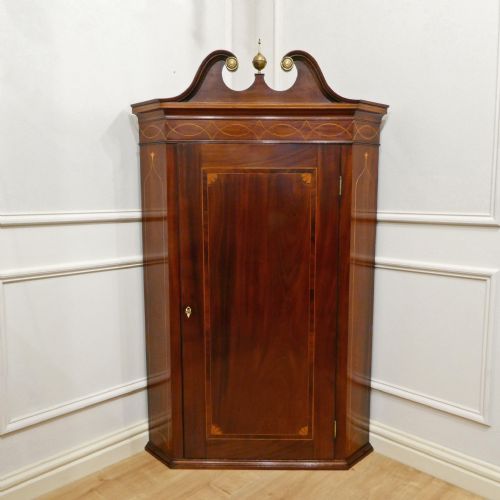
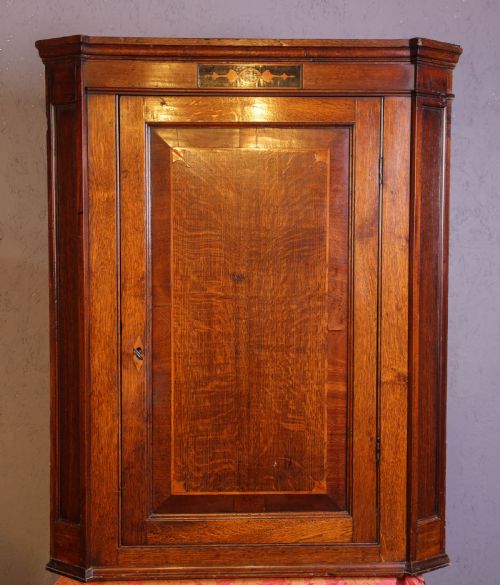
Buyers will encounter both hanging wall cabinets and floor-standing versions across these listings. Most examples present a bow front or flat front configuration in mahogany or oak.
The styles span from George III and Sheraton Revival to Dutch marquetry and French rococo. This variety ensures both modest hanging cupboards and grand standing cabinets are represented.
How they were made
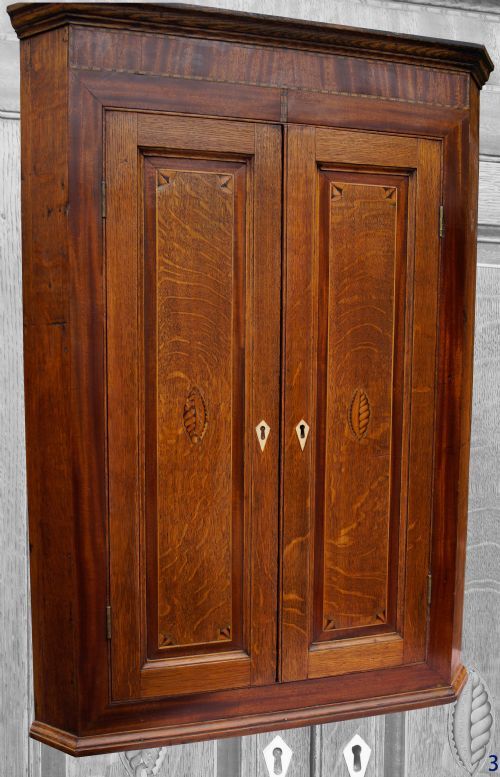
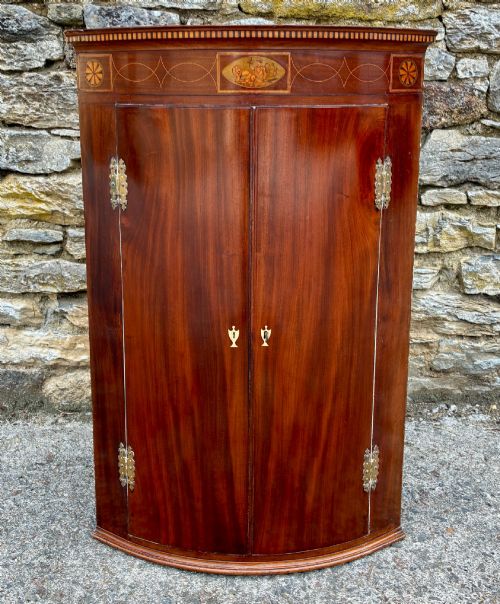
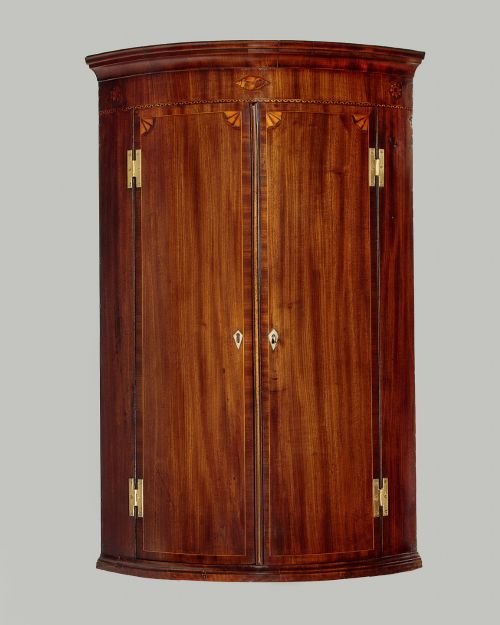
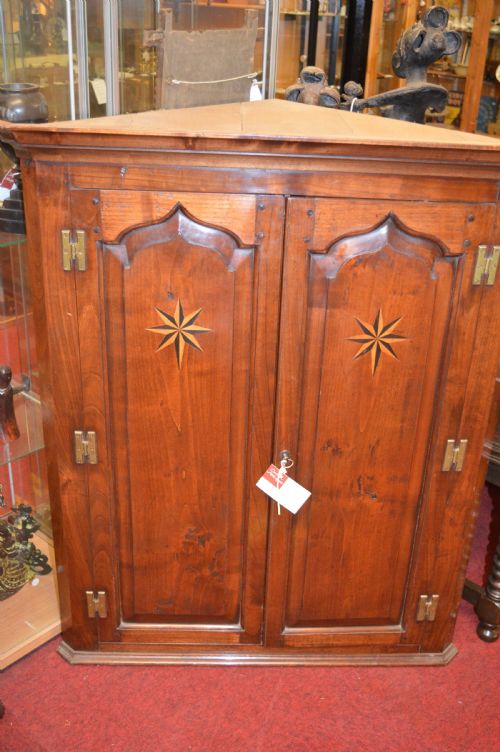
Cabinet-makers built these cupboards primarily using solid timbers like mahogany and oak, frequently embellished with contrasting veneers and stringing. Boxwood and satinwood inlay create crisp geometric patterns or delicate floral motifs across the door panels.
Marquetry techniques appear on Dutch and continental pieces, contrasting darker woods with lighter elements. Brass hardware, including hinges and escutcheons, secures the doors and adds functional detail.
Georgian examples outnumber other periods in this selection, supported by 19th century and Regency alternatives.
What varies in quality
Quality rests upon the selection of timber grain and the precision of the inlay work. Finer examples display tightly figured mahogany or carefully matched oak panels that show deliberate planning by the maker.
The crispness of the boxwood and satinwood stringing distinguishes better workshops from standard production. Interior fittings, such as shaped shelving and original brass H-hinges, elevate the standing of a piece.
The Inlaid Wooden Corner Cupboard Glossary
- Bow front
- A convex curved cabinet front that projects outward from the corners. This shape requires advanced woodworking skill to bend or shape the timber and frame.
- Marquetry
- The art of applying pieces of veneer to a structure to form decorative patterns and pictures. It differs from inlay by assembling the entire design on a backing before gluing.
- Stringing
- Thin lines of contrasting wood inlaid into grooves on the cabinet surface. This technique creates delicate borders around panels and drawer fronts.
- Pediment
- The decorative structure placed above the main body of a standing cabinet. Swan neck pediments feature two opposing curved sections ending in scrolls.
- Escutcheon
- A protective plate surrounding the keyhole. These brass fittings prevent the wood from splitting around the lock.
Inlaid Wooden Corner Cupboard: Frequently Asked Questions
Are these cupboards meant to hang on the wall?
Many examples on this page are designed as hanging wall cabinets with integrated brass fixing brackets. These units suit smaller rooms where floor space remains at a premium.
Conversely, floor-standing models rest directly upon the ground and often provide taller storage capacity with multiple internal shelves.
How do I distinguish between Georgian and later revival pieces?
Georgian pieces display the joinery methods and timber patination characteristic of the 18th and early 19th centuries. Their construction relies on hand-cut dovetails and older secondary woods.
Revival pieces, such as Sheraton Revival items from the late 19th century, often utilise machine-sawn timber and brighter, less oxidised veneers.
What is the difference between a corner cupboard and a side cabinet?
Corner cupboards feature a triangular or splayed plan specifically engineered to fit snugly into a 90-degree room junction. Their doors and fronts are angled away from the wall.
Side cabinets possess flat backs and rectangular footprints built to stand flush against a single flat wall surface.
How should I clean the wood surface?
Dust the timber regularly with a soft, dry cloth to prevent particulate accumulation. Avoid silicone-based polishes that can build up a hazy film over the original finish.
Apply a traditional beeswax sparingly if the wood appears dry, buffing it gently to maintain the natural sheen.