





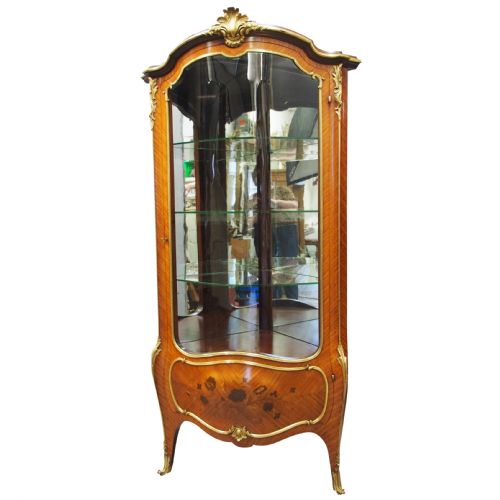
Antique French Corner Cabinet
An antique french corner cabinet uses forgotten angles to maximum effect, bringing polished timber and refined mounts to rooms that otherwise waste space.
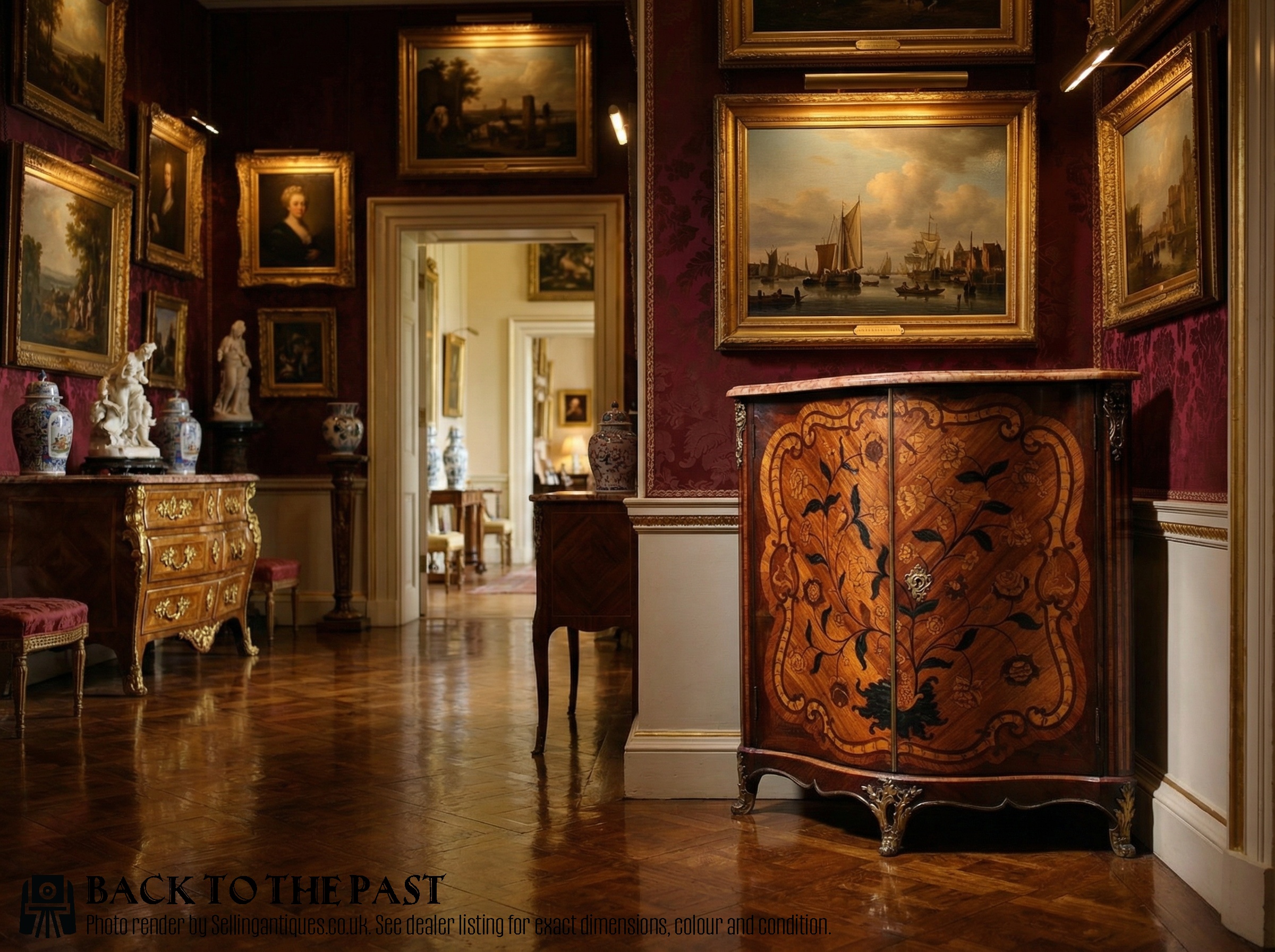
Antique French Corner Cabinet
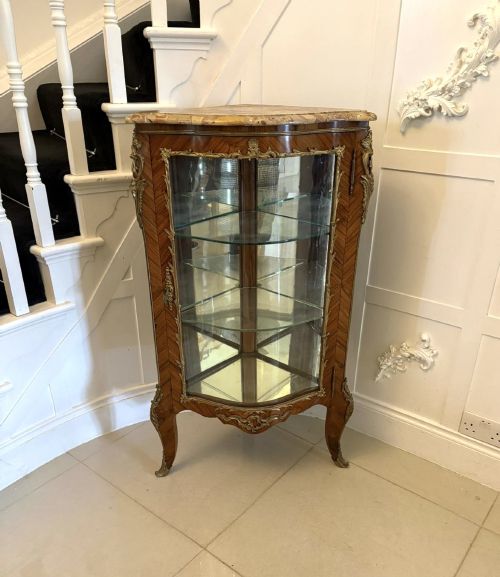
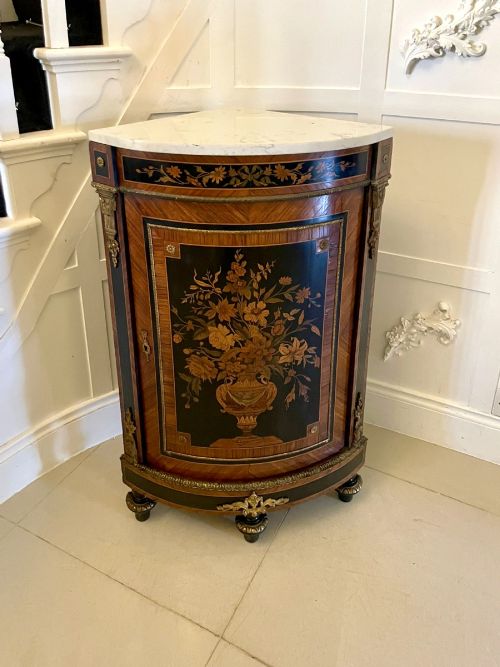
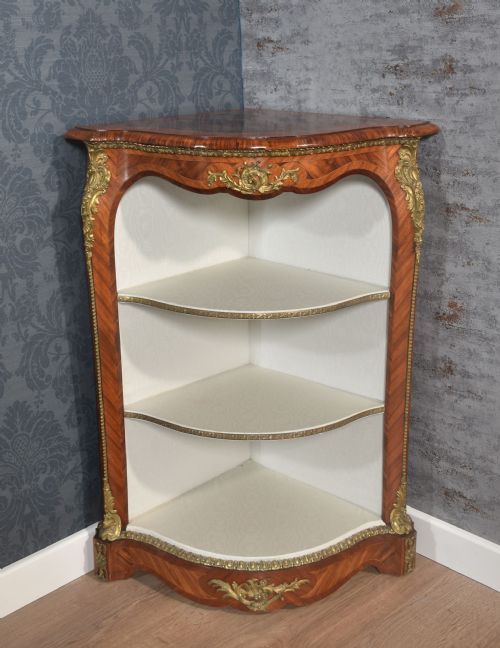
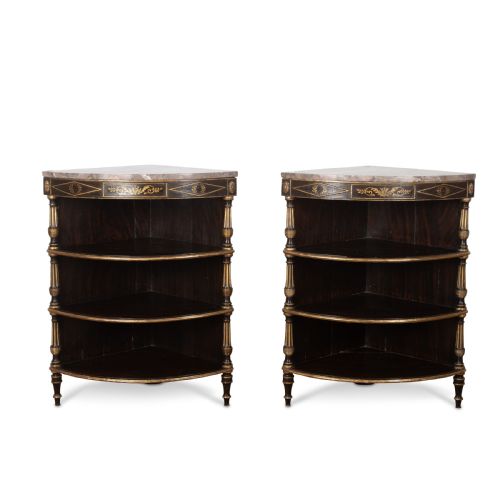
An antique french corner cabinet turns awkward room intersections into focal points, appearing in forms from glazed display pieces to enclosed cupboards. The pieces seen here span the eighteenth century, the nineteenth century, and the early twentieth century.
Makers shaped these items to fit snugly into ninety-degree angles, utilising otherwise dead space for storage or display. Common formats include serpentine display cabinets, bow-front cupboards, and marble-topped side pieces.
French Provincial and revival revivalisms like Louis XV and Louis XVI dominate the aesthetic evidence. Walnut, kingwood, and oak provide the primary structural carcasses for these corner furnishings.
What Varies in Quality
The sophistication of the timber veneers and the crispness of the bronze or ormolu mounts separate standard joinery from exceptional workshop output. Hand-cut marquetry patterns and thick, veined marble slabs indicate higher production standards.
Structural integrity at the wall-meeting mitres and the smoothness of door alignment dictate daily utility. Superior pieces maintain balanced proportions across curved glass panels and tight joints on shaped shelves.
Several examples utilise dumb waiter configurations, proving that nineteenth-century dining rooms required corner furniture to hold second helpings.
The Antique French Corner Cabinet Glossary
- Ormolu
- Gilt-bronze mounts applied to furniture edges and corners. This decorative technique added metallic contrast to dark timber surfaces.
- Marquetry
- Fitted pieces of wood veneer arranged in pictorial or geometric patterns. Craftsmen utilised contrasting tones of kingwood and tulipwood to create depth.
- Serpentine
- A furniture front curving inward and outward in a continuous wave. This undulating shape requires skilled carpentry to execute properly.
- Bombe
- A swollen, convex outward curve on the lower section of a cabinet. The profile swells outwards before tapering toward the base.
- Parquetry
- Geometric wood veneer patterns resembling tiling. Artisans arranged small blocks of timber to form repeating shapes across the cabinet doors.
Antique French Corner Cabinet: Frequently Asked Questions
How do I fit one into a modern room?
Measure the wall depth and corner angle carefully before placing your cabinet, as French proportions often demand specific clearance. Position them away from direct heat sources to protect vulnerable wood veneers and marble joints.
Style the surrounding walls to let the angled silhouette command the corner without feeling cramped by adjacent seating.
What is the difference between vitrines and cupboards?
Vitrines feature glass panels designed to showcase porcelain and glassware, while cupboards utilise solid wooden doors to conceal stored items. Both share the same triangular footprint tailored for room corners.
Display cabinets prioritise visual lightness with glazed doors, whereas cupboards offer robust, enclosed shelving.
How do I care for the marble top?
Wipe the marble surface regularly with a damp cloth and mild soap to prevent staining from liquids or oils. Avoid acidic cleaning products that can etch the polished stone finish.
Use coasters and protective pads beneath heavy decorative objects to prevent scratching the surface.
Can I date these by their mounts?
Ornate ormolu mounts often reflect the revival periods of the nineteenth century, mirroring eighteenth-century court aesthetics. Cast bronze details became heavier and more mechanically produced as the Victorian era progressed.
Examining the casting quality and fixing screws helps distinguish period mounts from later replacements.