



Marble Top Corner Cupboard
A marble top corner cupboard brings functional triangular storage and a cool stone surface together, shaped for the awkward angles of a room.
Marble Top Corner Cupboard
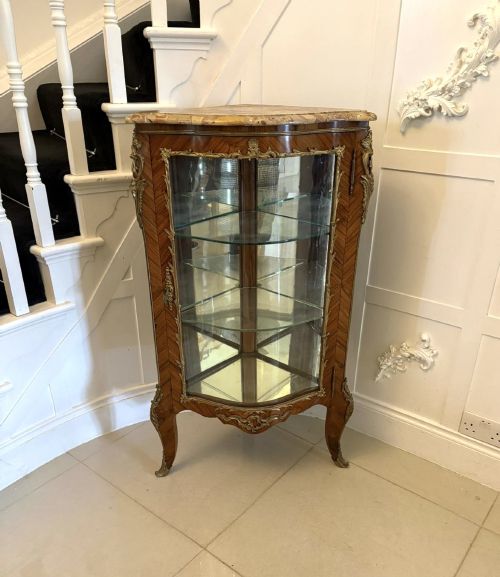
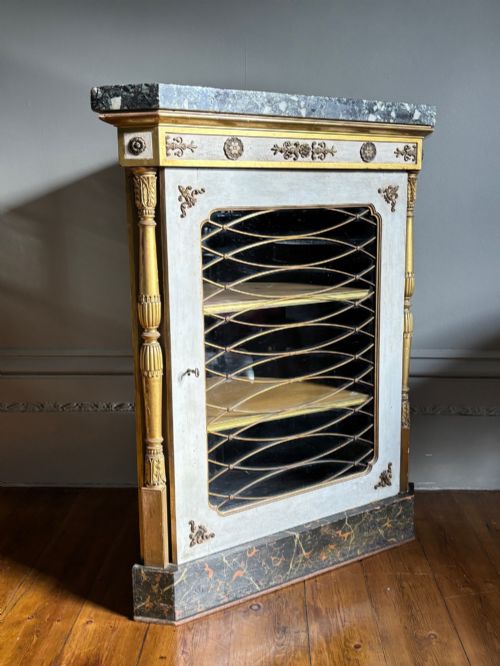
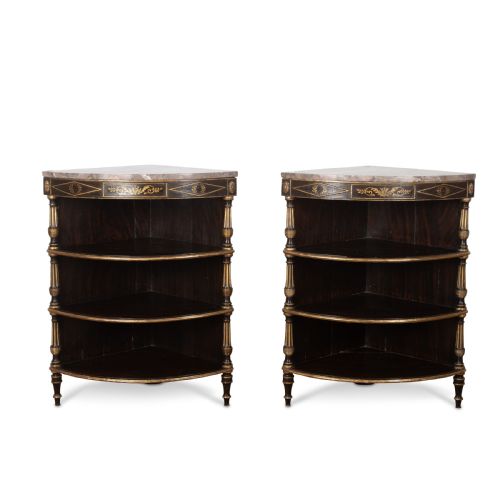
A marble top corner cupboard is a fitted storage cabinet designed specifically to occupy the junction of two walls, making practical use of dead space. The pieces appearing here span eras from the eighteenth century through the Victorian period and into the twentieth century, showing both British and continental European origins.
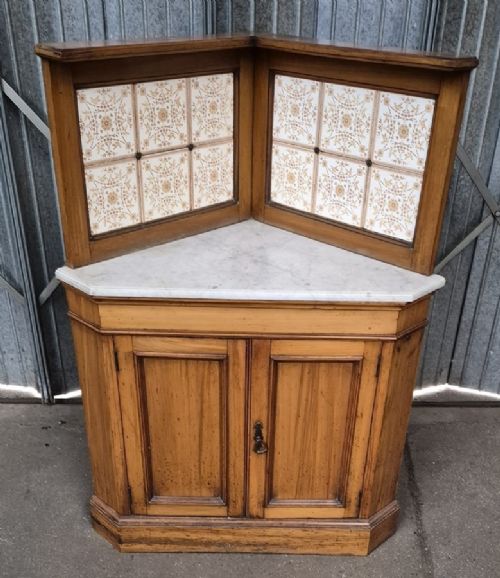
You will most commonly meet pieces styled after French revivals, featuring curved serpentine fronts or straight angles, alongside simpler washstands and display cabinets. These cabinets often incorporate glass doors, open shelves, or enclosed cupboards beneath the defining stone slab.
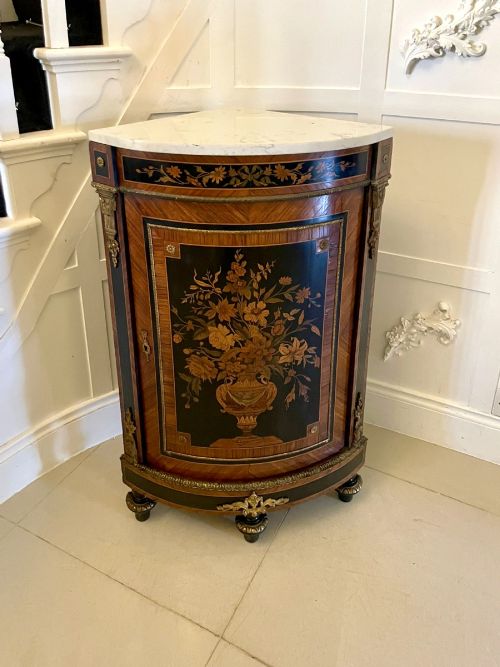
Cabinetmakers constructed these items from timber substrates such as walnut, mahogany, and kingwood, frequently embellished with marquetry or parquetry. The addition of marble provides a durable, heat-resistant surface that elevates an otherwise utilitarian furniture form.
How they were made
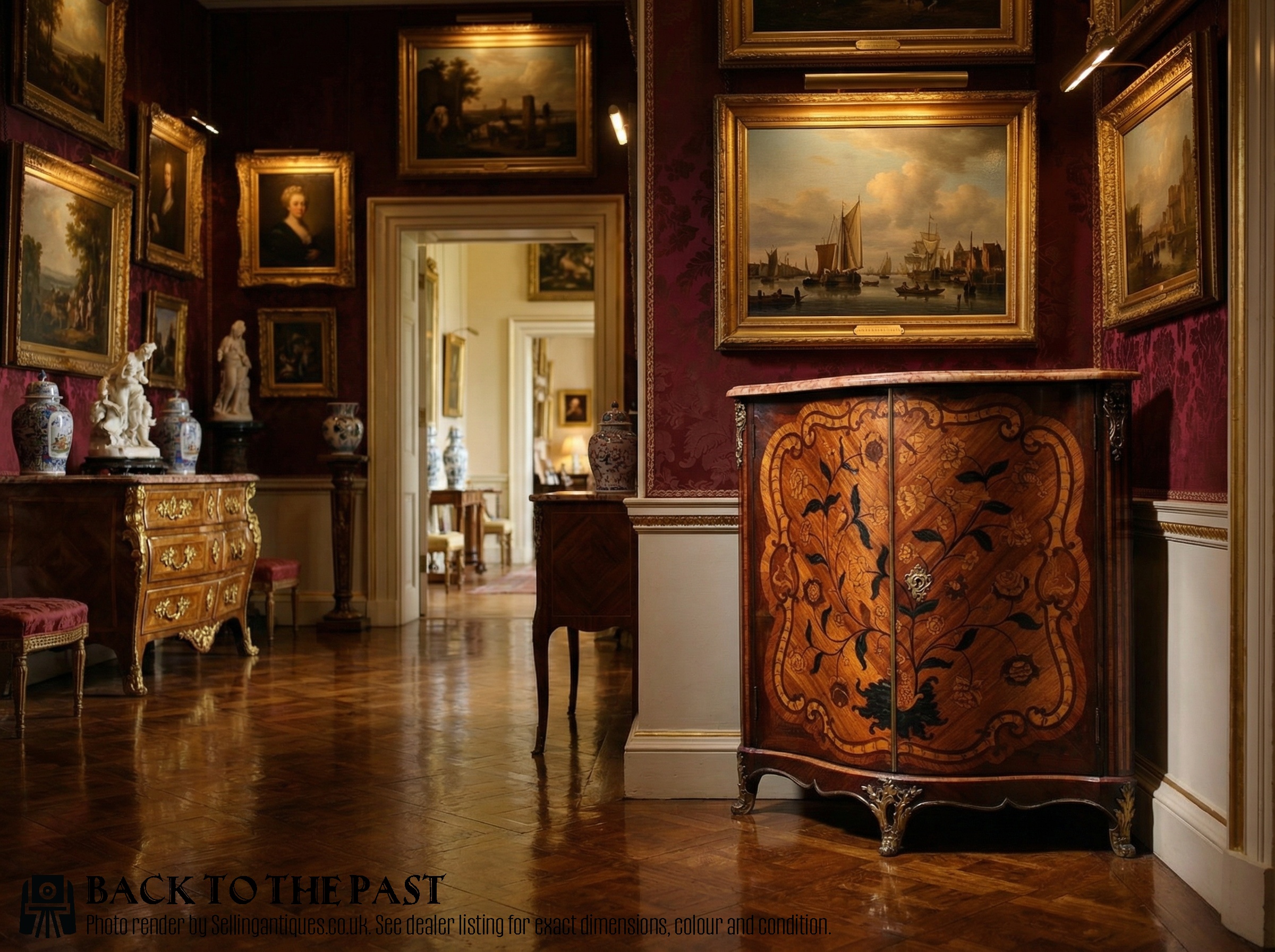
Makers built the carcases of these corner cupboards using solid native and exotic timbers, applying intricate veneers of tulipwood, kingwood, and walnut in geometric parquetry or floral marquetry patterns. Carpenters utilised traditional joinery techniques to ensure the rigid three-sided structure could support the substantial weight of a fitted stone slab.
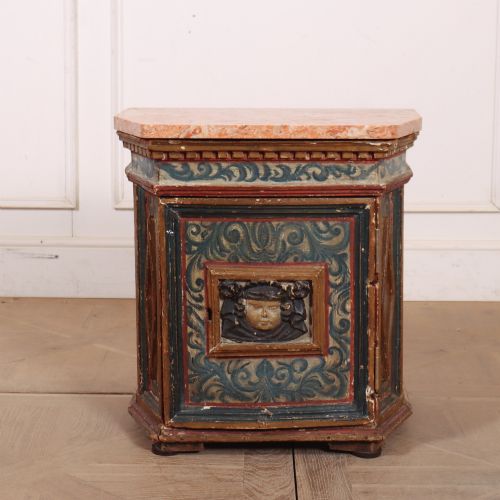
Ornamentation frequently includes cast or chased ormolu mounts, bronze accents, and hand-painted decorations applied directly to the wood surfaces. The heavy stone tops were precisely cut to follow the complex curves of serpentine or bow-fronted cabinet frames, resting flush upon the timber mouldings.
Some nineteenth-century washstands managed to look entirely aristocratic while secretly holding someone's morning washing water.
What varies in quality
The distinction between ordinary and exceptional pieces rests upon the precision of the cabinetwork and the choice of surface materials. Superior examples display seamless veneer matching across angled joints, finely figured timber grains, and heavy, well-cast ormolu mounts that integrate harmoniously with the design.
The quality of the stone slab itself influences the overall character of the piece, with thicker, richly veined marble indicating higher ambition. Simpler utility washstands rely on straightforward ceramic and painted finishes, whereas revival pieces demonstrate intricate inlay work and sculptural bronze detailing.
Walker & Sons·Shoolbred
The Marble Top Corner Cupboard Glossary
- Ormolu
- Gilded bronze mounts used decoratively on furniture frames. This French technique adds metallic contrast to dark wood surfaces.
- Marquetry
- Decorative patterns created by fitting thin pieces of wood veneer into a design. It often depicts floral or geometric motifs across the cabinet doors.
- Parquetry
- Geometric mosaic woodwork formed by small veneer tiles. This technique creates repeating patterns like cubes or chequers on flat panels.
- Serpentine
- A furniture front curving inward centrally and outward at the sides. This shape demands advanced woodworking skill to match the marble top.
Marble Top Corner Cupboard: Frequently Asked Questions
Why use a corner cupboard?
These cabinets fit neatly into unused room junctions, offering storage without dominating the floor space.
The triangular footprint makes them particularly useful in smaller rooms or hallways where rectangular furniture would obstruct movement.
What is a marble top washstand?
A washstand is a specialised type of cabinet designed to hold washing basins and toiletries.
The stone surface provides a waterproof and easy-to-clean area suited to daily washing routines.
How do I date a cabinet?
Dating relies on stylistic clues, construction methods, and the specific timber veneers used.
Eighty-century pieces often feature simpler painted or inlaid designs, while Victorian and revival items lean towards heavier ormolu mounts and exotic woods.
Can these hold heavy items?
The internal wooden shelving and sturdy corner bracing provide reliable support for everyday household objects.
However, the primary structural weight comes from the thick stone slab resting on top.