



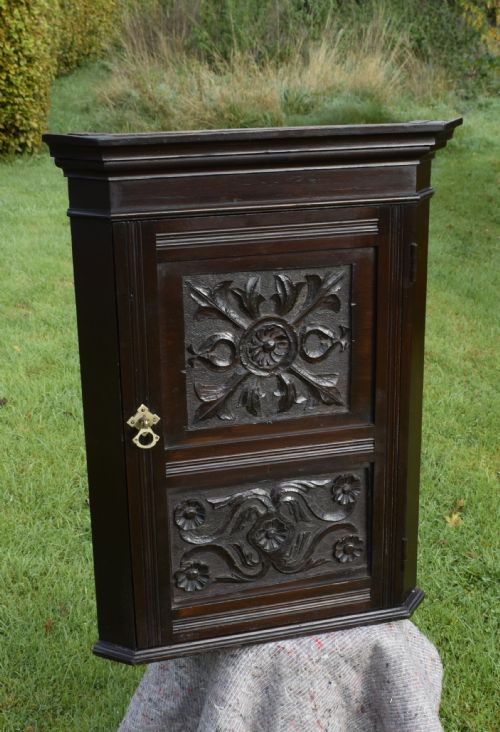


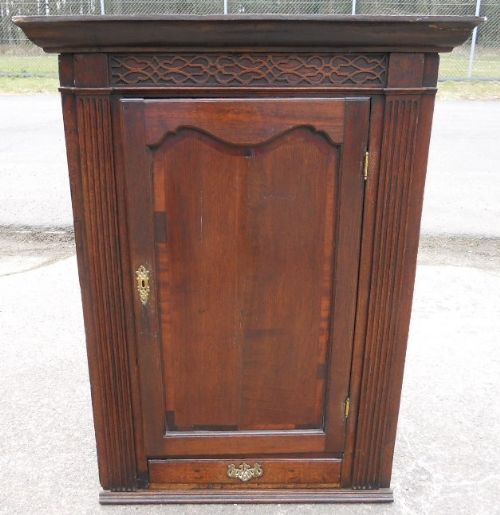

Carved Panel Corner Cabinet
A carved panel corner cabinet brings architectural timberwork to unused angles of a room, offering sturdy storage built to last.
Carved Panel Corner Cabinet
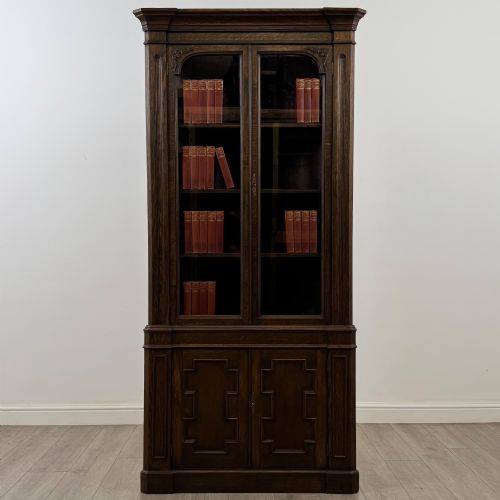
A carved panel corner cabinet is a fitted or freestanding storage unit designed specifically to occupy the junction of two walls, making practical use of awkward angles. These pieces range from compact wall-hanging cupboards to tall floor-standing examples, all sharing a triangular footprint that tucks neatly into a room.
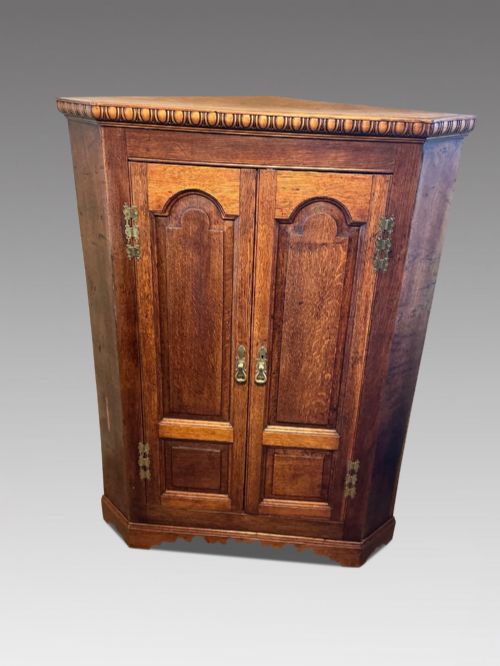
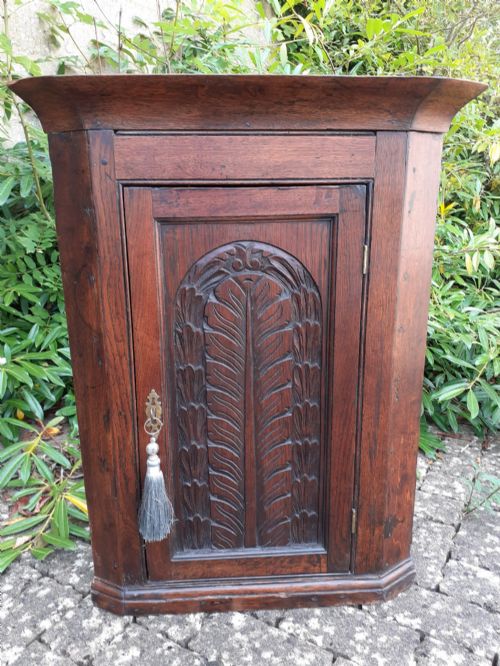
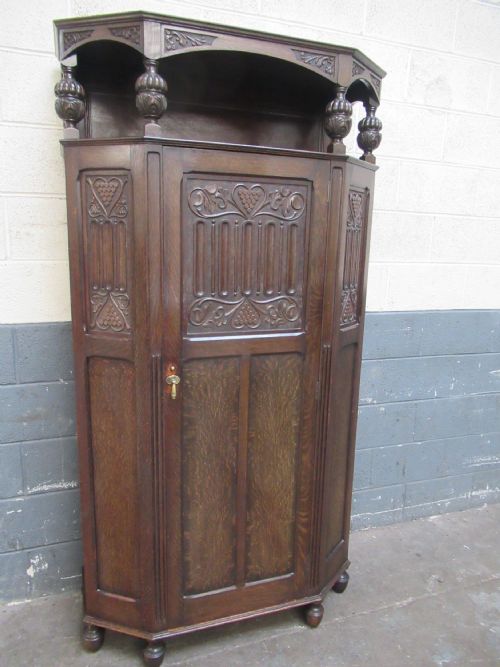
The versions most commonly met on this page date from the Georgian and eighteenth century through to the Victorian and Edwardian eras, constructed primarily in solid oak with occasional pine or brass details. Many display traditional raised panels and carved decoration associated with country vernacular or revival movements.
Makers shaped these cabinets to serve domestic interiors, providing secure storage for household goods, provisions, or tableware. Their forms vary from simple hanging cupboards with single doors to larger architectural cabinets with shaped internal shelves.
Materials and construction methods
Timber selection focuses heavily on oak, worked in solid boards to form the structural carcass, panelled doors, and shelving. Cabinetmakers utilised traditional joinery techniques such as mortise and tenon frames to house raised panels, allowing the wood to move naturally with changes in humidity.
Surface ornamentation relies on hand carving, applied mouldings, and raised panels rather than elaborate veneers, reflecting the robust character of English country and Georgian vernacular workshops. Iron or brass hinges and latches secure the doors, often matched with brass key escutcheons.
Listings feature oak predominantly, supported by occasional pine and brass hardware across Georgian, Victorian, and Edwardian periods.
Assessing quality in construction
Quality in a carved panel corner cabinet rests on the selection of timber and the precision of the joinery rather than surface polish alone. Thick, well-figured oak boards that remain stable show superior craftsmanship compared to thinner, warped replacements.
The depth and crispness of the hand carving on the front panels distinguish finer examples from standard vernacular pieces. Original hardware, intact shaped interior shelves, and sound structural carcasses retain the integrity of the original workshop output.
The Carved Panel Corner Cabinet Glossary
- Raised panel
- A central wooden panel with edges bevelled down to fit into a grooved frame, adding depth and structural stability to the cabinet door.
- Hanging cupboard
- A wall-mounted storage unit designed to be fixed above floor level, saving valuable ground space in smaller rooms.
- Floor standing
- A cabinet built with its own base or plinth that rests directly on the floor, offering greater height and capacity than wall-mounted versions.
- Chippendale revival
- A later stylistic movement reproducing or drawing inspiration from the mid-eighteenth-century designs associated with Thomas Chippendale.
- Vernacular
- Everyday domestic furniture made by regional joiners using local materials, prioritising utility and sturdy construction over high-style court fashions.
Carved Panel Corner Cabinet: Frequently Asked Questions
How do I hang a wall cabinet?
Wall-hanging corner cupboards require secure fixing to solid masonry or internal wall studs using appropriate brackets suited to the weight of solid oak.
Because these cabinets hold heavy contents, load distribution across multiple fixing points ensures the piece remains stable against the corner junction.
Are shelves adjustable inside them?
Most historical corner cupboards feature fixed timber shelves shaped to match the triangular interior layout of the cabinet carcass.
Alterations to shelf heights are uncommon in early pieces, as the shelves often form part of the internal structural bracing.
How do I clean oak panels?
Maintenance requires only a soft, dry cloth to remove dust from carved recesses and mouldings without damaging the aged surface.
Avoid modern silicone polishes, applying traditional beeswax sparingly if the timber appears dry from age and environmental exposure.
Do these cabinets fit modern rooms?
The compact triangular footprint allows these units to utilise neglected wall junctions in contemporary living spaces efficiently.
Floor-standing and wall-hung versions provide practical storage without encroaching significantly on central floor area.