

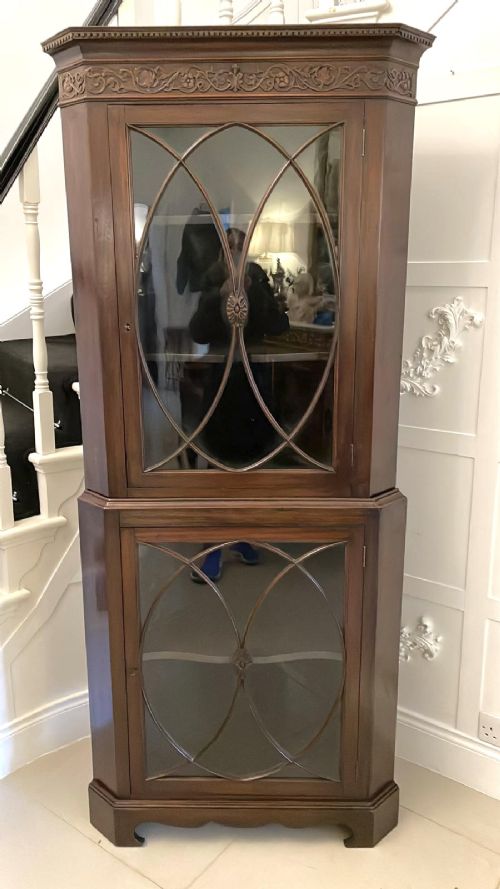
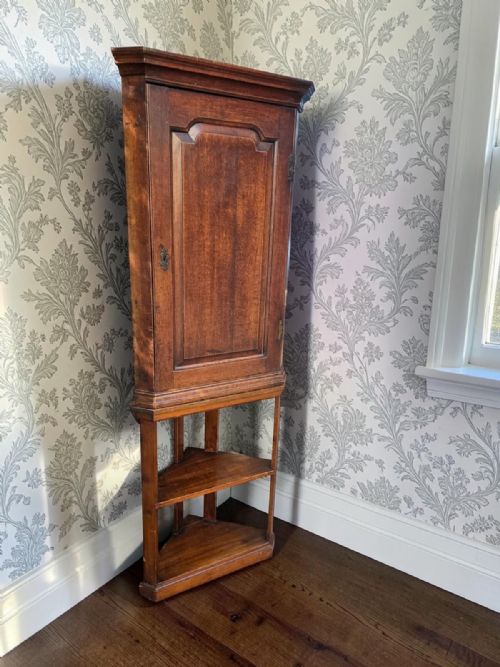
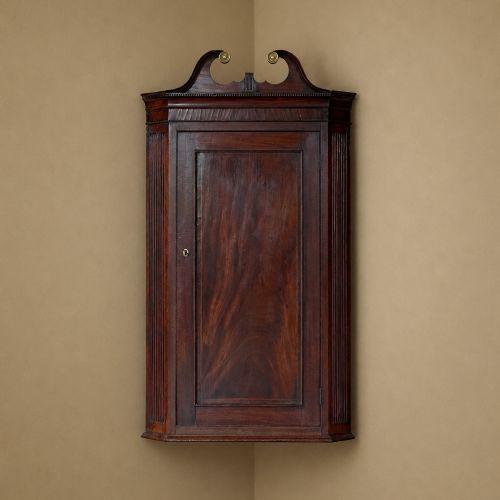
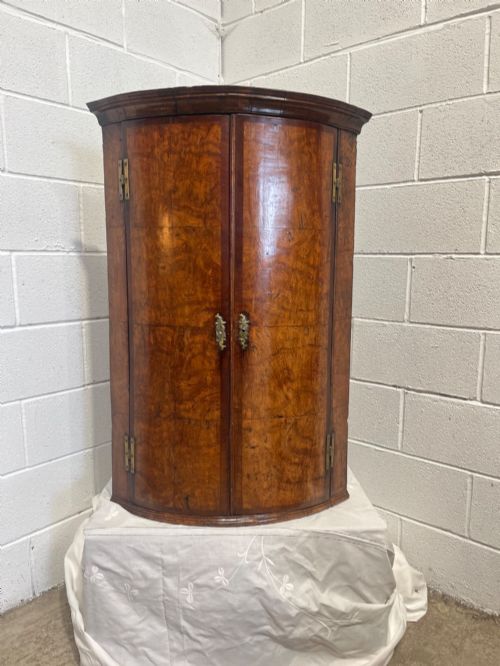
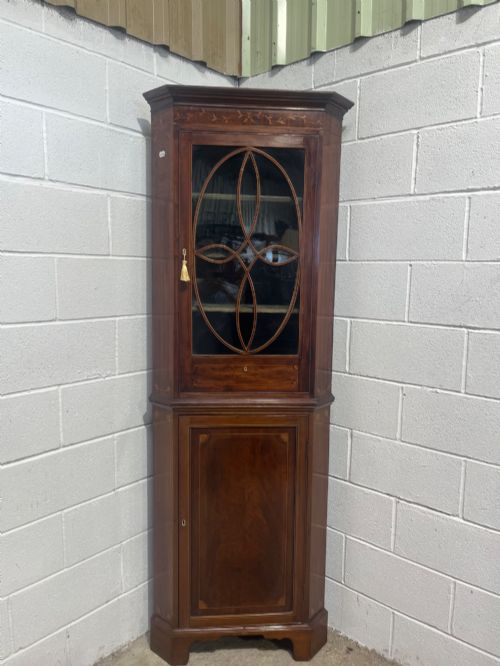
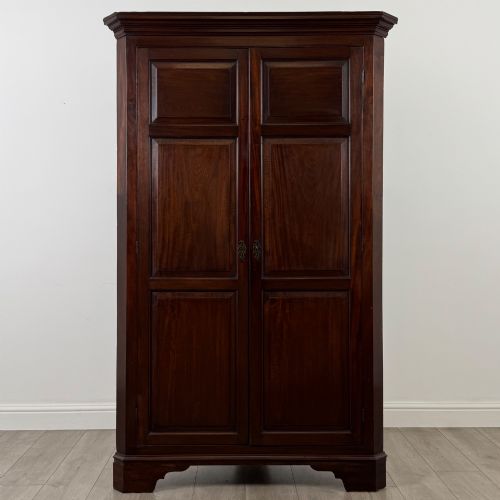
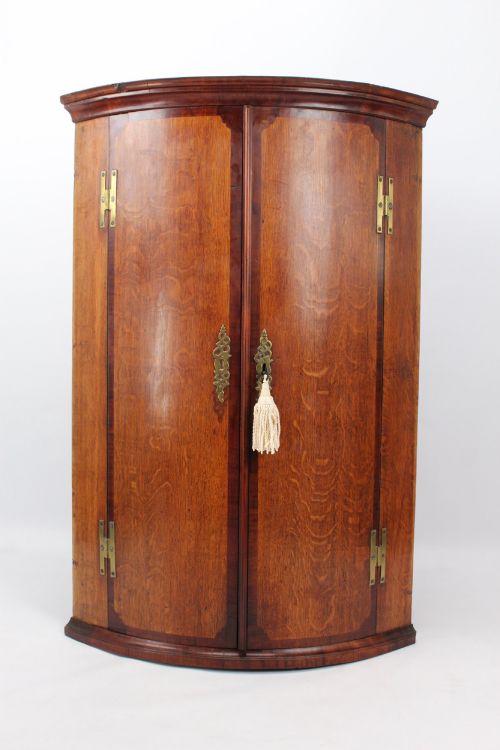
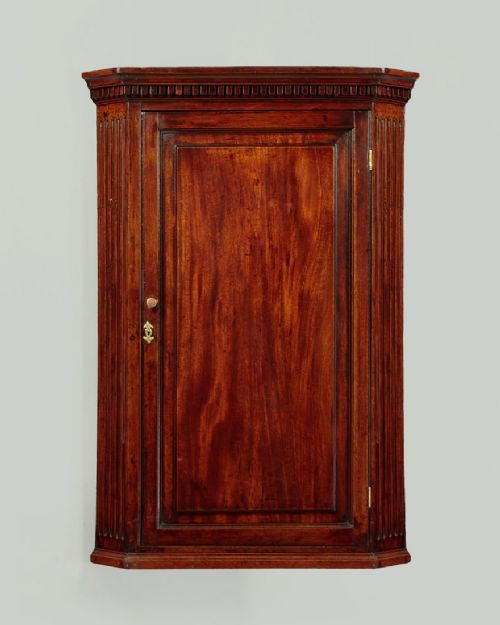
Brown Corner Cupboard
A brown corner cupboard tucks neatly into a neglected angle, turning dead space into practical storage with quiet eighteenth-century confidence.
Brown Corner Cupboard
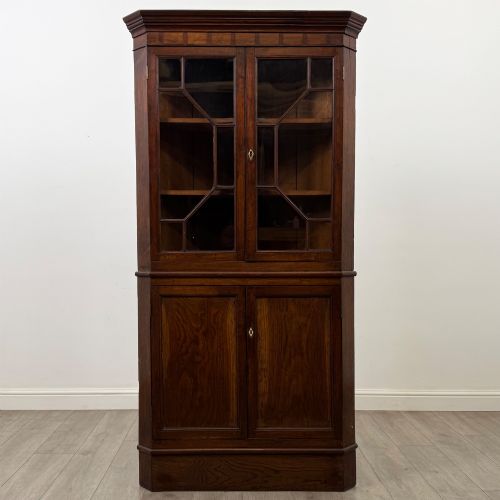
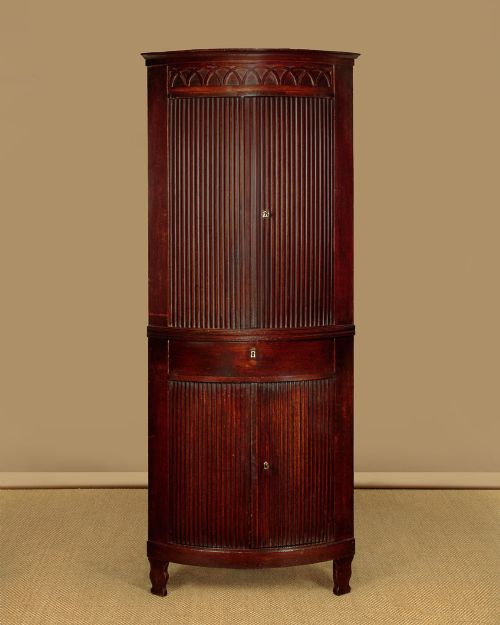
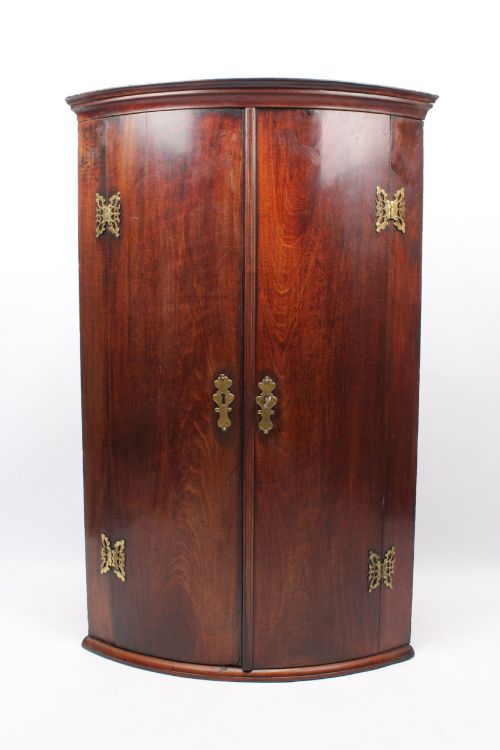
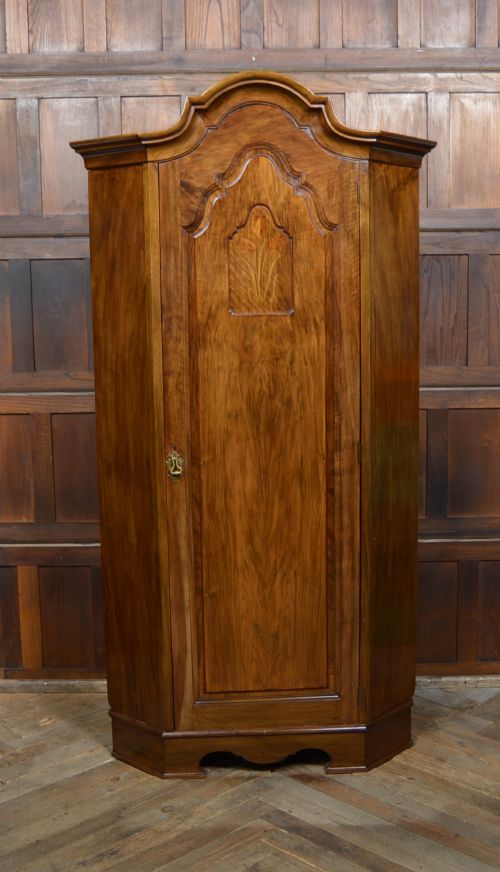
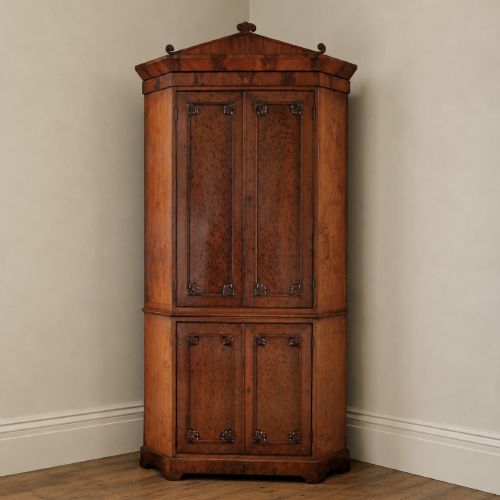
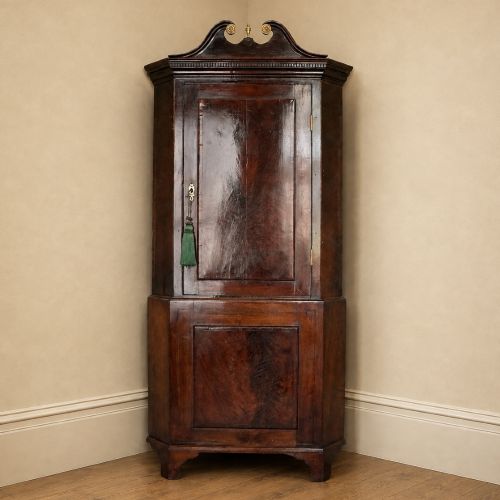
A brown corner cupboard serves to utilise awkward junctions in domestic rooms, taking the form of wall-mounted hanging cabinets, floor-standing units, and double-height architectural pieces. The pieces seen here span the Georgian, Victorian, and Edwardian eras, alongside later twentieth-century interpretations.
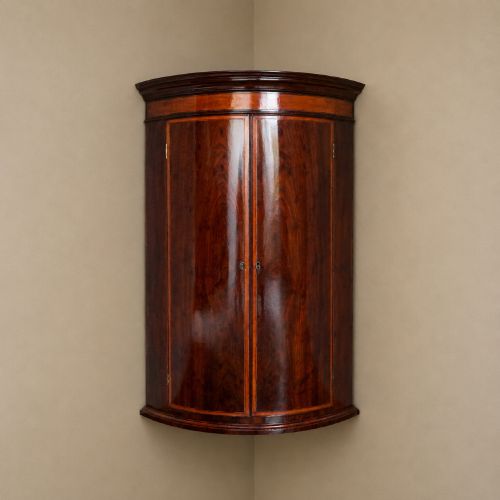
Mahogany and oak dominate the selection, appearing in flat-faced and bow-front variants designed to soften the harsh geometry of ninety-degree walls. Hanging versions provide compact storage at eye level, while standing cupboards anchor entire rooms with timber grain.
Georgian examples display restrained proportions and figured veneers, whereas Victorian and Edwardian iterations introduce marquetry, satinwood stringing, and glazed doors for display purposes.
Judging the Standard
Quality rests upon the selection of timber grain and the precision of the dovetail joints visible inside the carcass and drawers. Cabinets featuring highly figured plum pudding mahogany or burr oak require superior woodworking skill to shape without splitting.
The integration of original brass hardware, functioning locks with matching keys, and intact glass panes elevates a piece above standard utility furniture. Architectural details such as dentil moulding, carved friezes, and delicate stringing separate bespoke workshop commissions from simpler regional output.
Several cupboards retain their original keys, saving future owners a frustrating hunt through antique ironmongery boxes.
The Brown Corner Cupboard Glossary
- Bow front
- A convex curved door or cabinet front that projects outward from the corner walls. This shape softens the profile of the furniture.
- Astragal glazed
- Glass doors divided into smaller panes by narrow wooden strips known as glazing bars. These frame the interior shelves.
- Standing corner cupboard
- A tall, floor-resting unit built in one or two sections to occupy a room angle. It provides substantial enclosed storage.
- Hanging corner cupboard
- A wall-mounted cabinet secured by brackets or internal screw fixings. It uses vertical space above floor-standing furniture.
- Stringing
- Thin inlaid lines of contrasting timber set flush into the surface of the primary wood. It defines the borders of door panels and tabletops.
Brown Corner Cupboard: Frequently Asked Questions
Where should I place a corner cupboard?
These cabinets suit dining rooms, hallways, and living spaces where standard rectangular furniture blocks traffic flow. They occupy dead angles, drawing the eye upward while leaving floor space clear.
Position a hanging version above a sideboard or desk, or let a tall floor-standing piece anchor an otherwise bare corner.
How do I secure a hanging cupboard?
Wall-mounted cabinets require heavy-duty fixings anchored directly into structural masonry or timber studwork behind the plaster. Because solid timber carcasses carry significant weight, rely on professional installation to distribute the load evenly.
Check that the internal mounting brackets or screw points are secured before loading the interior shelves with heavy ceramics or glass.
How do I tell Georgian from Victorian pieces?
Georgian furniture relies on restrained architectural proportions, solid timber construction, and subtle cockbeading around drawer edges. Walnut and early mahogany predominate in the eighteenth century, showing deeper patination.
Victorian and Edwardian pieces frequently introduce heavier mouldings, machine-cut veneers, and decorative marquetry or satinwood banding. Look at the interior secondary timbers and backboards for clues regarding tool marks and construction methods.
Can I store heavy items inside?
Solid oak and mahogany carcasses possess sturdy fixed shelving capable of supporting heavy books, heavy stoneware, or bottled collections. Inspect the shelf supports and internal cleats to ensure they are firmly attached to the sides before loading.
Distribute weight evenly across lower shelves to maintain overall stability, particularly in tall standing models.