


Antique Chiffonnier Drawers
These antique chiffonnier drawers bring refined French storage and display to a room, offering practical timber compartments shaped by centuries of cabinet-making.
Antique Chiffonnier Drawers
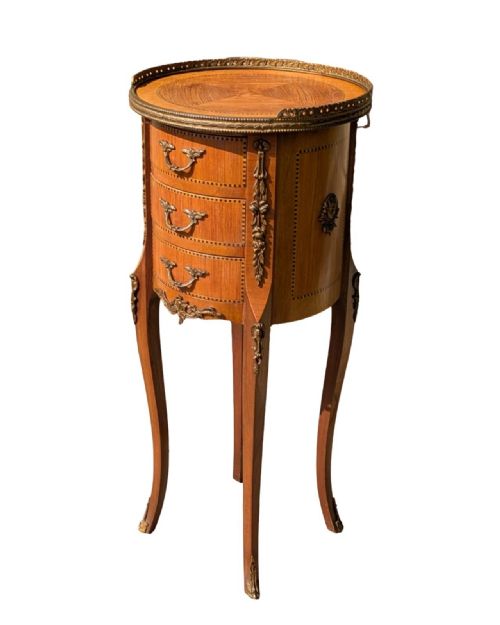
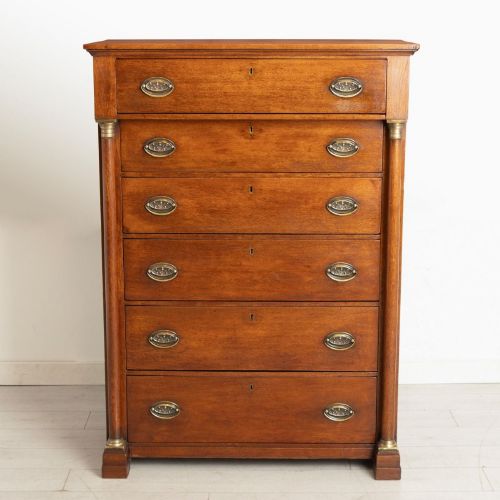
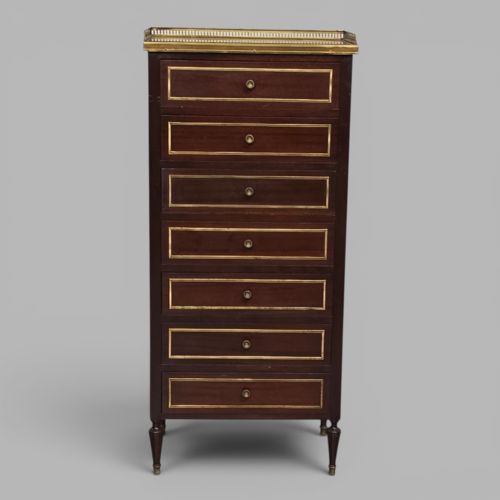
When you search for antique chiffonnier drawers, you encounter a selection of French chests of drawers, bedside cabinets, and side tables spanning the eighteenth to the twentieth centuries. These storage pieces range from tall oak chests and narrow rosewood units to circular inlaid kingwood bedside cabinets.
The versions most frequently met on this page originate from nineteenth-century France, alongside pieces dated to the early decades of the twentieth century and the eighteenth century. Makers utilised forms such as free-standing side tables and neat-sized cabinets equipped with multiple timber compartments.
Stylistically, the selection leans heavily towards French design vocabulary, including Louis XV, French Empire, French Revival, and French Provincial aesthetics. Buyers find both simple provincial storage items and elaborate urban furniture designed for formal interiors.
How they were made
Cabinet-makers constructed these storage items primarily using solid woods and decorative veneers like mahogany, rosewood, kingwood, tulipwood, and oak. These timbers provided sturdy structural carcasses while allowing artisans to display intricate grain patterns across the exterior surfaces.
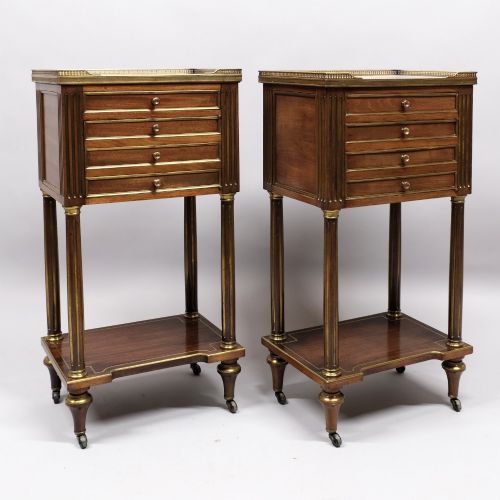
Craftsmen enhanced the timber frames with contrasting decorative elements, integrating brass inlay and gilt bronze or ormolu mounts to articulate the French Empire and Louis XV styles. Many items also feature fitted marble tops that added a durable, cool-toned surface above the wooden drawers.
One neat-sized side table manages to be completely free-standing while carrying a heavy marble top without tipping.
What varies in quality
The refinement of the timber work and the precision of the veneer matching distinguish the finer examples from simpler provincial items. Finer pieces display careful inlay work in kingwood or rosewood alongside well-cast bronze mounts.
Structural proportion and surface finish also define the grade of each cabinet. Better examples maintain crisp carving details on wood surfaces and integrate heavy marble tops that fit the wooden frames precisely.
The Antique Chiffonnier Drawers Glossary
- Chiffonnier
- A tall, narrow chest of drawers designed for small garments or papers. It typically provides vertical storage without taking up excessive floor space.
- Ormolu
- Gilt bronze ornamentation applied to furniture mounts. This technique created metallic highlights against dark cabinet timbers.
- Kingwood
- A dense, richly figured wood utilised for decorative veneering. Cabinet-makers favoured it for its striking dark and golden brown colouration.
- Secretaire
- A desk or chest incorporating a writing drawer with a drop-front flap. It combined traditional storage compartments with a pull-out writing surface.
- Tulipwood
- A light-coloured cabinet timber with distinct linear figuring. Artisans employed it for contrasting bandings and delicate floral marquetry.
Antique Chiffonnier Drawers: Frequently Asked Questions
What is a chiffonnier?
A chiffonnier is a tall, narrow storage unit featuring multiple drawers designed for smaller items of clothing or household goods. These pieces originated in France as practical furniture for bedrooms and dressing rooms.
Over time, the form evolved to incorporate decorative surfaces, marble tops, and fine timber veneers while maintaining its characteristic narrow vertical footprint.
Where were these cabinets made?
These pieces originate primarily from France, reflecting regional and urban cabinet-making traditions from the eighteenth through to the early twentieth century. Workshops produced everything from provincial oak storage to ornate Empire and Louis XV pieces.
French makers utilised native and imported hardwoods like mahogany, rosewood, and kingwood to construct these chests and bedside cabinets.
How do I care for marble tops?
Marble tops require gentle cleaning with a damp cloth and mild, pH-neutral soap to preserve the polished stone surface. Avoid acidic cleaners, vinegar, or harsh abrasives that can etch or dull the natural material.
Using coasters and mats helps prevent moisture rings and scratching from everyday objects placed on the stone.
Are these pieces suitable for modern bedrooms?
These compact chests and bedside cabinets fit well into contemporary bedrooms as functional storage and side tables. Their varied heights and narrow footprints allow them to occupy tight spaces while providing enclosed drawer storage.
The mix of marble tops, brass inlay, and polished rosewood or mahogany also introduces texture and historical character to modern interiors.