

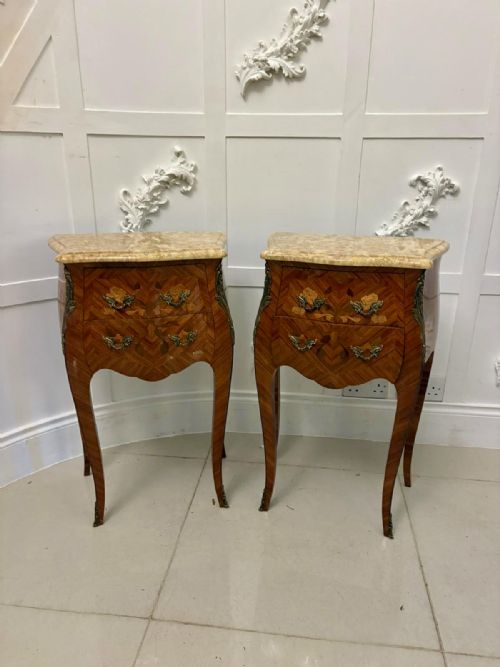


Pair of Chevets
A pair of chevets brings French bedside elegance to a room, offering matched bedside storage shaped by centuries of cabinet-making tradition.
Pair of Chevets
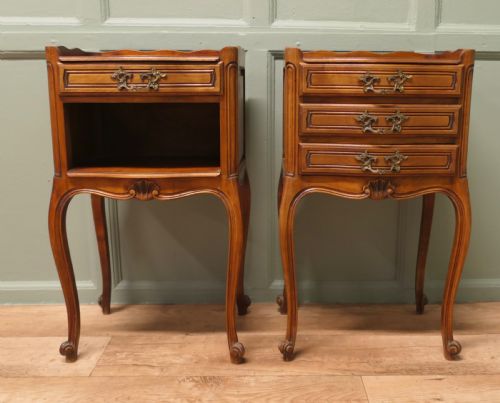
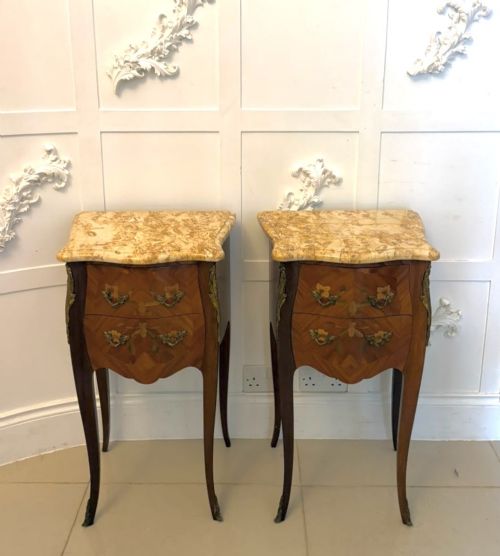
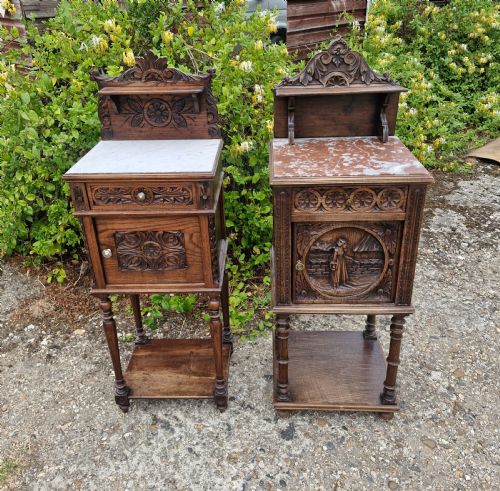
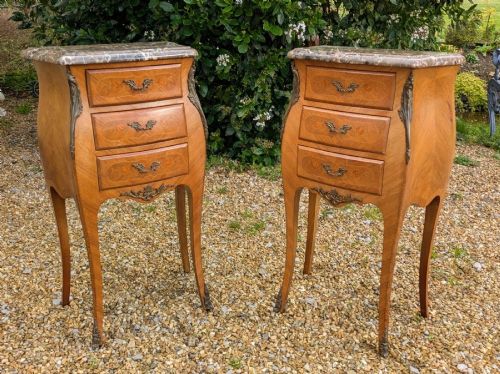
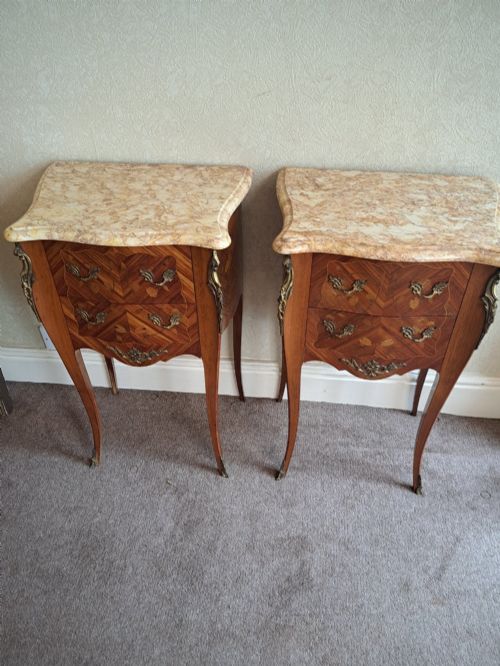
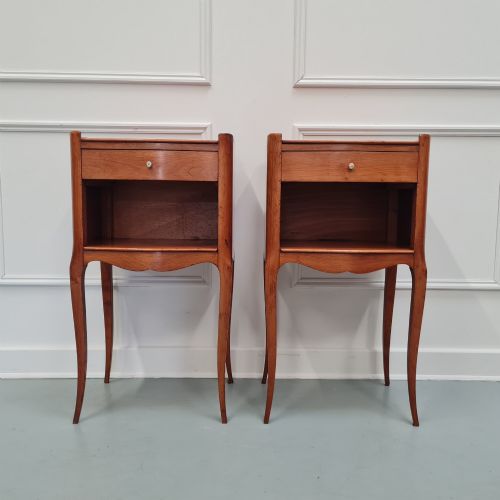
A pair of chevets comprises matched bedside tables or cabinets, originating primarily from French domestic interiors across the nineteenth and early twentieth centuries. These pieces serve as functional bedside storage units, taking the form of small cabinets with doors, open compartments, or sets of drawers.
The versions most frequently met on this page date from the late nineteenth century through to the nineteen-thirties, reflecting periods from the late Victorian era up to the interwar years. Walnut, oak, and mahogany form the structural backbone of these matched sets, frequently paired with decorative veneers and stone surfaces.
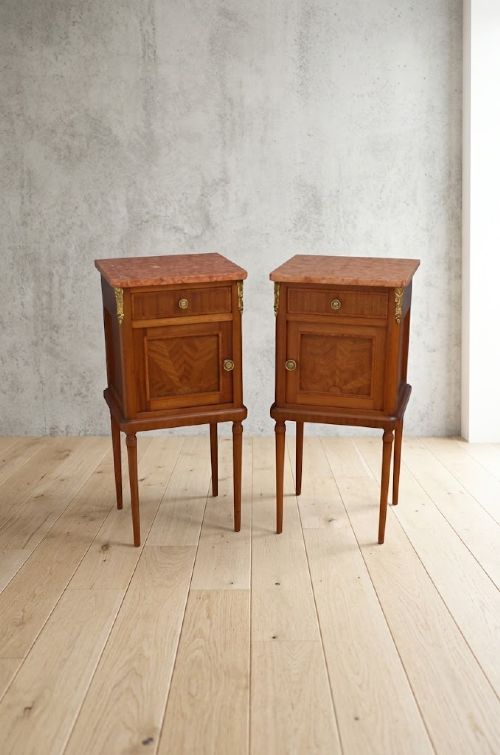
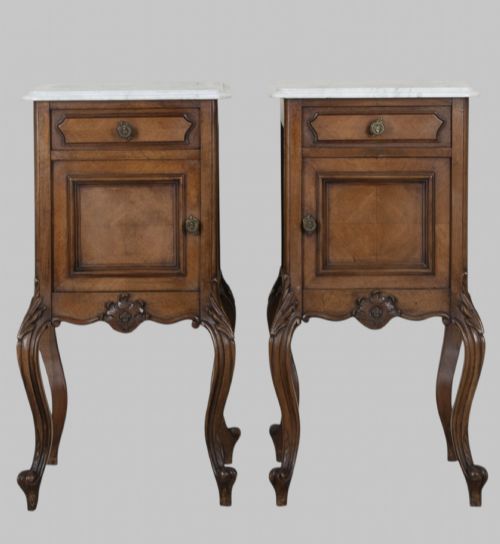
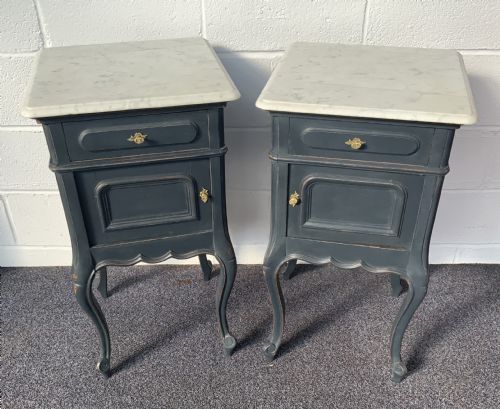
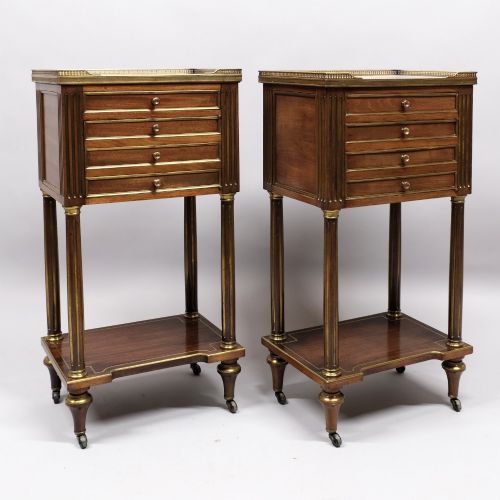
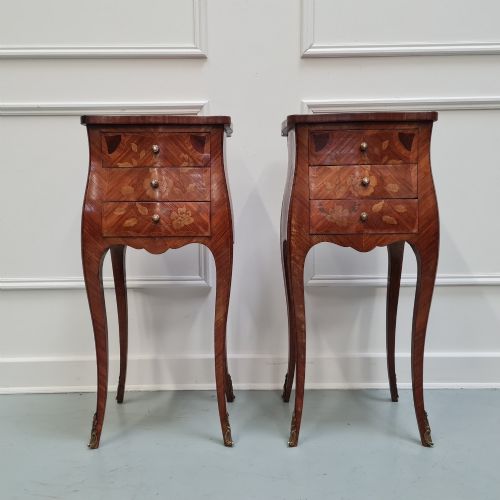
Stylistic influences lean heavily toward French design traditions, particularly Louis XV and Louis XVI revivals, alongside provincial variations. Buyers encounter everything from simple oak cupboards to intricately inlaid marquetry pieces topped with marble.
How they were made
Cabinet-makers relied on solid hardwoods such as walnut, oak, mahogany, and cherry for the primary carcase and structural framing. These timbers provided the stability needed for daily bedside use.
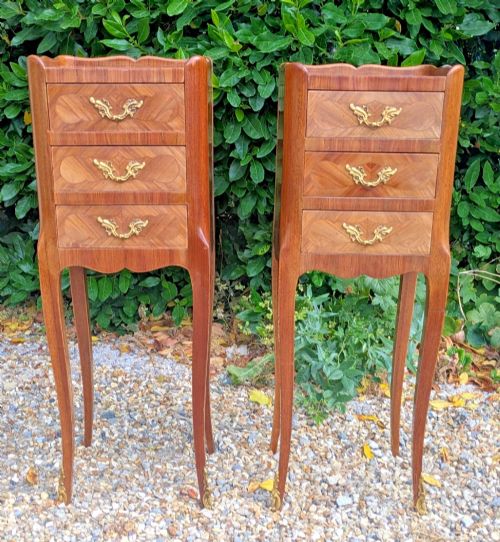
Decorative surfaces often utilised exotic veneers including kingwood, satinwood, and rosewood, arranged in geometric parquetry or floral marquetry patterns. Brass mounts, ormolu accents, and cast handles completed the decorative scheme.
Slab tops in marble - such as Belgian Sainte-Anne - were integrated to provide a durable, wipe-clean surface resistant to bedside items like water jugs and lamps.
Listings feature pieces spanning the nineteenth century through to the nineteen-thirties, utilising walnut, oak, mahogany, kingwood, and marble.
What varies in quality
The refinement of the timber selection and the precision of the veneer work separate standard examples from exceptional ones. Finer pieces display carefully matched grain patterns and complex marquetry rather than plain surfaces.
Structural execution also distinguishes the range, visible in the tightness of the joinery, the heft of the marble slab, and the quality of the cast brass or ormolu mounts. Finer cabinets exhibit smooth drawer action and properly fitted doors that align squarely.
The Pair of Chevets Glossary
- Chevet
- A French term for a small bedside table or cabinet. These pieces typically sit beside a bed to hold lighting and personal items.
- Marquetry
- Decorative veneer work arranged in pictorial designs using various coloured woods. Artisans cut and fit these wood pieces precisely into the carcase surface.
- Ormolu
- Gilded bronze mounts used for decorative enrichment on furniture. This technique imparts a metallic golden finish to cast brass or bronze elements.
- Parquetry
- Geometric wood inlay patterns forming repetitive designs such as squares or chevrons. It provides a structured decorative surface on tabletops and cabinet doors.
- Bombe
- A swelling, outward-curving contour found on the front and sides of furniture carcases. This curvilinear form is characteristic of sophisticated cabinet-making.
Pair of Chevets: Frequently Asked Questions
What is the difference between a chevet and a bedside table?
A chevet is simply the French term for a bedside table or small cabinet, often implying a piece with European stylistic origins.
In practical terms, both function to hold bedside lamps and personal items, though chevets frequently incorporate enclosed cabinet space rather than open shelves.
How do I care for a marble top on a bedside cabinet?
Marble surfaces require gentle cleaning with warm water and a soft cloth to avoid scratching the polished stone. Acidic liquids should be kept away from the marble to prevent etching.
Using coasters and mats protects the stone from stains while preserving the original finish.
Are these cabinets freestanding?
Most French bedside cabinets and tables are finished on all sides to allow freestanding placement beside a bed. This construction means they do not rely on being pushed against a wall for stability.
Cabinet backs are often panelled and polished in keeping with the rest of the piece.
How do I identify the style period?
Style indicators such as cabriole legs, floral marquetry, and serpentine fronts point toward Louis XV revival designs common around nineteen hundred. Straighter tapered legs and more formal symmetry usually suggest Louis XVI taste.
Construction methods and timber choices help confirm whether a piece originates from the nineteenth century or the nineteen-thirties.