



Pair Famille Rose Vases
Pair famille rose vases bring rich floral palettes and mid-to-late nineteenth-century decorative presence into a room.
Pair Famille Rose Vases
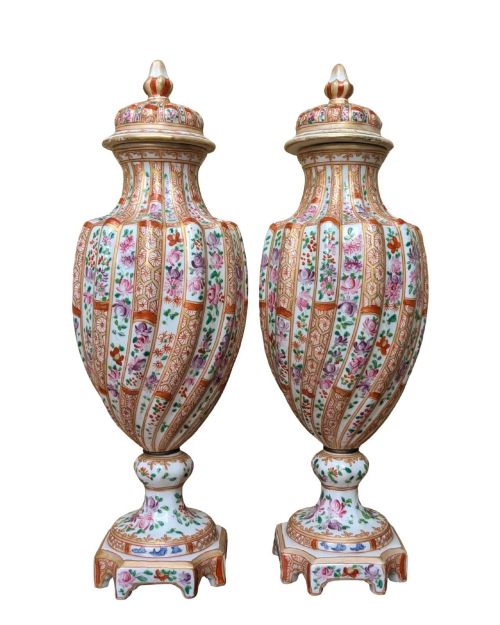
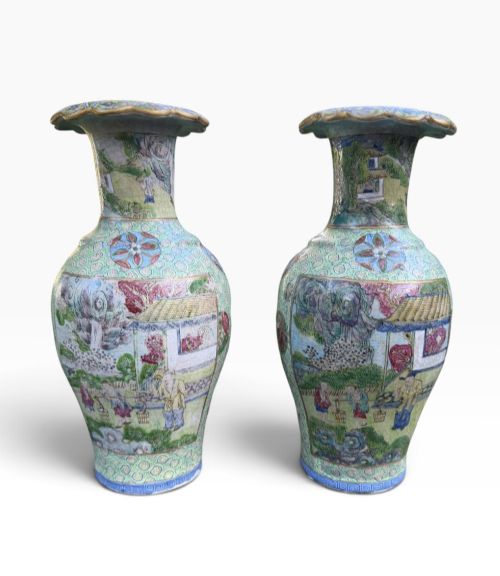
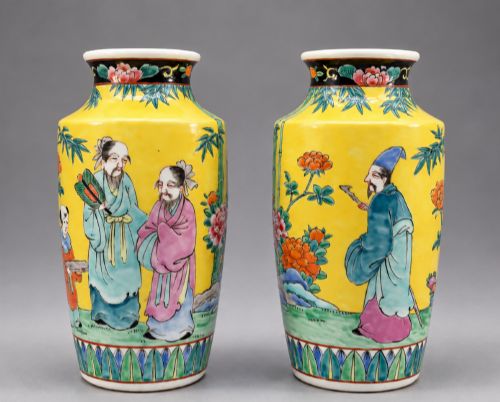
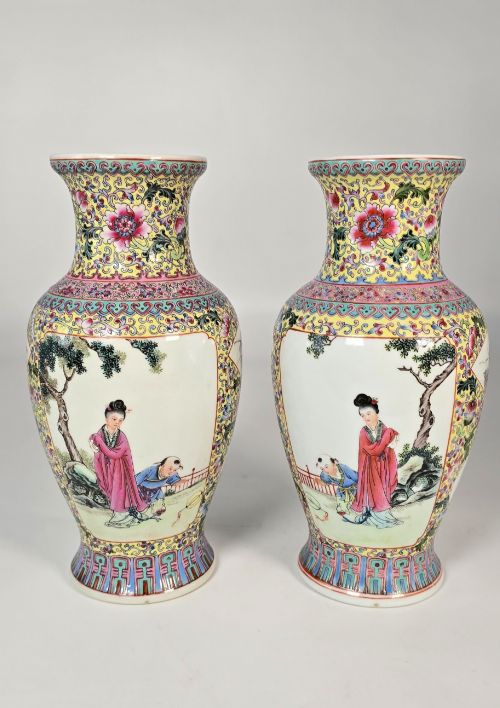
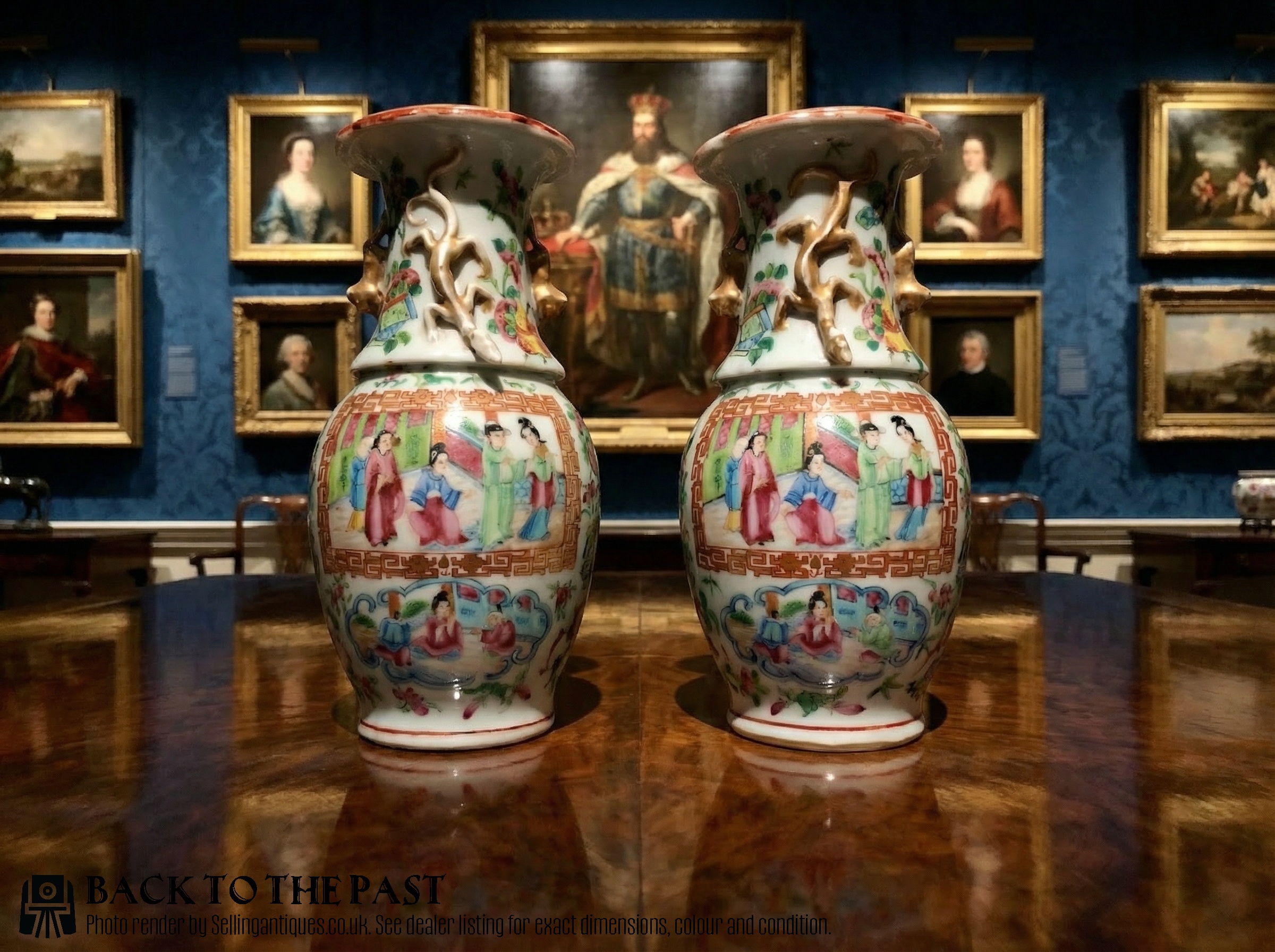
These matching vessels display the distinctive pink enamel palette alongside greens, golds, and intricate figural or botanical panels. Most examples encountered here originate from nineteenth-century China, spanning Cantonese production, Rose Medallion patterns, and later Republican period exports.
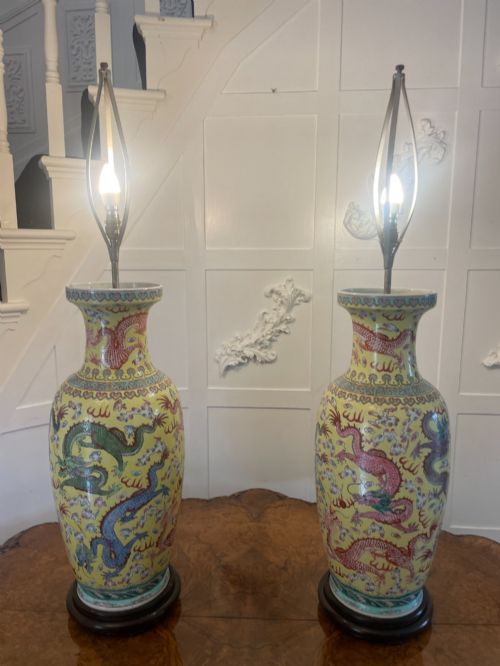
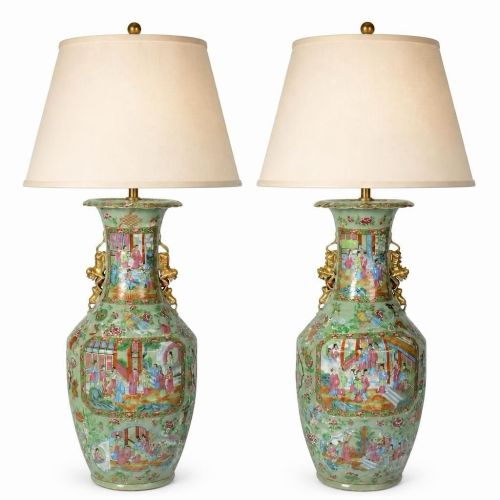
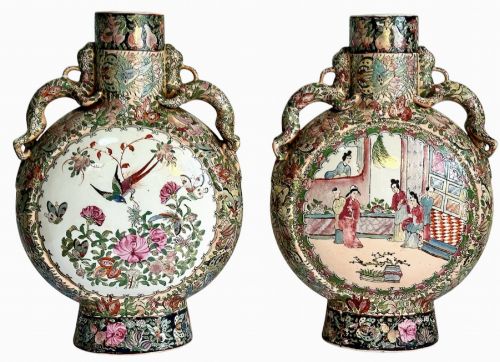
Buyers frequently find these porcelains adapted into table lamps or fitted with ormolu mounts, reflecting Victorian and later interior tastes for repurposing oriental ceramics. Forms range from baluster vases and ginger jars to moon flasks and rouleau shapes.
The aesthetic bridges traditional Qing dynasty craftsmanship with Western export demands, resulting in symmetrical pairs designed for mantelpieces or side tables.
Materials and construction
Potters shaped high-fired white porcelain bodies before applying detailed hand-painted overglaze enamels and metallic highlights. Artisans then utilised gold leaf, brass, and ormolu mounts to edge rims or convert the vessels into functional lighting.
Many pairs incorporate carved wooden stands and fabric lamp shades, combining traditional ceramic techniques with domestic hardware from the nineteenth and early twentieth centuries.
Pair Famille Rose Vases Retail Price Guide 2026
Typical asking prices for pair famille rose vases among the pieces listed under this phrase on Sellingantiques today, from the lower quarter to the upper quarter. They describe what is for sale here now, not the wider market.
Listings demonstrate a strong concentration of nineteenth-century porcelain alongside materials like brass, ormolu, and hand-applied enamel.
Assessing the work
The skill of the hand-painted brushwork dictates the visual success of each piece, separating rigid commercial output from fluid, expressive artistry. Dense panels crowded with figures and birds require immense control over the enamel pigments.
Condition and completeness matter greatly, particularly regarding the preservation of the delicate gilt edges and the matching nature of the two components. Later adaptations into lamps also vary in the quality of the brass and ormolu hardware applied to the porcelain base.
Samson of Paris
The Pair Famille Rose Vases Glossary
- Famille rose
- A group of Chinese porcelain wares characterised by an opaque pink enamel introduced during the Qing dynasty. The palette relies heavily on rose-pink hues mixed with other soft enamel colours.
- Rose medallion
- A specific pattern of compartmentalised panels filled with birds, flowers, and court figures surrounding a central medallion. It represents a major subset of nineteenth-century Cantonese export porcelain.
- Baluster
- A vase shape with a rounded body that tapers toward the base and swells outward before narrowing into a neck. This form provides a stable canvas for expansive pictorial decoration.
- Ormolu
- Gilded bronze or brass used for decorative mounts, handles, and lamp bases. European workshops frequently added these metal fixtures to imported Chinese porcelain.
- Moon flask
- A flattened circular flask resting on a small oval foot, often fitted with two small handles connecting the neck to the shoulders. This classic vessel shape offers two distinct flat panels for detailed painting.
Pair Famille Rose Vases: Frequently Asked Questions
What is a pair famille rose vases?
These are matching ceramic vessels decorated with opaque pink enamel and vibrant polychrome scenes, typically originating from nineteenth-century China.
They were produced in various forms such as baluster jars, ginger pots, and moon flasks for both domestic use and the export market.
How were they used historically?
Families displayed matching pairs on mantelpieces, tables, and sideboards as symbols of status and refined taste.
In later decades, many were converted into oil lamps and table lamps to suit changing domestic lighting needs.
How do I live with them?
Place them where natural light can catch the enamel details and gilt highlights without exposing them to accidental knocks.
If your pair is wired as lamps, ensure the wiring meets modern safety standards while preserving the original ceramic body.
How can I tell the periods apart?
Nineteenth-century pieces often feature dense Canton or Rose Medallion hand-painting with rich gilding and distinct potting weights.
Twentieth-century and Republican period examples generally show smoother porcelain bodies with different enamel densities and stylistic refinements.