
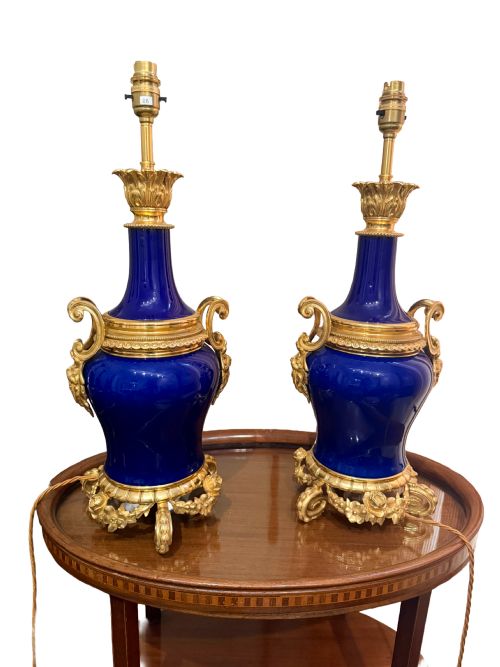


Pair Cobalt Blue Urns
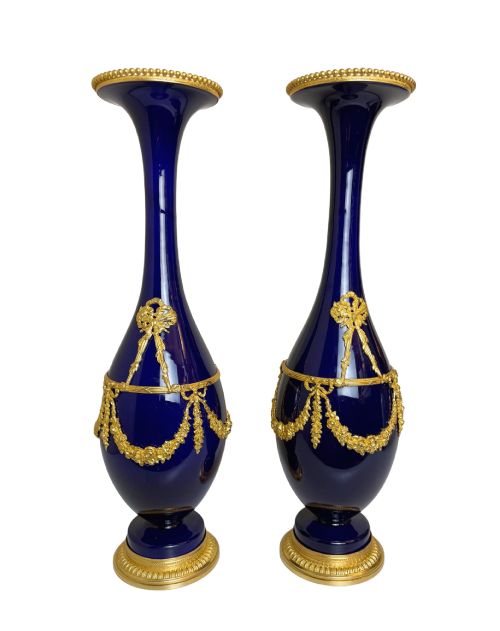
These pair cobalt blue urns bring dramatic depth and rich indigo glaze to a room, offering the symmetrical balance traditional interiors require.
Pair Cobalt Blue Urns
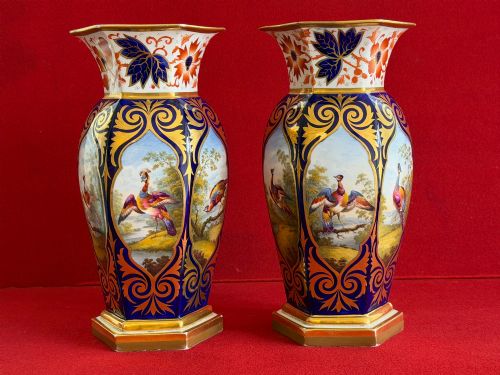
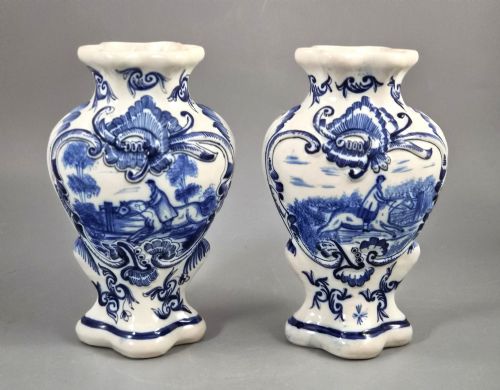
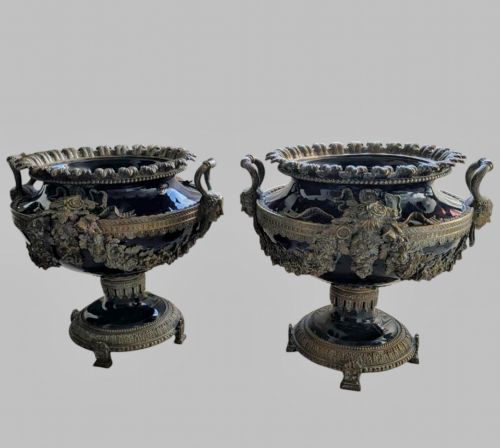
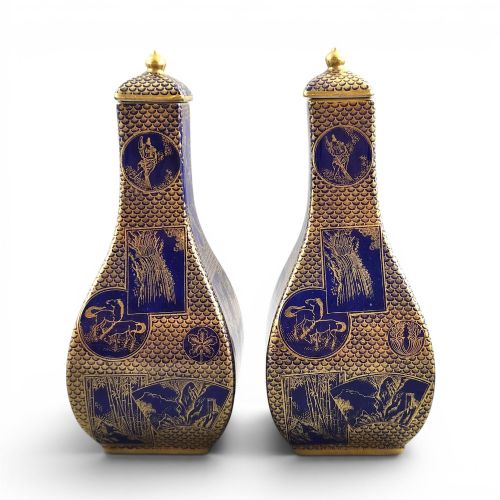
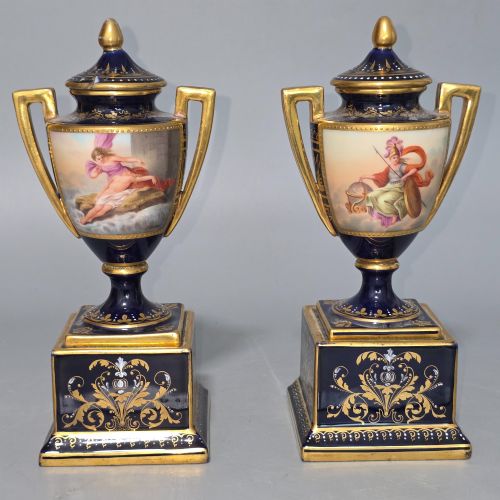
When searching for pair cobalt blue urns, you encounter a diverse range of decorative vessels designed for symmetry and visual weight. The selection on this page leans heavily toward nineteenth-century porcelain and ceramic pieces, alongside Japanese Imari wares and earthenware from various periods.
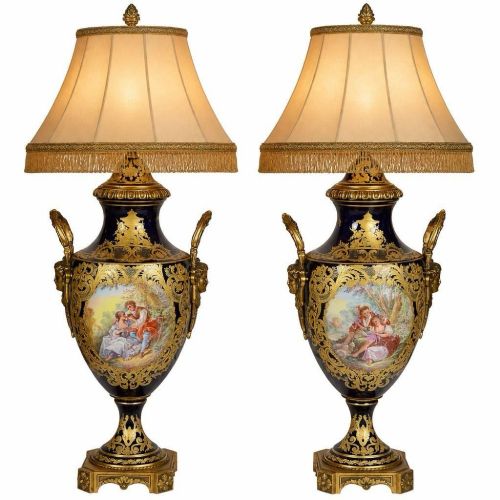
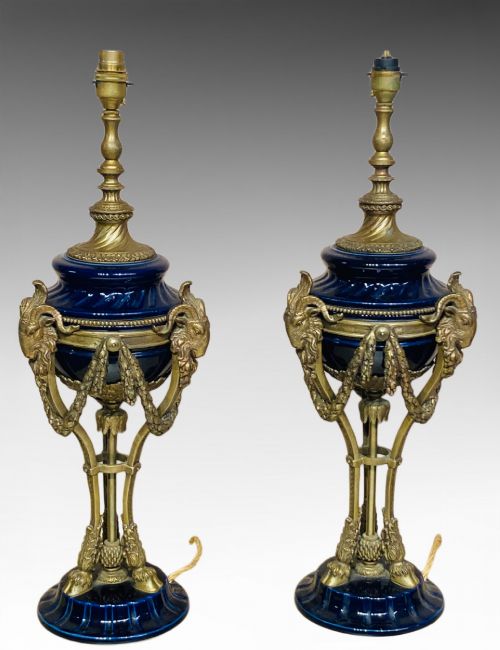
Forms vary from lidded jars and amphora vases to large garden-style jardinieres and table lamps mounted with gilt bronze. European manufactories such as Sevres, Worcester, and various English potteries appear alongside Japanese Satsuma and Arita creations, reflecting global stylistic exchanges across centuries.
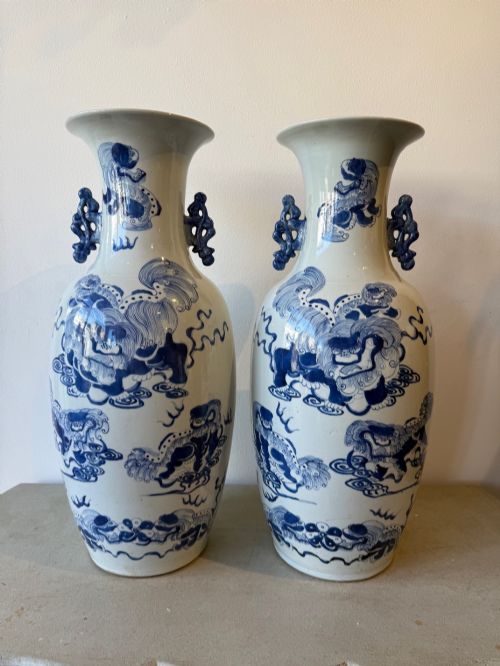
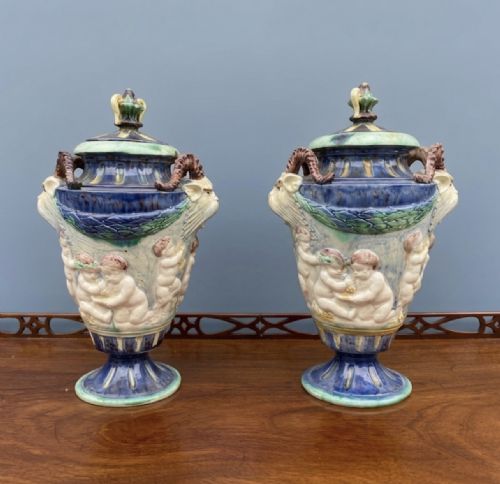
These matched pairs served traditionally as mantelpiece ornaments, garnitures, or focal points on side tables. Their deep cobalt grounds often provide a striking canvas for gilt highlights, hand-painted panels, or moulded classical reliefs.
How They Were Made
Makers achieved the distinctive deep blue colour by introducing cobalt oxide to the glaze or clay body before high-temperature firing. This mineral pigment withstands intense heat, resulting in a rich, stable blue that underpins subsequent surface decoration.
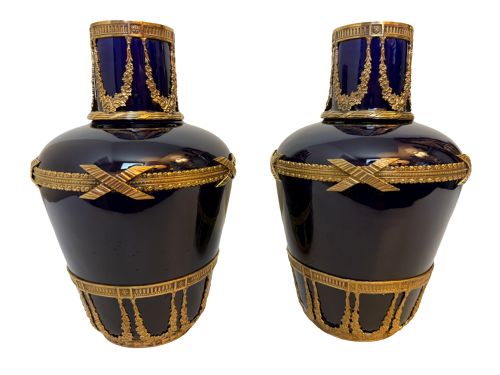
Many European and Asian vessels received extensive hand-gilding using gold leaf or powdered gold suspended in a medium, which was then fired and burnished to a high shine. Bronze and ormolu mounts were frequently cast, chased, and fire-gilded to frame the ceramic bodies.
Earthenware and stoneware variants utilised specialised techniques such as salt-glazing, enamel painting, or applied moriage decoration to build texture and contrast against the smooth cobalt ground.
Listings span seventeenth-century Arita wares to twentieth-century ceramics, utilising porcelain, earthenware, ormolu, and gold leaf.
What Varies in Quality
The sophistication of the painting and the crispness of the moulding distinguish finer pieces from standard production wares. Hand-painted panels, intricate gilt detailing, and well-executed relief work demand advanced craftsmanship and artistic control.
The integration of metal mounts, where applicable, indicates the original ambition of the piece. Precision in ormolu casting and secure fitting to the ceramic body separate superior examples from more utilitarian assemblies.
The depth and clarity of the cobalt glaze itself reveal much about the firing process and the purity of the materials. Even coloration without clouding or surface pitting marks the work of premier kilns and skilled ceramists.
Flight, Barr and Barr·Mason's Patent Ironstone·Vienna Porcelain·Carlton Ware·Royal Doulton·Wedgwood·Royal Crown Derby·Ernst Wahliss·Kinkozan·Fourmaintraux-Courquin
The Pair Cobalt Blue Urns Glossary
- Cobalt blue
- A deep, vibrant blue pigment derived from cobalt salts, used extensively in ceramic glazes for its heat resistance and stability.
- Ormolu
- Finely chopped and cast brass or bronze finished with a gold-water gilding technique, commonly used for mounts on nineteenth-century decorative urns.
- Imari
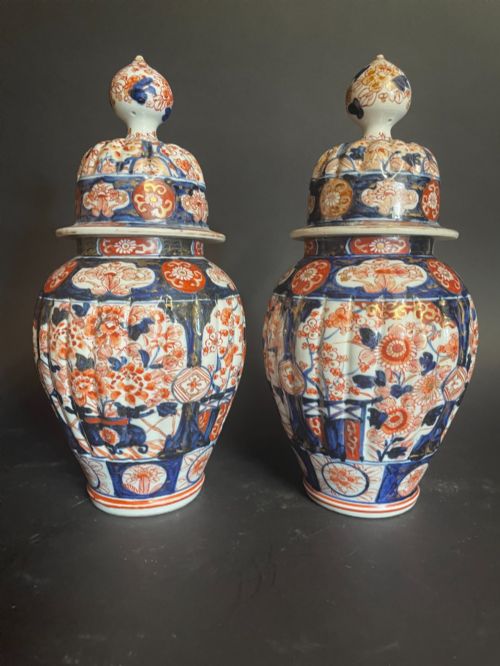
- A style of Japanese porcelain featuring a distinctive palette of cobalt blue, iron red, and gold, named after the port of export.
- Moriage
- A Japanese ceramic technique using piped clay to create raised, textured patterns beneath or over the glaze.
- Jardiniere
- An ornamental pot or stand designed to hold growing plants or flowers, often matching the form of a large urn.
Pair Cobalt Blue Urns: Frequently Asked Questions
How were cobalt blue urns used in historic interiors?
These vessels typically occupied prominent positions on mantelpieces, often arranged as sets of three or five known as garnitures. They functioned purely as decorative statements to display wealth, taste, and an appreciation for fine craftsmanship.
Over time, many of these urns transitioned into functional lighting or remained as focal points on side tables and pedestals. Their balanced pairs brought symmetry and formal elegance to nineteenth-century rooms.
What is the difference between porcelain and earthenware urns?
Porcelain is fired at extremely high temperatures using fine white clay like kaolin, resulting in a vitrified, non-porous body that often rings when struck. Earthenware utilises coarser clays, requires lower firing temperatures, and remains porous unless fully glazed.
This fundamental composition affects the weight, translucency, and sharpness of detail achievable on the surface. European and Asian potteries selected these distinct bodies depending on the desired aesthetic and function of the vessel.
How can I identify Japanese Imari pieces?
Japanese Imari porcelain is traditionally recognised by its strict palette combining underglaze cobalt blue with iron red, complemented by extensive gold detailing. The designs frequently incorporate floral motifs, brocade patterns, and panels filled with natural scenes.
Production centered around the Arita region and shipped through the port of Imari, influencing European kilns profoundly. These pieces combine robust ceramic bodies with densely layered surface ornamentation.
What do ormolu mounts indicate on a ceramic urn?
Ormolu mounts demonstrate the collaborative efforts between ceramic artists and metalworkers, particularly within French decorative arts. These gilded bronze frames served to protect vulnerable rims and bases while elevating the status of the vessel.
The presence of finely chased bronze mounts suggests a piece created for the luxury export market or high-end domestic display during the nineteenth century.