
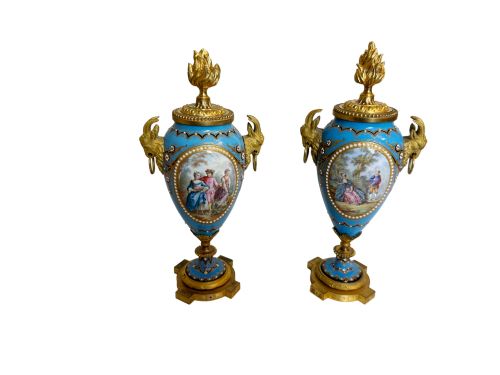
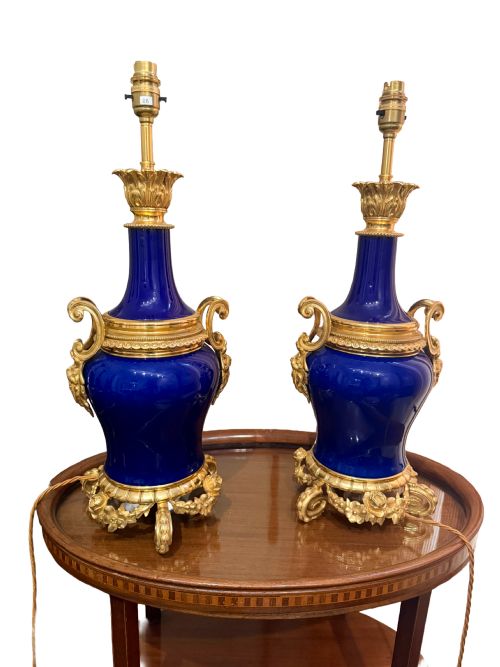


Blue Sevres Porcelain Urns
Blue sevres porcelain urns bring nineteenth century French decoration into a room through rich cobalt ceramics and gilt metal mounts.
Blue Sevres Porcelain Urns
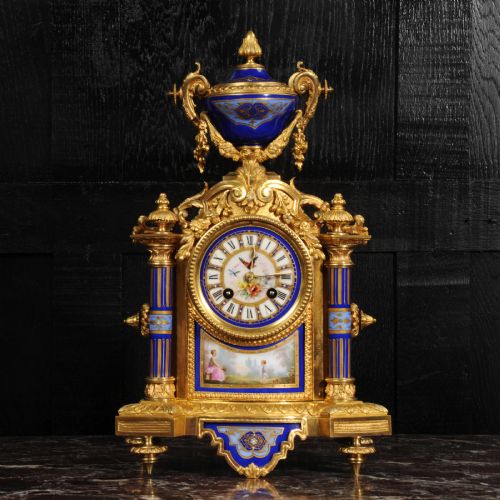
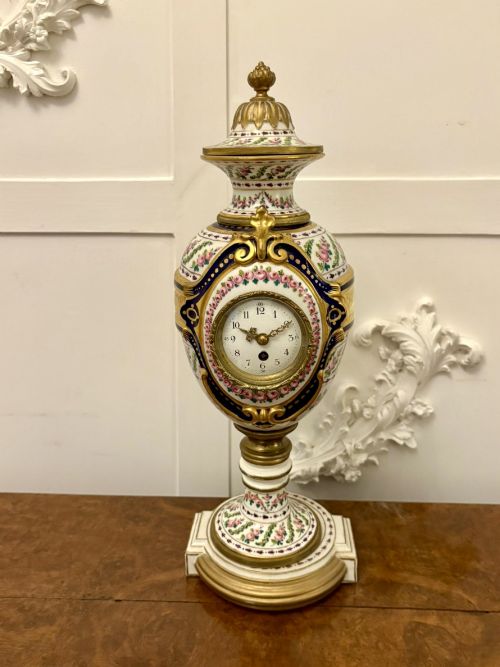
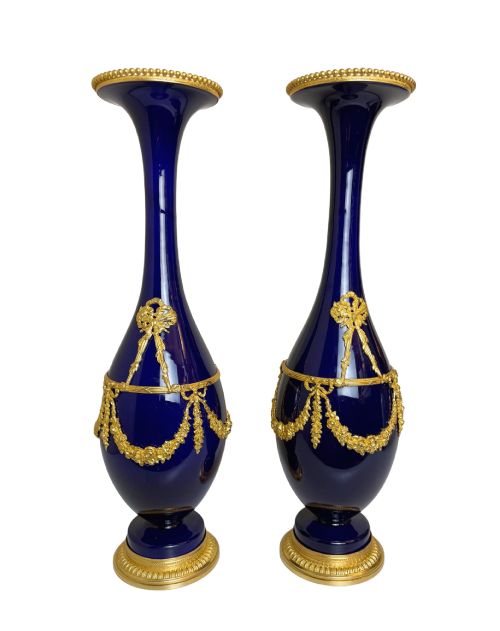
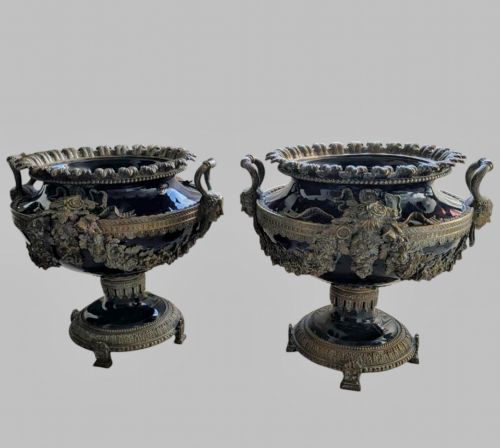
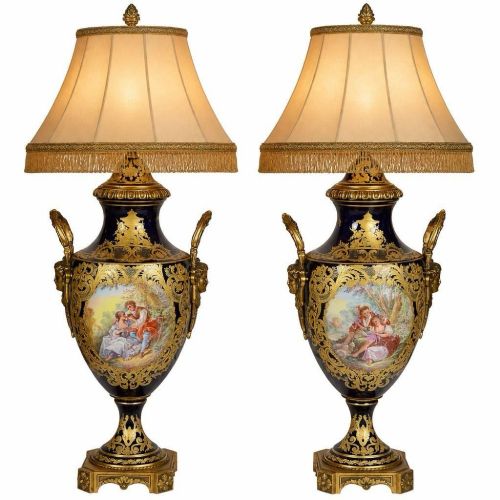
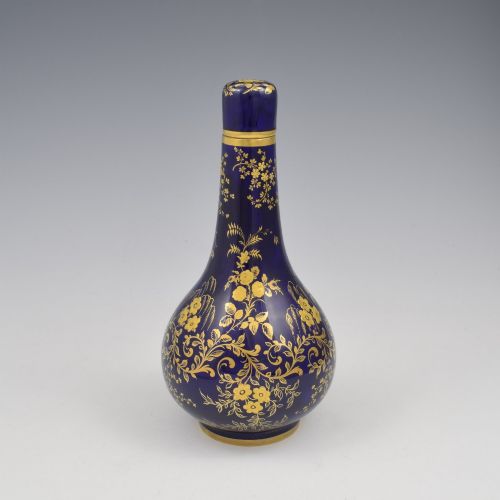
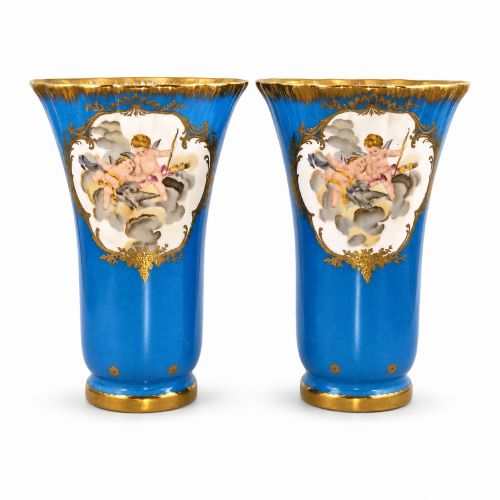
When searching for blue sevres porcelain urns, buyers encounter nineteenth century decorative objects originating from France, including pieces made in the Sevres style by various makers. The most common form on this page is the lidded vase or urn, often paired symmetrically and mounted with ormolu or gilt bronze.
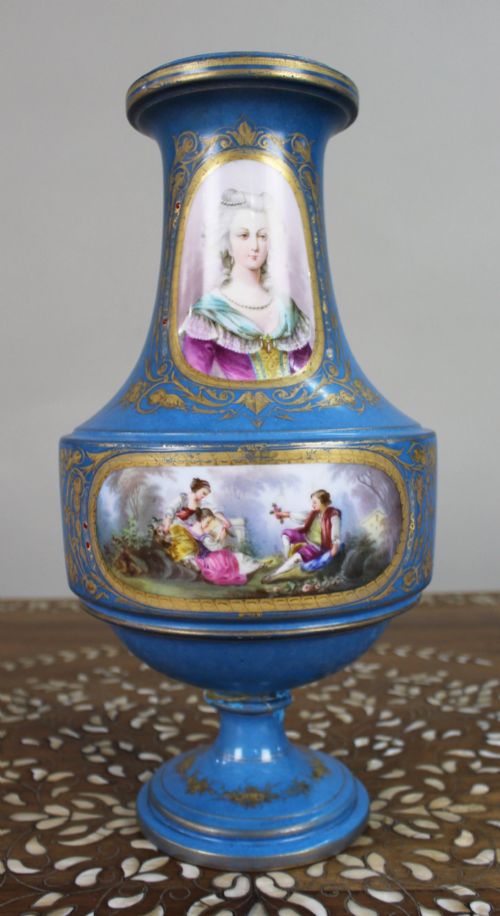
Many examples date from the decades around eighteen eighty, featuring classical shapes influenced by Louis XVI and Rococo revival styles. These objects frequently incorporate hand painted decoration over a deep blue or bleu celeste ground, sometimes adapted later into table lamps or incorporated into clock garniture sets.
Materials and construction methods
The foundation of these pieces is ceramic porcelain, fired and glazed in shades of blue before receiving hand painted details and gilded accents. Metal components such as ormolu, gilt bronze, and brass are cast and chased to frame the ceramic bodies.
Mounts are secured to the porcelain bodies using pins, screws, or fitted bezels, combining the ceramicist's art with the metalworker's craft. Enamel and gold leaf are frequently applied to enhance the decorative finish of the handles, lids, and bases.
Listings feature nineteenth century French porcelain urns and vases mounted in ormolu and gilt bronze, alongside table lamps and mantel clock garnitures.
Distinctions in craftsmanship
The standard of an object rests on the crispness of the bronze or ormolu chasing and the delicacy of the hand painted ceramic surface. Heavier, more deeply cast metal mounts and finely detailed hand painted scenes indicate superior workshop production.
Proportion and balance between the porcelain vessel and its metal mounts dictate visual success, with finer pieces showing harmonious integration rather than clumsy assembly. The depth and consistency of the blue glaze and the application of gold leaf further separate standard production from exhibition pieces.
Japy Freres·Samson Paris·Vincenti of Paris·JP Delettrez
The Blue Sevres Porcelain Urns Glossary
- Ormolu
- Gilded bronze mounts applied to furniture, clocks, and porcelain vessels. This technique involves coating cast bronze in a layer of gold amalgam.
- Bleu celeste
- A bright turquoise blue ground colour associated with the Sevres porcelain factory. It became popular during the eighteenth century and was frequently copied in the nineteenth century.
- Garniture
- A set of matching decorative objects designed to be displayed together on a mantelpiece or sideboard. These sets typically comprise a central clock flanked by urns or vases.
- Cassolette
- A decorative vase or urn with a reversible lid that functions either as a closed vessel or a perfume burner. They often feature pierced metal mounts.
- Jardiniere
- A large ornamental pot or container designed to hold growing plants or flowers. In nineteenth century French interiors, these were often made of porcelain with gilt metal trim.
Blue Sevres Porcelain Urns: Frequently Asked Questions
What is a clock garniture set?
A clock garniture set consists of a central mantel clock accompanied by two matching side pieces, such as urns or vases. These sets were designed to create a balanced display on a fireplace mantel or console table.
The pieces share identical stylistic elements, such as ormolu mounts and blue porcelain bodies, tying the arrangement together visually across a room.
Were these urns made for lighting?
Many nineteenth century urns and vases were later converted into table lamps to suit modern domestic lighting needs. This conversion often involved running electrical cords through the base or body without altering the external antique appearance.
Original factory production focused on decorative display rather than lighting, meaning most lamp conversions occurred well after the initial manufacturing date.
How do I distinguish Sevres style from factory pieces?
Pieces described in the Sevres style are nineteenth century interpretations inspired by the famous French porcelain factory rather than products of the royal manufactory itself. Makers such as Samson Paris produced these high quality revival pieces to meet the Victorian demand for French decorative arts.
Examining the mounts, gilding style, and overall weight helps collectors understand the specific workshop origin behind each decorative vase.
How should I clean ormolu mounts?
Ormolu mounts require gentle dusting with a soft, dry brush to prevent the accumulation of dirt in the recessed chased details. Moisture and harsh metal polishes should be avoided because they can strip the fragile gold gilding from the bronze surface.
Preserving the original surface sheen maintains the visual contrast between the bright gilt bronze and the deep blue porcelain body.