

Pair Classical Urn Vases
These pair classical urn vases bring ancient architectural grandeur directly into domestic interiors through time-honoured decorative forms.
Pair Classical Urn Vases
When you search for pair classical urn vases, you encounter symmetrical decorative vessels designed to echo ancient Greek and Roman forms. These pieces function primarily as ornamental centerpieces rather than functional receptacles for flowers.
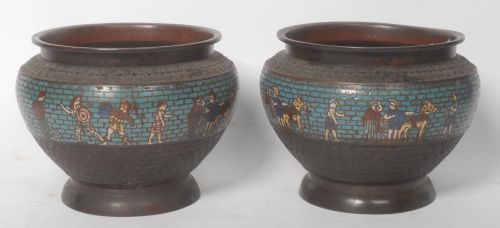
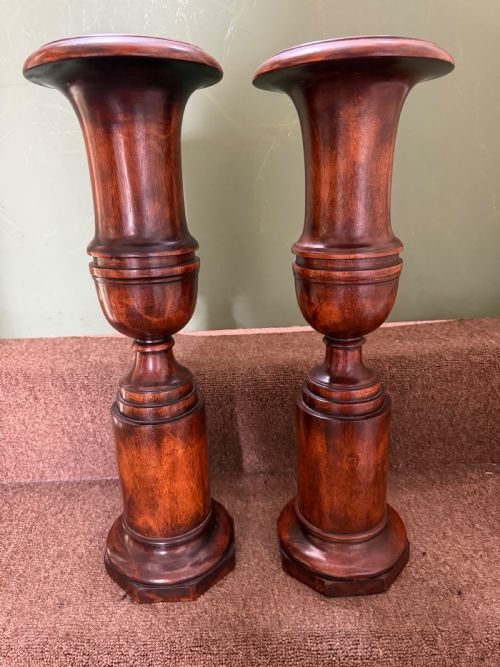
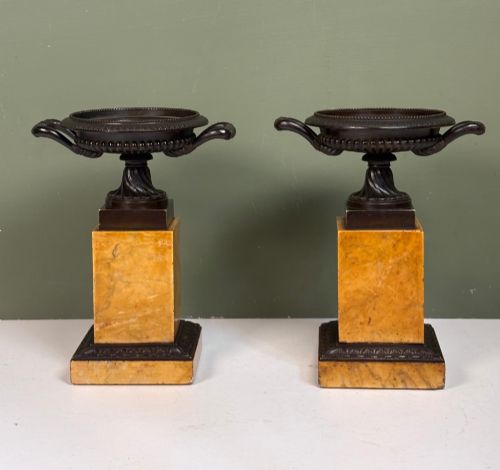
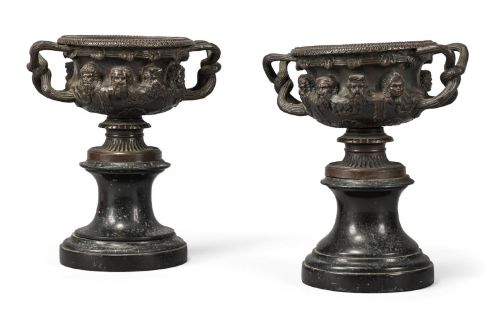
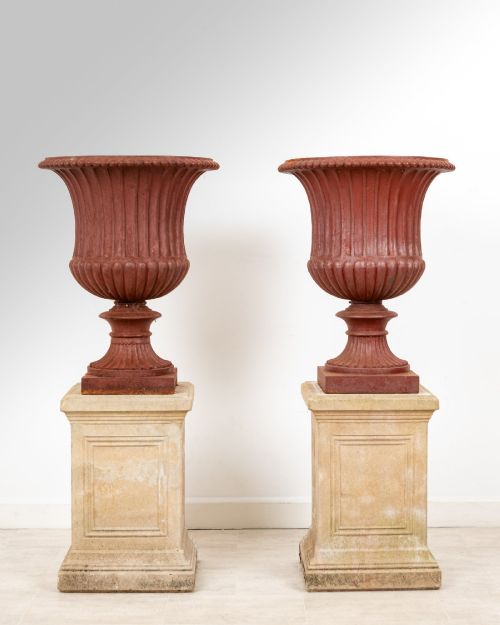
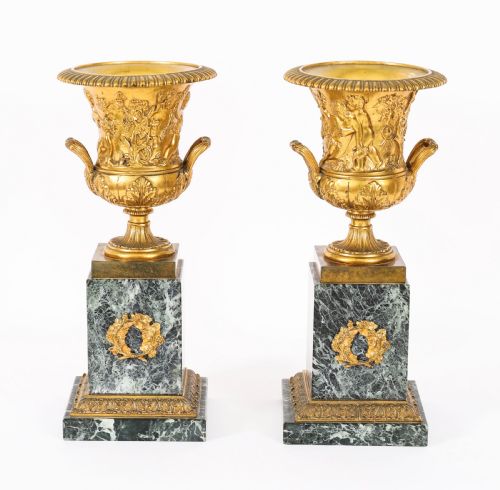
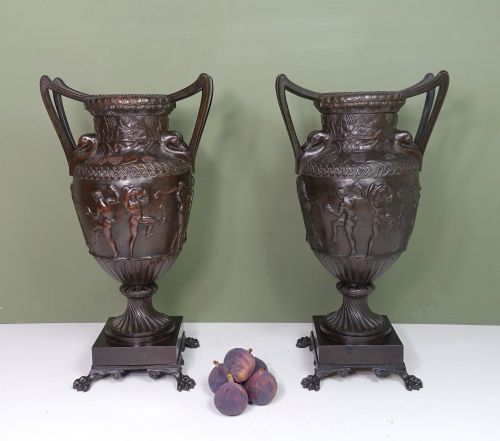
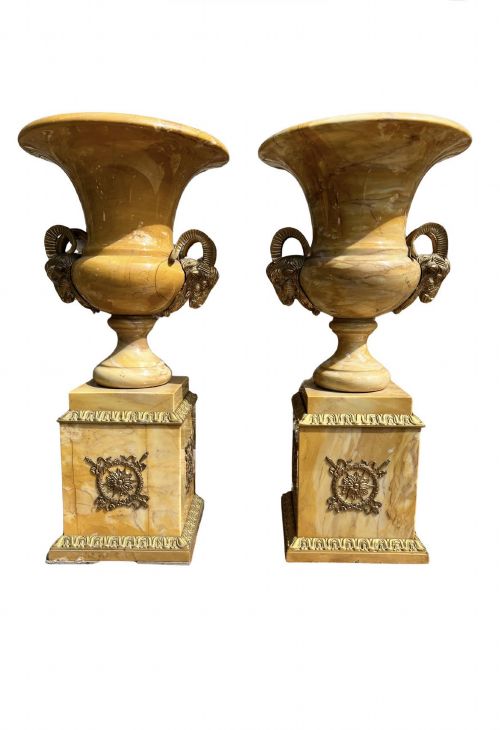
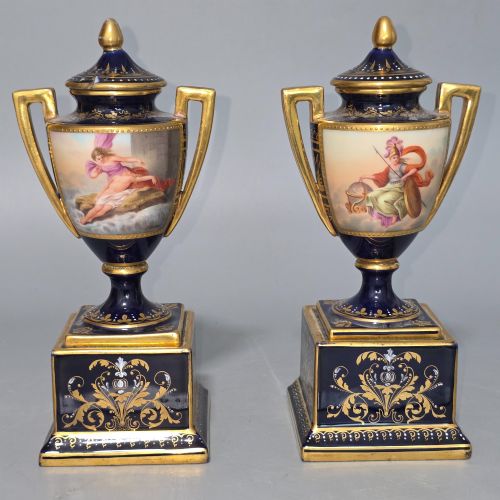
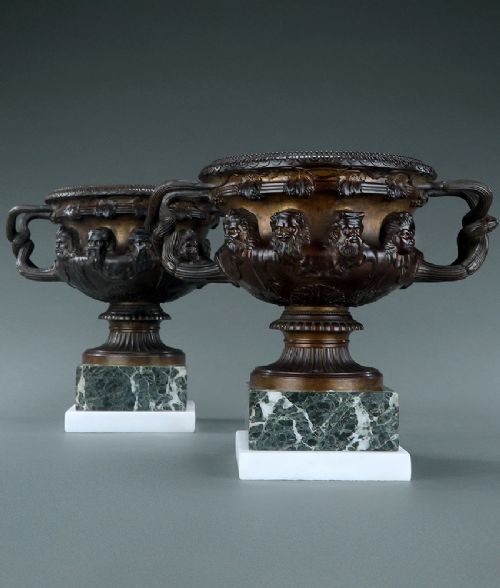
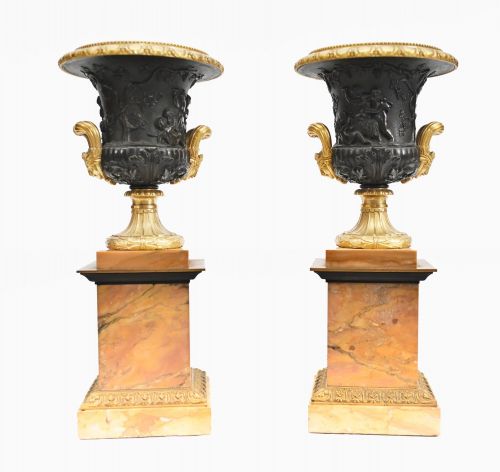
The selections on this page span the nineteenth century and lean heavily into French Empire, Neoclassical, and Grand Tour traditions. You will frequently find campana shapes, handled amphorae, and tazzas modelled in metal, stone, and porcelain.
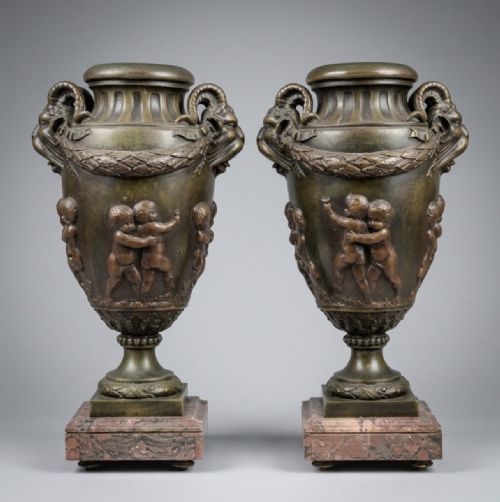
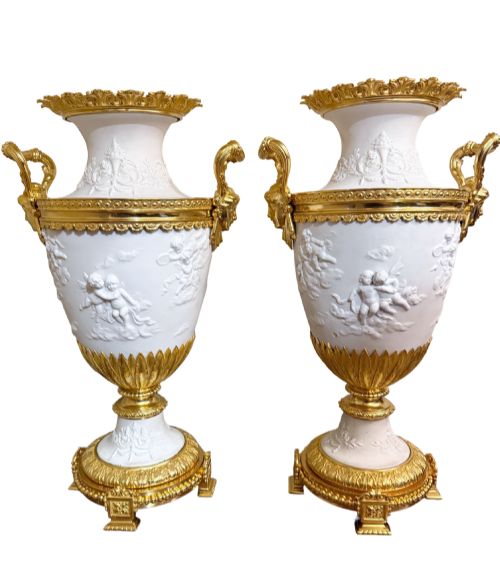
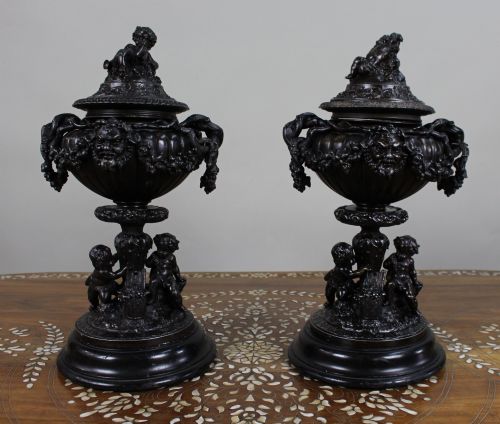
Many examples incorporate pedestals, marble plinths, or classical figural reliefs depicting bacchic masks and putti. They serve equally well atop mantelpieces, sideboards, or flanking architectural entryways.
How they were made
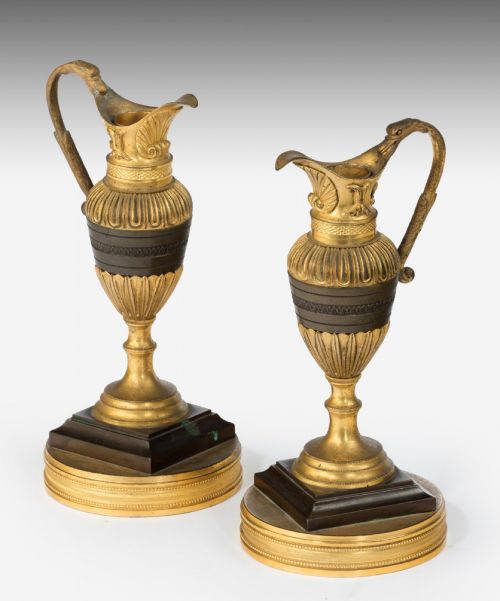
Foundry casting dominates the metal examples, utilising bronze, spelter, and cast iron finished with patination, gilding, or ormolu mounts. Makers often combined these metals with turned Italian Sienna, white onyx, or Breccia Medicea marble bases.
Ceramic versions rely on hard-paste porcelain, earthenware, and jasperware bodies shaped on the wheel or in moulds. Hand-painted details, enamel highlights, and applied white bas-reliefs complete the surface decoration before firing.
Listings feature nineteenth-century materials including porcelain, bronze, gilt bronze, enamel, marble, ormolu, gold leaf, and cast iron.
What varies in quality
The distinction between ordinary and superior pieces rests on the crispness of the casting and the depth of the chasing. Sharp relief work on bacchic masks and floral swags indicates a skilled hand in the metal workshop.
Material selection and weight heavily influence value, seen in solid bronzes versus plated spelter, or genuine carved marble plinths against simpler timber or plaster substitutes. Hand-painted ceramic pieces depend entirely on the precision of the enamel work and porcelain paste quality.
Coalbrookdale·Sevres·Wedgwood·Royal Vienna·F. Koller
The Pair Classical Urn Vases Glossary
- Campana urn
- A bell-shaped vessel with a flared lip and a socle foot, originating from classical pottery forms. These often feature decorative handles and classical friezes.
- Grand tour
- A cultural journey undertaken by nineteenth-century elites who collected bronze and marble antiquities as souvenirs. Many decorative urns imitate these specific classical archaeological discoveries.
- Ormolu
- Gilt bronze mounted onto furniture, clocks, or decorative vessels. The technique involves applying a mercury and gold amalgam to cast bronze before firing.
- Spelter
- A zinc alloy frequently used as a cheaper alternative to bronze during the nineteenth century. It accepts patination well but possesses a lighter weight and softer surface.
- Cassolette
- A decorative vessel shaped like an urn, designed with a reversible lid that functions as a burner for perfumes or incense. They frequently appear in French neoclassical interiors.
Pair Classical Urn Vases: Frequently Asked Questions
What were classical urn vases used for?
These vessels served primarily as decorative ornaments rather than practical containers. Wealthy households displayed them on mantelpieces, side tables, and pedestals to signal classical learning and refined taste.
In grander settings, large cast iron versions adorned gardens and porticos. Smaller interior examples occasionally doubled as cassolettes for burning perfumes.
Are these urns from ancient Rome?
The pieces available here date predominantly from the nineteenth century, spanning periods like the Victorian era and the French Empire revival. They represent later interpretations of ancient Greek and Roman aesthetics rather than archaeological antiquities.
Many specific models derive directly from objects encountered by travellers on the Grand Tour. Artisans in Italy and France meticulously copied these excavated forms for nineteenth-century collectors.
Where should I display a pair of urns?
Symmetrical pairs look best flanking a central mirror, fireplace, or architectural doorway. Placing them on matching pedestals or sideboards creates a balanced focal point in a room.
Ensure heavy cast iron or marble examples rest on sturdy, level furniture. Their substantial weight requires stable support to prevent accidental tipping.