



Patinated Spelter Ornaments
These patinated spelter ornaments combine accessible metalwork with expressive subject matter, offering collectors striking decorative impact without the weight of solid bronze.
Patinated Spelter Ornaments
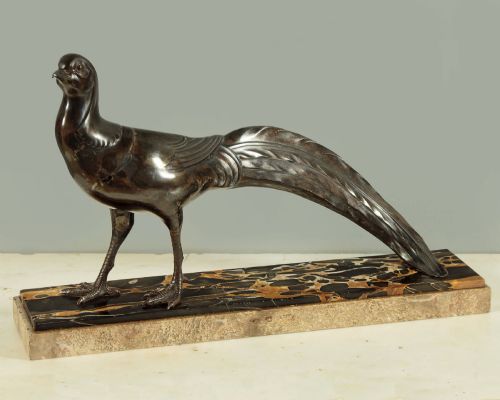
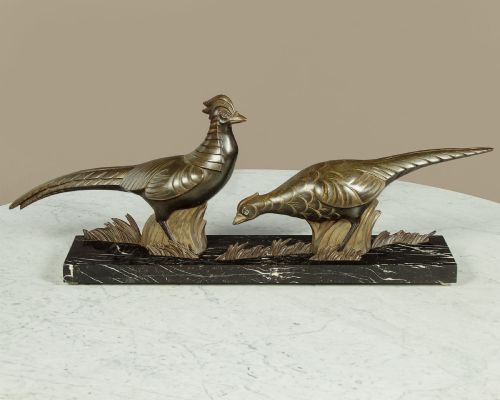
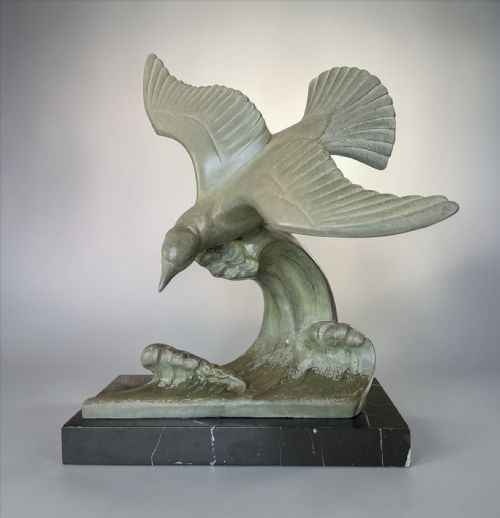
When you search for patinated spelter ornaments, you find sculptural works and decorative vessels shaped from a zinc-based alloy and treated with chemical finishes to simulate older metals. The selection ranges from nineteenth-century French figures and campana urns to geometric Art Deco animal groups and female statuary.
The objects frequently rest on contrasting bases of marble, onyx, or stepped plinths, lending a substantial architectural presence to the figures. You encounter pairs of decorative urns, Marley horses, and figural groups alongside single studies of birds and human subjects.
How they were made
The primary material, spelter, is cast in moulds to achieve fine detail before receiving a surface treatment. Artisans applied patinated metal coatings or bronzed finishes to the softer zinc alloy to give the visual impression of traditional bronze sculpture.
Many of these pieces incorporate stone elements, mounting the metal figures onto black marble or onyx bases. Signatures and foundry details are occasionally cast or inscribed directly into the metal or the supporting plinth.
Patinated Spelter Ornaments Retail Price Guide 2026
Typical asking prices for patinated spelter ornaments among the pieces listed under this phrase on Sellingantiques today, from the lower quarter to the upper quarter. They describe what is for sale here now, not the wider market.
Listings span the nineteenth century through the nineteen-thirties, incorporating materials such as onyx, marble, and patinated metal.
What varies in quality
The integration of the base also signals distinction. Pieces set on heavy, well-fitted marble or onyx plinths display superior balance and finish compared to simpler mountings.
P. Sega·H. Bal·Auguste Moreau
The Patinated Spelter Ornaments Glossary
- Spelter
- A zinc-based alloy commonly used as a cost-effective alternative to bronze for decorative sculptures and figures. It accepts patination well to mimic heavier metals.
- Patinated
- A chemically or thermally treated surface finish applied to metal to impart colour, age, and a sense of depth. This treatment protects the metal while defining the contours of the sculpture.
- Campana urn
- A bell-shaped classical vessel form often utilised for decorative pairs in nineteenth-century interiors. These urns frequently sit upon stepped plinths.
- Art Deco
- A design style prominent around nineteen-thirty characterised by streamlined geometric forms and stylised depictions of animals and human figures. Pieces from this period favor clean lines and dynamic movement.
Patinated Spelter Ornaments: Frequently Asked Questions
What is spelter?
Spelter is a zinc-based alloy that manufacturers utilised as a substitute for bronze in decorative figures and sculptures.
It allows for intricate casting and accepts surface patination to resemble older, heavier metals.
How do I clean patinated metal?
You should dust these ornaments gently with a soft, dry cloth to protect the delicate surface finish.
Moisture and harsh cleaning agents can strip away the applied patination and damage the underlying metal.
Are these pieces solid bronze?
No, these ornaments are formed from a softer zinc alloy rather than copper-based bronze.
Makers often applied a bronzed finish to give the appearance of solid metal while keeping the objects lighter.
Where were most ornaments made?
A significant portion of these decorative sculptures originated in French workshops during the nineteenth and early twentieth centuries.
French makers produced diverse subjects ranging from classical urns to modern animal figures.