



Dark Brown Metal Urns
Dark brown metal urns bring sculptural weight and rich patination to a room, offering classical forms shaped in bronze, spelter and brass.
Dark Brown Metal Urns
Dark brown metal urns encompass both decorative vessels and functional forms rooted in 19th-century European and East Asian metalwork. When searching for dark brown metal urns, buyers encounter a notable selection of Japanese Meiji period bronze vases alongside French neoclassical campana urns and spelter pieces. These objects span periods from pre-16th century Chinese work to Regency cassolettes and late 19th-century productions.
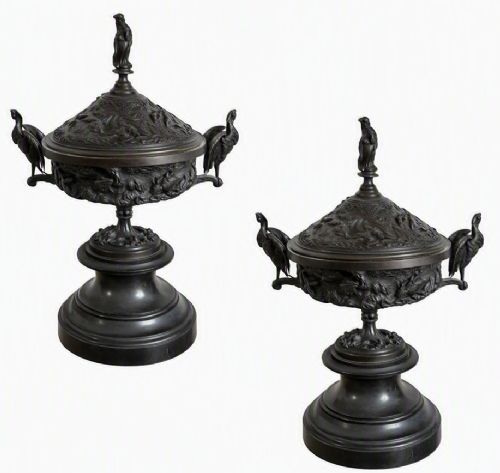
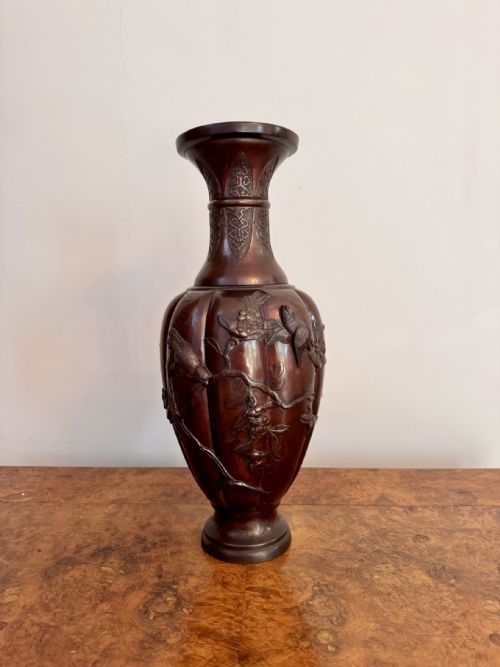
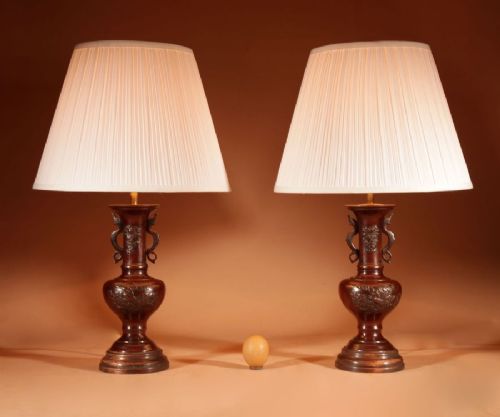
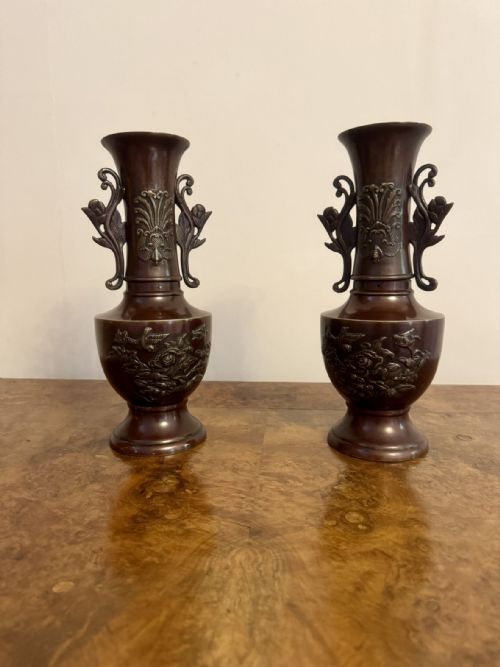
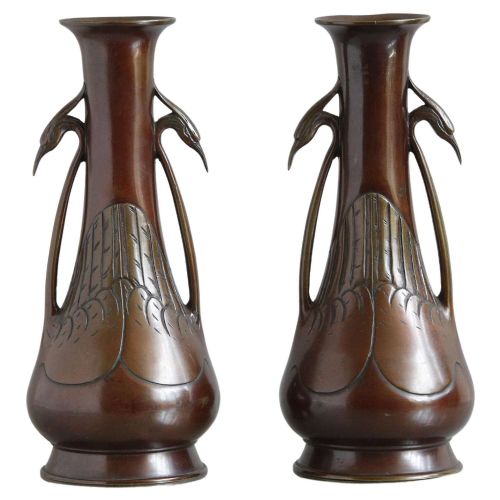
The dominant forms on this page include twin-handle vases, campana-shaped urns on stepped plinths, and large jardiniere vessels. Many items originate from Japanese workshops of the Meiji era, featuring patinated surfaces and cast handle decorations such as egrets, carp, and floral motifs. French pieces introduce figurative elements, including nymphs and storks, cast in bronze or spelter.
Materials and Casting Techniques
The construction of these pieces relies primarily on bronze, patinated bronze, and spelter, often shaped through traditional casting methods. Metal surfaces receive chemical or natural patination treatments to achieve deep brown, dark, and aged tones.
Detailing is achieved through varied techniques, ranging from applied patinated bronze and cast relief figures to enamel inlay on Chinese and Japanese vessels. Bases frequently incorporate contrasting materials or stepped plinths to support the weight of heavy metal bodies.
Several pieces feature sculptural carp and long-legged egrets clinging persistently to the handles, proving that metal birds make surprisingly loyal companions.
Judging Quality in Metal Vessels
Quality in these vessels reveals itself through the crispness of the casting and the depth of the original patination. Masterful chiselling and finishing distinguish finely detailed figural handles and relief work from softer, mass-produced commercial castings.
The integrity of the metal, the weight of the piece, and the presence of artist signatures or workshop marks further separate standard decorative items from exceptional examples of period metalcraft.
Jules Moigniez·Charles Korschann
The Dark Brown Metal Urns Glossary
- Patinated bronze
- Bronze that has been treated chemically or environmentally to alter its surface colour, producing rich dark brown or greenish tones.
- Campana urn
- A classical vase form shaped like an inverted bell, frequently mounted on a square plinth base.
- Spelter
- A zinc alloy used as a less costly alternative to bronze, often given a bronze-finish coating to resemble heavier metal.
- Cassolette
- A decorative vessel shaped to serve either as a vase or a burner for perfumes, often fitted with a reversible lid.
- Meiji Period
- The era in Japanese history from 1868 to 1912 characterised by the opening of trade and exceptional mastery in bronze casting.
Dark Brown Metal Urns: Frequently Asked Questions
What periods do these urns come from?
The selection spans several centuries, with a strong concentration of pieces originating in the 19th century, particularly the Victorian era and the Japanese Meiji period. Earlier examples stretch back to pre-16th century Chinese dynasties.
Craftsmen from Regency England, 19th-century France, and Meiji-era Japan dominate the available inventory, each bringing distinct regional aesthetics to the metalwork.
How were dark brown metal urns used historically?
These vessels served primarily as decorative ornaments, interior table pieces, and garnitures set upon mantelpieces or furniture surfaces. Some larger forms functioned as jardinieres for plants or ritual altar vases.
European campana urns often formed part of matching sets with cassolettes, while Japanese bronze vases displayed intricate relief work intended for aesthetic contemplation.
How do I style dark brown metal urns at home?
Their heavy metal construction and dark patinated surfaces make them natural focal points on sideboards, side tables, or architectural mantelpieces. Pairing them with natural light helps highlight the subtle tones in the bronze and spelter.
They integrate comfortably into both traditional and contemporary interiors, acting as sculptural anchors that contrast against lighter walls and wood furniture.
How can I tell Japanese Meiji bronzes apart?
Meiji period bronzes often display signature surface treatments, including rich original patination and detailed animal or botanical motifs such as carp and egrets. Many pieces bear artist signatures on the base or body.
Comparing the weight, crispness of the cast handles, and style of relief decoration helps distinguish these Japanese works from European productions of the same era.