





Pair Chinese Temple Jars
Pair chinese temple jars bring commanding symmetry and rich hand-painted pigment to a room, offering the striking scale and presence that collectors prize.
Pair Chinese Temple Jars
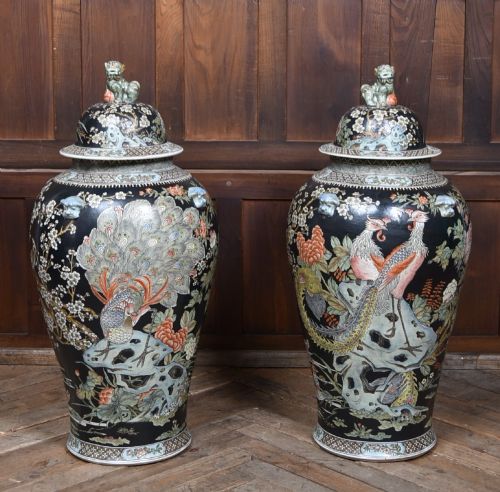
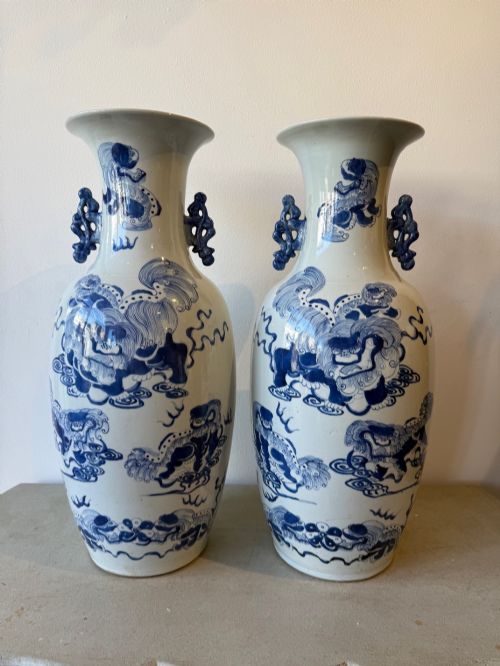
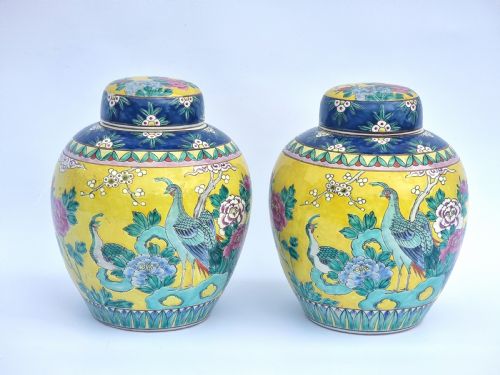
A pair chinese temple jars search brings up large lidded vessels intended for display rather than holding tea or wine, shaped with generous shoulders and fitted covers. You encounter forms ranging from massive floor standing palace jars to ginger jars and ovid shapes, predominantly executed in porcelain.
The pieces span several centuries and decorative movements, drawing heavily on Qing Dynasty, Chinese Export, and Republic Period aesthetics. Nineteenth-century examples appear frequently alongside earlier Kangxi period pieces and later twentieth-century decorative adaptations.
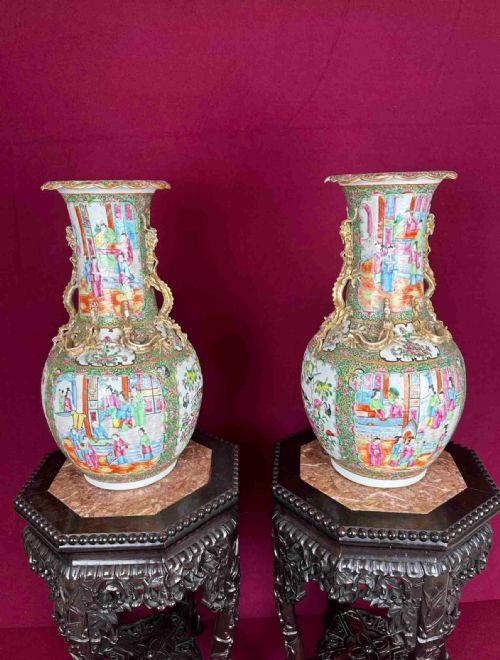
Makers and workshops produced these vessels for both domestic export and Western markets, resulting in variations like Canton, Rose Medallion, and powder blue glazes mounted with ormolu. Some listings pair the ceramics directly with padouk wood tables or adapt the jars into table lamps.
How they were made
Potters shaped the core body using refined porcelain clay before applying cobalt glaze or enamel pigments by hand. Many pieces incorporate gold leaf highlights and polychrome decoration baked in kilns to fix the intricate motifs.
Metalwork mounts in brass or copper appear on specific nineteenth-century iterations, adding structural frames or converting the vessels into lamps. Artisans also turned dense wood components, such as padouk bases and companion tables, to support the heavy ceramic forms.
Listings feature porcelain forms ranging from seventeenth-century Kangxi pieces to nineteenth-century Canton and Rose Medallion variations.
What varies in quality
The precision and density of the hand-painted brushwork dictate the visual weight of the design, separating hurried export pieces from finely detailed commissions. Crisp application of cobalt blue underglaze or vibrant famille rose enamels demonstrates superior technical control in the kiln.
The integrity of the matching covers and the original matching nature of the pair substantially influence the piece. Additional mounts in ormolu or heavy brass reflect higher tier production values intended for formal European interiors.
The Pair Chinese Temple Jars Glossary
- Famille Rose
- A palette of opaque enamel colours dominated by pink, introduced during the Qing Dynasty. It allowed for delicate shading of floral and figural scenes.
- Kangxi period
- The reign spanning the late seventeenth and early eighteenth centuries, celebrated for exceptional blue and white porcelain quality. Pieces from this era often bear apocryphal or genuine reign marks.
- Rose Medallion
- A distinctive Cantonese decorative style featuring panels of alternating figures and birds or flowers, densely framed in gilt and green enamel. This pattern defined much of the nineteenth-century export trade.
- Powder blue
- A speckled, blown cobalt glaze creating an atmospheric, mottled blue surface on the porcelain body. It served as a rich background for gilt decoration or panels.
- Cloisonne
- A metalworking technique where enamel paste is applied within compartments defined by soldered wire strips on a brass or copper base. These pieces bring textured colour to matching vase displays.
Pair Chinese Temple Jars: Frequently Asked Questions
What were pair chinese temple jars used for?
These large lidded vessels served primarily as decorative ornaments in grand interiors, often displayed on mantelpieces, pedestals, or dedicated tables.
They also functioned as containers for dry goods or spices in domestic settings before becoming staple luxury export items for Western collectors.
How do you date pair chinese temple jars?
Dating relies on examining the painting style, glaze characteristics, and potting techniques alongside any reign marks present on the base. Nineteenth-century examples often display denser polychrome enamel work, whereas earlier pieces show refined cobalt blue underglazes.
Material additions like nineteenth-century ormolu mounts or later electrical conversions provide further clues to the period of their assembly and use.
How should you display pair chinese temple jars at home?
Their imposing scale makes them ideal as floor-standing focal points or symmetric mantel ornaments. Placing them on matching wooden tables highlights their height and structural presence in a room.
Because many surviving examples retain their fitted covers, keep them away from high-traffic areas where accidental knocks could displace the lids.
What is the difference between ginger jars and temple jars?
Temple jars typically feature a more elongated, tapering shoulder profile and sit on a broader base, built for ceremonial display. Ginger jars generally possess a more rounded, ovoid body shape originally designed to store spices.
Both forms frequently appear as matched pairs in porcelain with matching domed lids across various nineteenth and twentieth-century styles.