

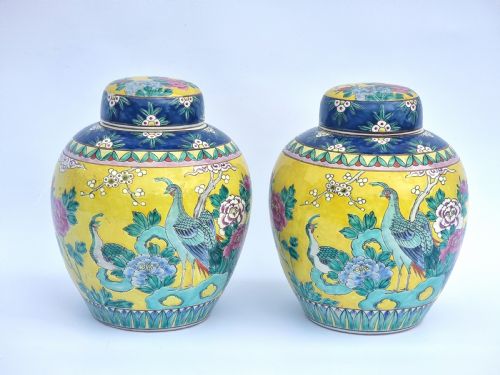


Chinoiserie Porcelain Covered Urns
Chinoiserie porcelain covered urns bring together European decorative ambition and Asian ceramic forms in a striking display.
Chinoiserie Porcelain Covered Urns
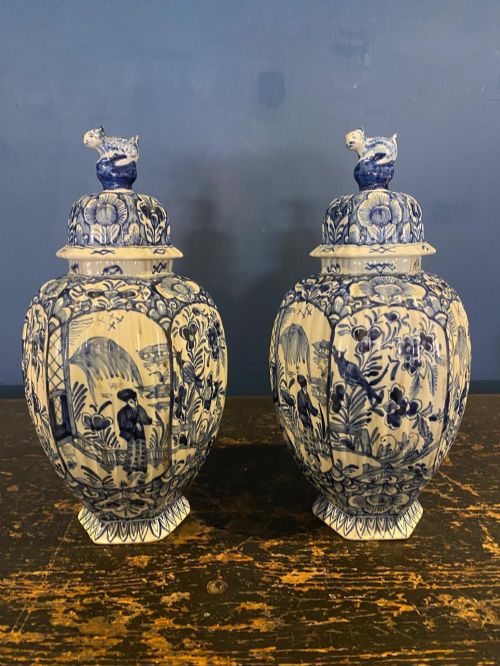
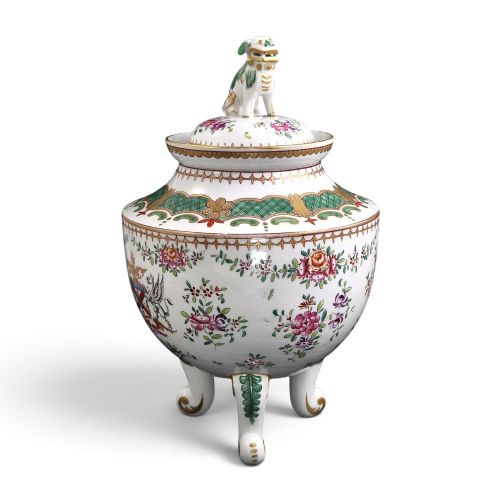
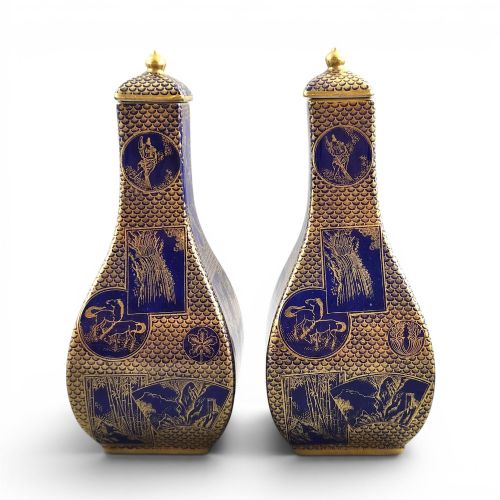
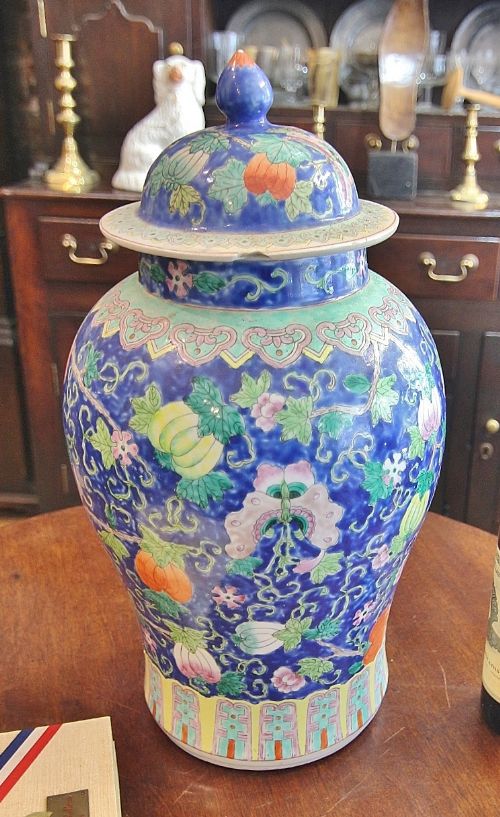
Chinoiserie porcelain covered urns encompass lidded vessels, ginger jars, and garnitures created in styles ranging from Georgian and Regency interpretations to 20th century Chinese production. These pieces often feature hand painted decoration, mazarine blue grounds, or armorial motifs applied to hard-paste porcelain and ironstone bodies.
The selections span the 19th century into the 20th century, including Victorian manifestations alongside Japanese Imari wares that share similar decorative impulses. Forms vary from monumental hall vases to pairs mounted with ormolu, occasionally accompanied by occasional tables.
Assessing Quality
The refinement of the hand painted detail distinguishes superior examples, particularly where brushwork on porcelain or ironstone displays exceptional control and precision. The depth of the mazarine blue ground and the integrity of the gold leaf or gold gilt application also mark the upper tiers of production.
Proportion and the integration of ormolu mounts play a significant role in overall execution, ensuring the ceramic vessel and its cover form a cohesive composition. The historical consistency of the period design, whether adhering to Georgian, Regency, or Victorian sensibilities, further separates standard wares from finer productions.
The documented forms include ginger jars, lidded vases, and garnitures decorated in Chinoiserie and Imari styles.
Samson Paris·Mason's
The Chinoiserie Porcelain Covered Urns Glossary
- Chinoiserie
- European decorative style reflecting Chinese artistic influences. It manifests in porcelain and furnishings across the Georgian and Victorian periods.
- Ironstone
- A patented heavy earthenware ceramic developed in the 19th century. Mason's utilised this dense material for durable lidded vases and garnitures.
- Ormolu
- Gilded bronze mounts applied to decorative objects. These metal fittings frequently embellish 19th century vases and lamps.
- Garniture
- A set of matching vases or jars designed to be displayed together on a mantelpiece or furniture top.
Chinoiserie Porcelain Covered Urns: Frequently Asked Questions
What periods do these covered urns date from?
The listings span the 19th century and the 20th century, encompassing Georgian, Regency, and Victorian eras.
Individual pieces reflect stylistic influences ranging from early 19th century English ironstone to later Chinese export production.
How were these lidded vessels used?
These pieces functioned primarily as decorative items, garnitures, or hall vases in grand interiors.
Some examples also served as bases for lamps when fitted with appropriate wiring.
What is the difference between porcelain and ironstone?
Porcelain is a fine, vitrified ceramic fired at high temperatures, known for its translucency.
Ironstone is a robust, opaque earthenware designed for durability while retaining crisp decorative details.
Are these pieces always sold as pairs?
While many examples are offered as matched pairs or garniture sets, single vessels also appear in the listings.
Pairs often feature mirrored hand painted decoration or matching ormolu mounts.