


Padouk Wood Side Tables
Padouk wood side tables are dense, deeply coloured furnishings from the eighteenth and nineteenth centuries that bring rich grain and robust carving into a room.
Padouk Wood Side Tables
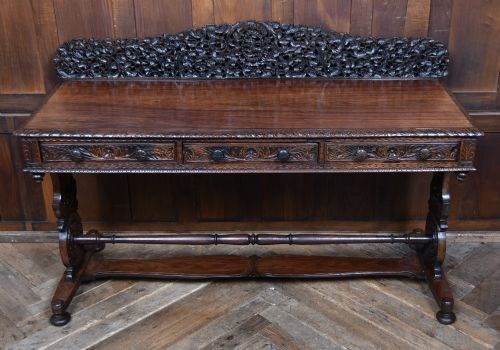
Padouk wood side tables span the eighteenth and nineteenth centuries, taking the form of occasional tables, plant stands, console tables, and tilt-top designs. The pieces appearing here most frequently belong to the nineteenth century, particularly within Anglo-Indian and Chinese export traditions.
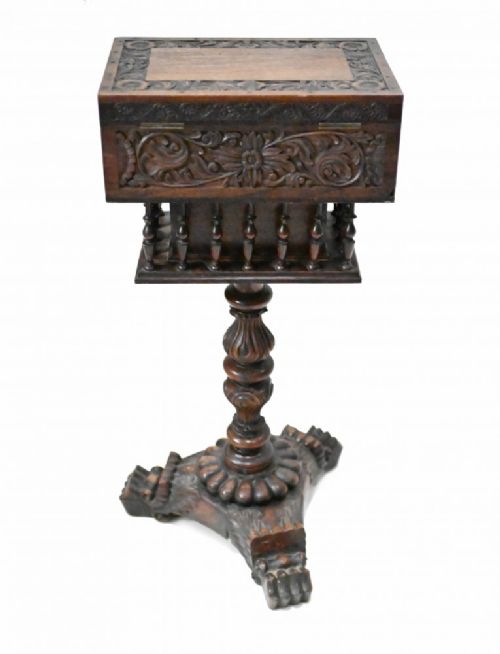
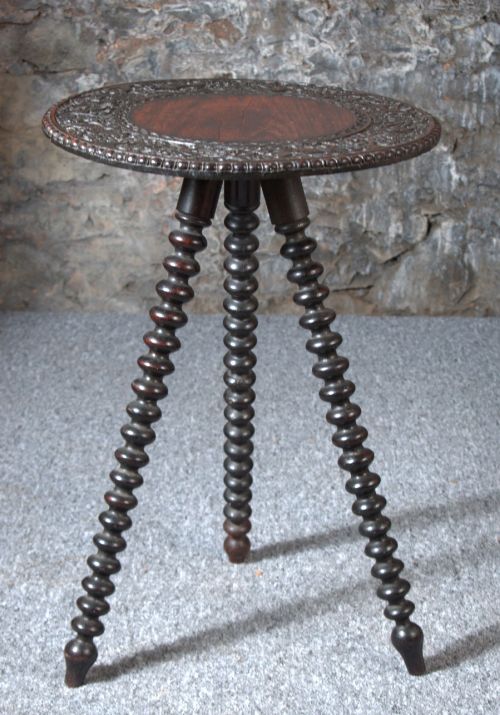
The styles encountered across these listings include Anglo-Indian colonial work, George III pieces, and Chinoiserie forms influenced by the Qing dynasty. Makers often utilised dense tropical hardwoods to produce carved stands and circular tables that functioned as teapoys or display surfaces.
Origins stretch from the Bombay region to Chinese workshops, reflecting global trade routes of the period. Buyers find both compact stands and larger console tables built to withstand heavy use while displaying intricate surface carving.
Construction and Materials
These tables rely primarily on solid padouk and related hardwoods, chosen for their exceptional weight and deep reddish-brown tone. Artisans combined this dense timber with brass fittings and occasionally incorporated marble or porcelain elements into the top surfaces.
Carving techniques define the Anglo-Indian and Chinese export pieces, featuring deeply undercut foliage, geometric borders, and figural motifs executed by hand. Tilt-top mechanisms and pedestal bases required precise joinery to support the heavy timber without warping.
Listings feature items from the eighteenth and nineteenth centuries, incorporating marble, brass, and porcelain alongside solid padouk and hardwood.
Assessing Quality and Execution
Quality rests heavily on the depth and crispness of the carving, where master carvers achieved sharp relief while lesser workshops produced shallow, rounded detailing. The choice of timber also matters, with richly figured padouk displaying superior grain patterns compared to plainer stock.
Proportion and structural integrity separate standard utility pieces from finer examples, especially in tilt-top mechanisms and pedestal joints. Original brass hardware and intact marble or porcelain inserts elevate the standing of a piece within its period.
The Padouk Wood Side Tables Glossary
- Padouk
- A dense tropical hardwood known for its reddish colour that darkens to a deep brown over time. It polishes to a fine lustre and resists woodworm.
- Tilt-top table
- A table featuring a mechanism that allows the circular top to pivot vertically when not in use. This design saved space in nineteenth-century interiors.
- Teapoy
- A small occasional table originally used for holding tea canisters and equipment. Many examples from the colonial period feature fitted interiors or carved basins.
- Anglo-Indian
- A style of furniture produced in India by local craftsmen for British residents during the colonial era. It blends European forms with traditional Indian carving techniques.
- Chinese Export
- Goods manufactured in China specifically for Western markets during the eighteenth and nineteenth centuries. These pieces often combine local timber with forms requested by European buyers.
Padouk Wood Side Tables: Frequently Asked Questions
How do I care for padouk wood?
Padouk timber benefits from occasional application of quality beeswax to nourish the grain and maintain its natural lustre. Keep these tables away from direct heat sources and strong sunlight to prevent the deep red tones from fading.
Dust regularly with a soft, dry cloth rather than using silicone-based polishes that build up over time. A damp cloth handles occasional marks provided the surface is dried immediately afterwards.
What is a tilt-top table used for?
Tilt-top tables served as versatile occasional furniture in nineteenth-century drawing rooms and parlours where space was at a premium. The pivoting mechanism allowed the top to rest vertically against a wall when the room needed to be cleared.
When lowered horizontally, the surface supported decorative objects, tea service equipment, or reading materials. The mechanism relies on a sturdy catch and a sturdy pedestal base for stability.
How can I tell a nineteenth-century piece apart?
Nineteenth-century padouk tables display characteristic tool marks, hand-cut joinery, and specific casting methods on any associated brass fittings. Examining the underside and interior surfaces reveals the manual methods used by period cabinetmakers.
Stylistic cues such as dense floral carving and specific pedestal turning provide further clues to dating. Comparing the timber weight and patination against known period examples confirms the era of production.