


Qing Dynasty Style Jars
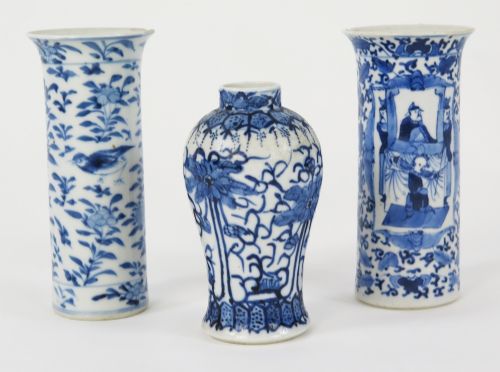
Qing dynasty style jars bring centuries of ceramic heritage into a room, offering striking blue and white patterns and vibrant famille palettes that collectors prize.
Qing Dynasty Style Jars
When you search for qing dynasty style jars, you find decorative vessels spanning the nineteenth century and the Edwardian era, including pieces designed to evoke earlier Kangxi aesthetics.
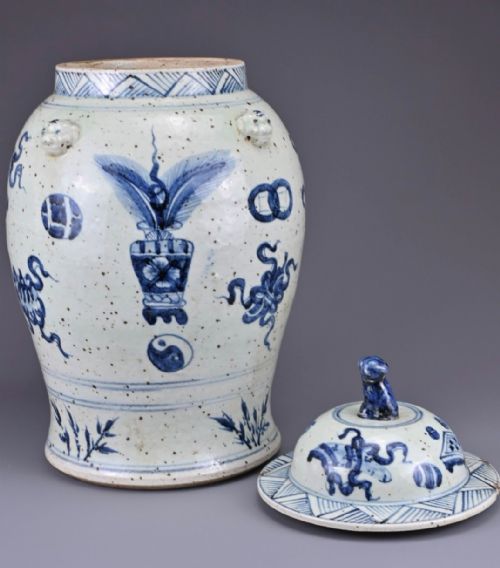
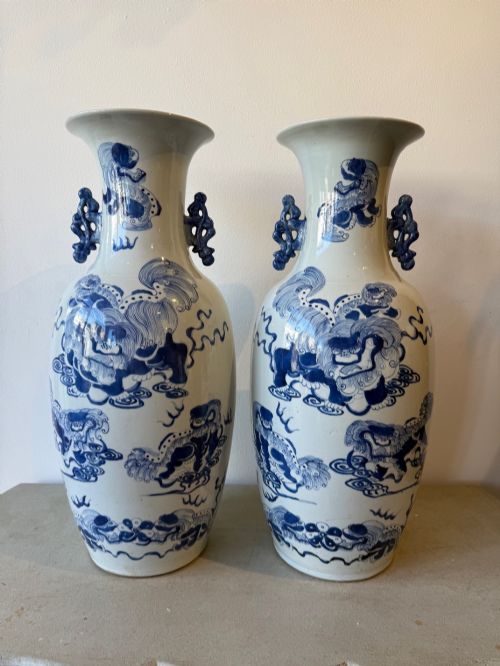
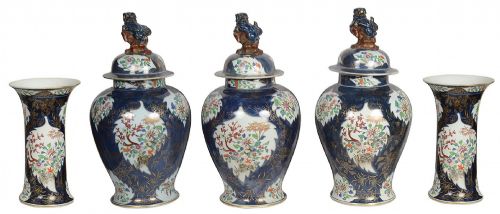
The selection ranges from ginger jars and lidded urns to large porcelain vases and converted table lamps, often displaying traditional dragon motifs, blue and white glazes, or famille rose and famille verte colourways.
These forms reflect historical Chinese export and decorative traditions, appearing in pairs or single statement pieces shaped by nineteenth-century craftsmanship.
Materials and construction
The construction relies primarily on porcelain and ceramic bodies shaped into classic jar and vase forms, frequently finished with cobalt glaze, underglaze blue, or multi-coloured enamel decoration.
Surface detailing involves hand-painted scenes, dragon designs, and occasional gold leaf accents, alongside specialised treatments such as crackle ware finishes and cloisonne work on metal vessels.
Materials documented across the available inventory include porcelain, brass, enamel, glaze, gold leaf, ceramic, and silk.
Evaluating quality and execution
Quality rests in the crispness of the hand-painted brushwork and the depth of the cobalt or enamel glaze, where precise detailing on dragons and floral motifs separates superior examples from simpler commercial work.
The integrity of the porcelain body, the symmetry of the form, and the presence of clear character marks or seal marks to the base further distinguish the finer pieces in this range.
The Qing Dynasty Style Jars Glossary
- Ginger jar
- A wide-shouldered ceramic vessel with a domed lid, originally used for storing spices and later prized purely for display. These forms form a major part of the nineteenth-century selection.
- Famille rose
- A low-temperature opaque ceramic palette dominated by pink or rose enamels introduced during the Qing dynasty. It allows for soft shading on floral and figurative designs.
- Famille verte
- A vibrant green-dominated enamel palette used on Qing dynasty and revival ceramics. It creates strong visual contrast alongside blue and white elements.
- Doucai
- A technique combining underglaze blue outlines with overglaze enamel infill on porcelain. This method produces crisp, multicoloured designs such as dragons.
- Kangxi period
- A historically significant reign within the Qing dynasty known for exceptional blue and white porcelain. Later nineteenth-century makers frequently referenced these classic designs.
Qing Dynasty Style Jars: Frequently Asked Questions
How do I date qing dynasty style jars?
Dating relies on examining the porcelain body, the characteristics of the glaze, and any painted character marks or seals on the base. Nineteenth-century pieces often show specific potting traits that distinguish them from later reproductions.
Comparing the brushwork style and the formulation of the cobalt or enamel colours against known period examples helps narrow down the decade of production.
Were these jars used for ginger?
While the Western term ginger jar describes this specific shoulder-form vessel, their historical use in China encompassed storing various spices, oils, and provisions. Over time, their aesthetic appeal led to their primary use as decorative objects.
By the nineteenth century, makers produced them specifically for export and display rather than culinary storage.
How do I display a ginger jar?
Ginger jars work effectively as single focal points on side tables or mantels, or arranged as symmetrical pairs to anchor a room's design. Their strong geometric shapes and detailed patterns contrast well with plain wooden surfaces.
Some examples adapted as table lamps also provide functional ambient lighting while retaining their traditional ceramic character.
What is the difference between blue and white and famille wares?
Blue and white pieces utilise cobalt oxide painted directly onto the clay body beneath a clear glaze before firing, resulting in deep blue motifs against a white background. Famille wares incorporate overglaze enamels in green, rose, and other colours applied after the initial firing.
This polychrome technique offers a more colourful, layered surface compared to monochrome blue designs.