


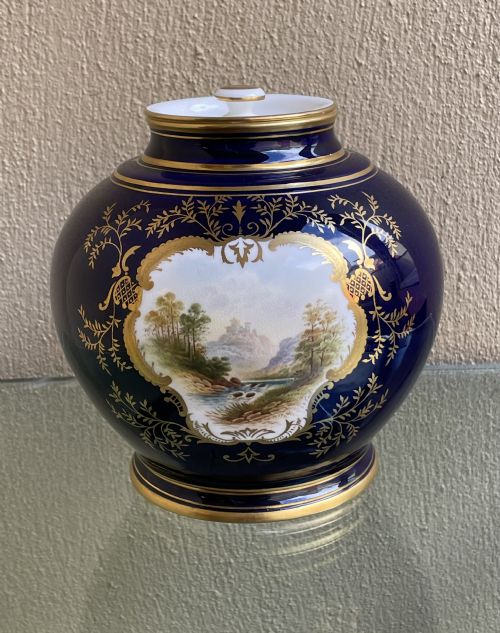


Blue Porcelain Ginger Jar
When you search for a blue porcelain ginger jar, you are looking for lidded vessels originating from Chinese and Japanese traditions alongside European interpretations.
Blue Porcelain Ginger Jar
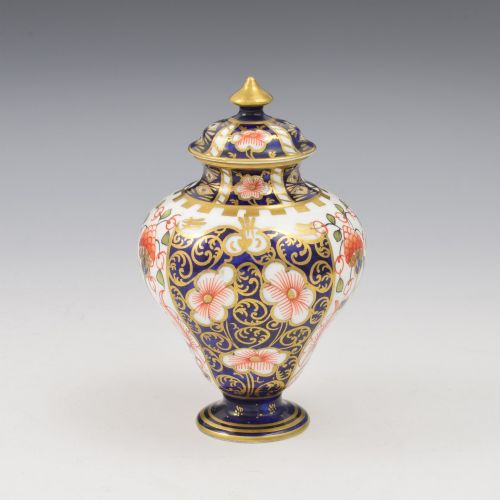
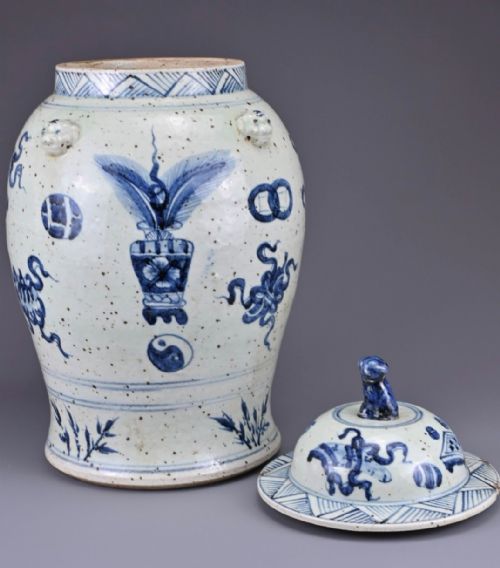
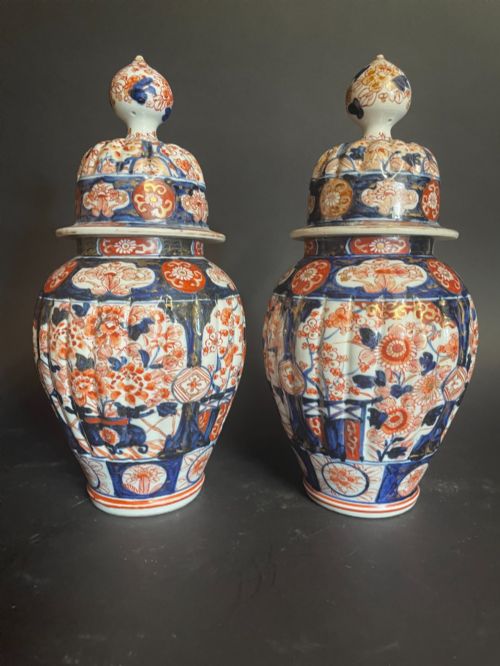
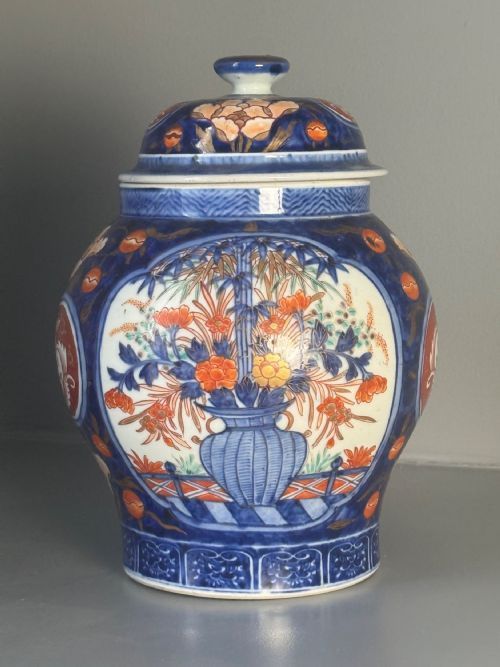
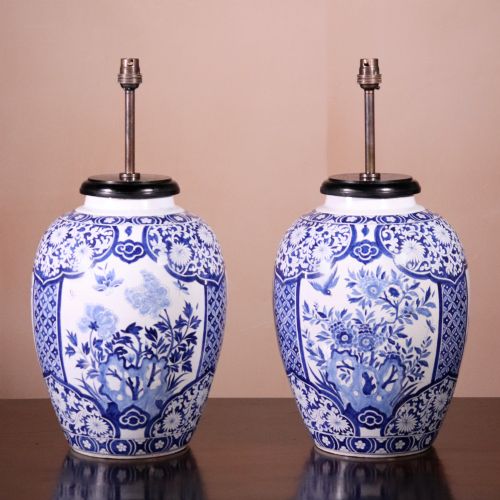
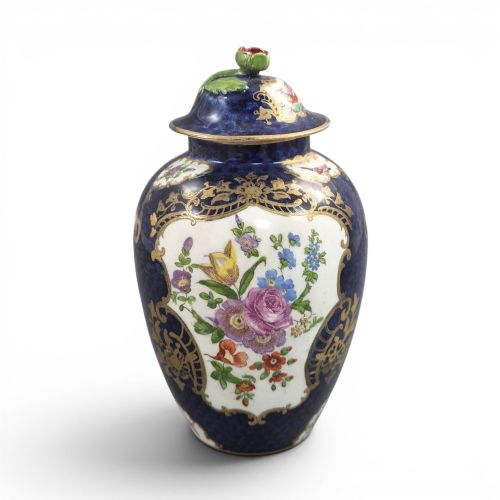
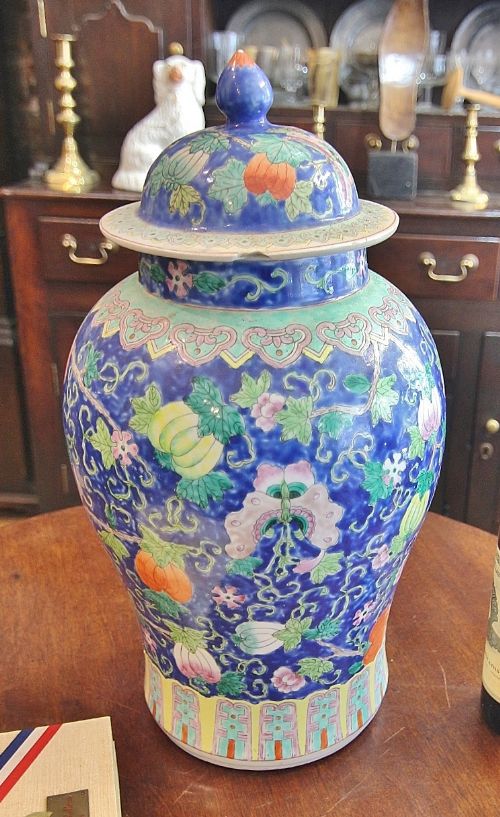
A blue porcelain ginger jar is a covered vessel initially designed for storage, featuring heavily in Chinese Qing Dynasty wares, Japanese Imari productions, and European ceramic traditions. These pieces appear on this page as lidded jars, baluster vases, and table lamps spanning the seventeenth to the twentieth centuries.
The version you are most likely to meet here is a nineteenth-century Japanese Imari lidded jar or a Chinese blue and white porcelain piece. They arrive in various scales, from small cabinet examples to large floor-standing vessels.
Makers and potteries from England and continental Europe also produced comparable lidded jars, drawing directly upon Asian design motifs such as exotic birds and floral panels.
How they were made
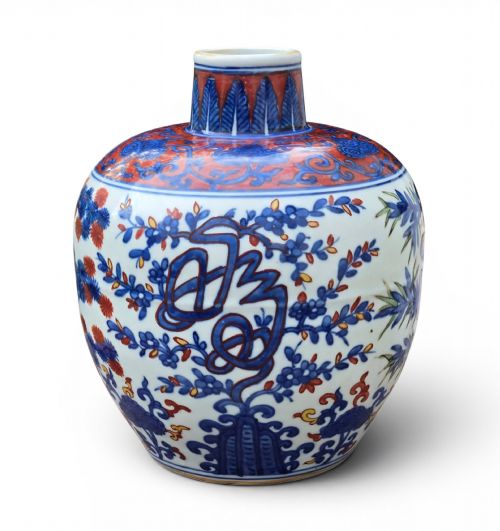
These pieces rely upon porcelain and ceramic bodies finished with cobalt glaze, enamel, and gilding. Artisans applied cobalt blue underglaze decoration before firing, often combining this with iron-red highlights and gold leaf details.
Selected vessels feature crackle glaze finishes or incorporate brass and ormolu mounts fitted during later European adaptations into lamps and decorative containers.
The listings span multiple centuries, incorporating seventeenth-century Arita wares alongside twentieth-century English ironstone productions.
What varies in quality
The distinction between tiers rests upon the precision of the hand-painted underglaze work and the crispness of the porcelain moulding. Superior examples display controlled brushwork and rich, deep cobalt tones rather than muddy or flat coloration.
The presence of matching original covers and undamaged gilt highlights elevates a piece, as does the balance of the proportions on baluster and ovid forms.
Royal Crown Derby·Booths Silicon China·Coalport·Wolfsohn Dresden·Samson of Paris
The Blue Porcelain Ginger Jar Glossary
- Imari
- A style of Japanese porcelain decorated in underglaze blue, iron-red, and gold. It takes its name from the port of export.
- Baluster
- A vase form with a rounded body that tapers toward the base and swells near the centre. This shape provides stability and visual weight.
- Ovid
- An egg-shaped profile frequently utilised for storage jars and vases. It creates a smooth curvature from the shoulder to the foot.
- Ormolu
- Gilded bronze mounts applied to ceramic bodies, particularly common on pieces adapted in Europe during the nineteenth century.
- Underglaze
- Pigment applied directly to the raw ceramic body before the application of a transparent glaze and subsequent high-temperature firing.
Blue Porcelain Ginger Jar: Frequently Asked Questions
What were blue porcelain ginger jars originally used for?
These jars served primarily as practical storage containers for spices, herbs, and other valuable commodities traded across continents.
Over time, their decorative qualities led to their adoption as display pieces in domestic interiors.
How do I tell Chinese export pieces from Japanese Imari?
Chinese pieces often rely on cobalt blue and white painted motifs, sometimes featuring crackle glazes or Kangxi period designs.
Japanese Imari typically incorporates a distinct palette combining underglaze blue with iron-red and gilding.
Are these jars usually found with their original covers?
Many surviving examples retain their matching lidded covers, though replacement or matched covers do occur among older ceramics.
The fit and glaze continuity between jar and lid help indicate whether they originated together.
How can I safely live with a ceramic jar lamp?
Jar lamps combine historic porcelain bodies with electrical fittings, usually added during twentieth-century or later adaptations.
Placing them on stable surfaces away from heavy traffic protects both the ceramic body and any associated ormolu mounts.