




Chinese Ginger Jar
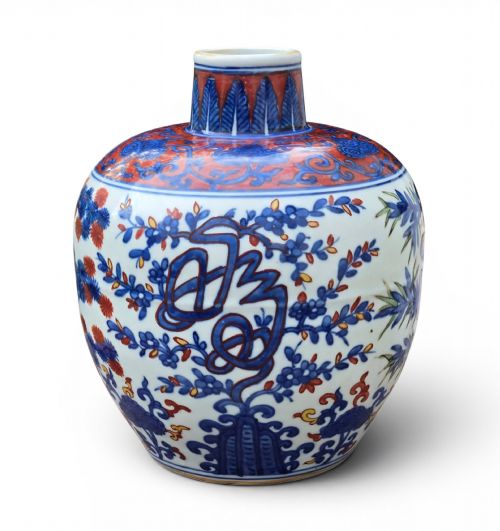
A chinese ginger jar carries centuries of ceramic history, offering collectors stout proportions and hand-painted blue and white or polychrome decoration.
Chinese Ginger Jar
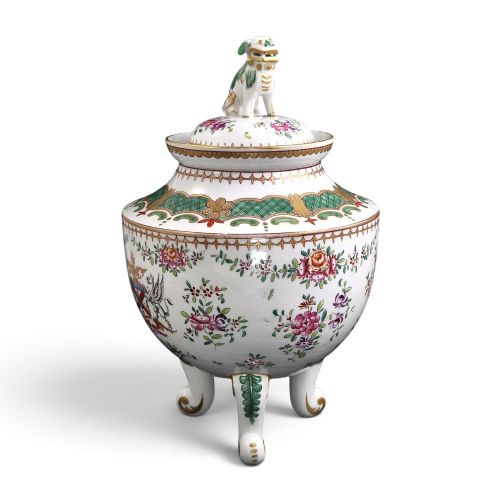
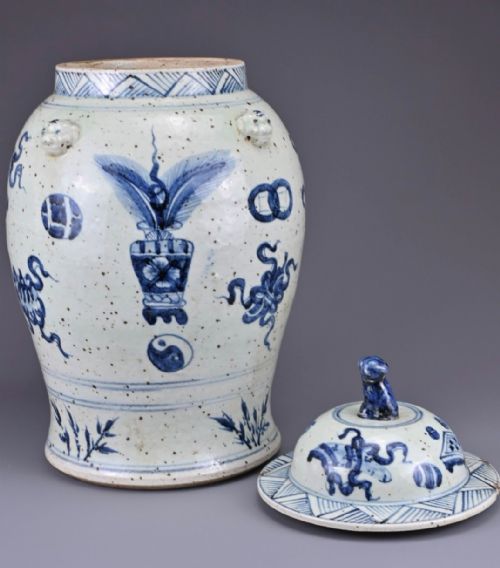
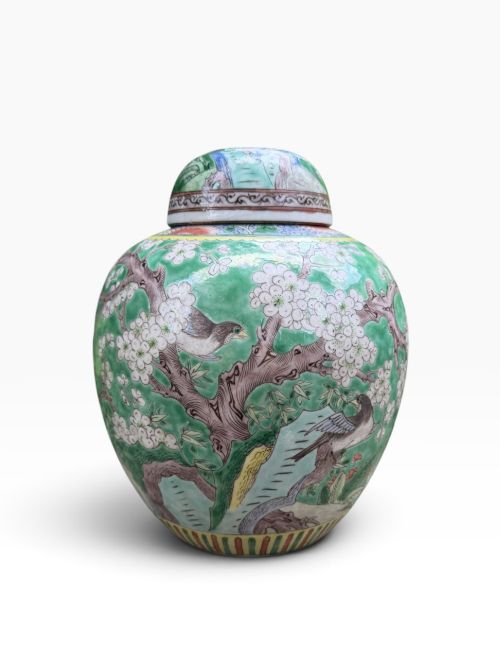
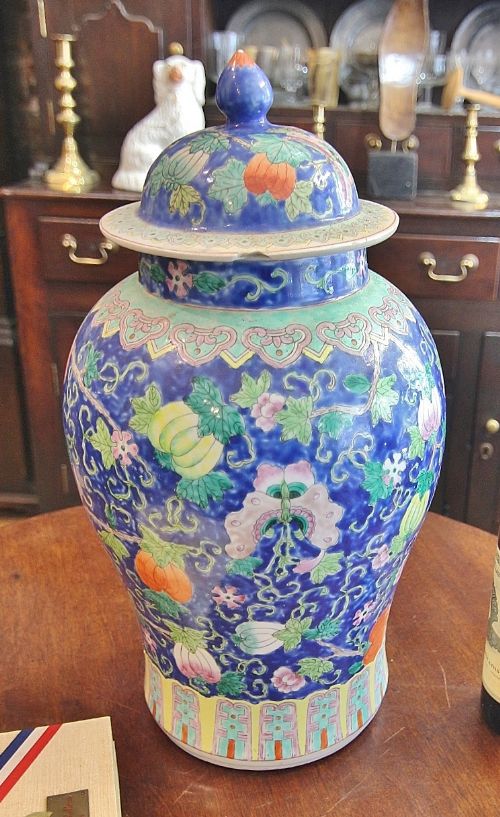
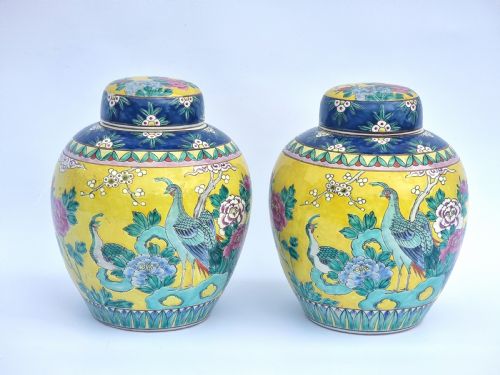
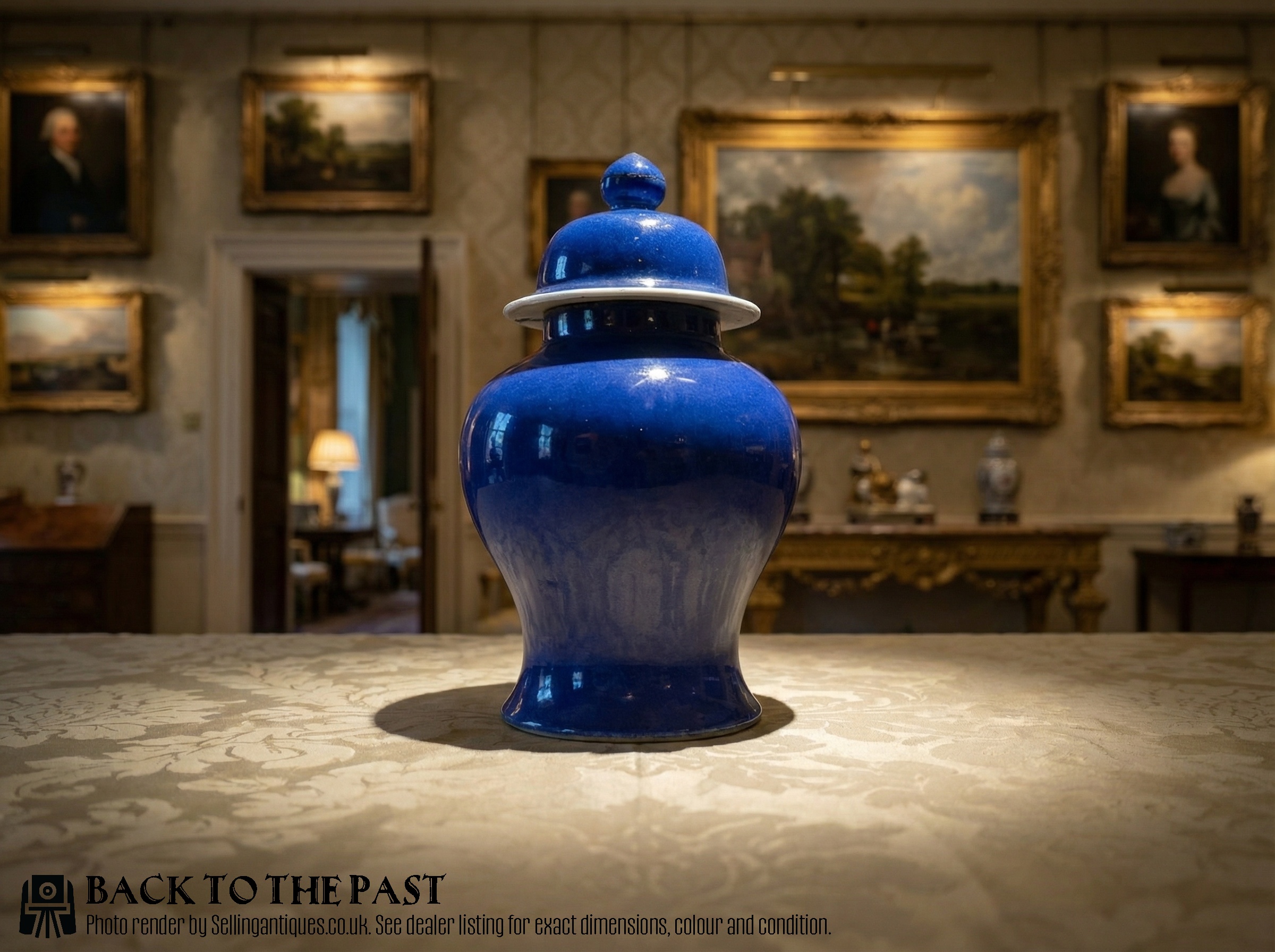
When you search for a chinese ginger jar, you are looking at covered ceramic vessels originally made to store spices, salt or oil. The pieces on this page span from the Ming dynasty and Kangxi period through the nineteenth century and into the twentieth century. You will frequently encounter blue and white porcelain examples, alongside famille rose, famille verte, and powder blue variations.
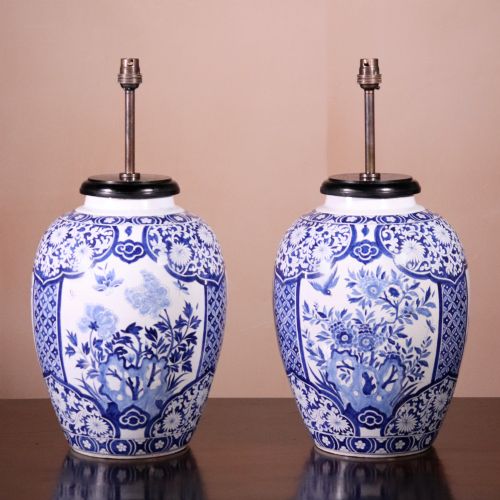
Beyond lidded jars intended for storage, the selection includes vases, temple jars, and pieces subsequently converted into table lamps with wired fittings or mounted with ormolu. Forms range from stout, high-shouldered ovoid shapes to smaller canisters and provincial pottery. Many retain their original covers, while others appear paired or as single decorative display pieces.
How They Were Made
Potters shaped these vessels in porcelain, pottery, and ceramic bodies, often applying cobalt glaze beneath a clear finish to achieve deep blue tones. Other pieces utilise polychrome enamels such as the famille rose and doucai palettes, painted by hand with birds, flowers, dragons, and figures.
Some works incorporate metal elements like brass, ormolu mounts, and cloisonné enamel work, while related items use wooden stands or carved wooden lids. Kiln techniques varied from traditional imperial production to provincial kilns, leaving visible crackle glazes and underglaze iron-red accents on specific bodies.
Listings feature porcelain, pottery, and brass materials across nineteenth-century and twentieth-century production periods.
What Varies in Quality
The distinction between ordinary and exceptional examples rests on the crispness and control of the hand painting. Finer pieces display precisely drawn motifs, deeply saturated cobalt, or evenly applied enamel palettes without muddiness.
Proportion and the preservation of the matching original cover also dictate standing. Vessels that retain crisp underglaze marks, correct period potting characteristics, and undamaged surfaces occupy the upper tier of the range.
Samson Paris·Wang Bing Rong
The Chinese Ginger Jar Glossary
- Famille Rose
- A palette of opaque pink and rose enamel colours introduced during the Qing dynasty. It allowed artists to create shaded floral and figural compositions.
- Underglaze Blue
- A decoration method where cobalt pigment is painted directly onto the clay body before applying a transparent glaze and firing. This seals the blue pigment beneath the glassy surface.
- Kangxi
- A period of the Qing dynasty spanning from 1662 to 1722, celebrated for brilliant cobalt blue porcelain and balanced potting. Later nineteenth-century pieces often replicated these designs.
- Ovid
- An egg-shaped vessel profile shared by many traditional storage jars. It gives the body a wide shoulder that tapers toward the base.
- Prunus
- A motif featuring blossoming plum branches, frequently painted on blue and white porcelain jars. It symbolises resilience and spring.
Chinese Ginger Jar: Frequently Asked Questions
What were chinese ginger jars used for?
These lidded vessels originally served to store and transport spices, salt, oil, and herbs in international and domestic trade. Merchants packed commodities tightly inside the stout ceramic bodies before export.
Over time, Western collectors repurposed the empty vessels for display, interior decoration, and eventually as table lamps fitted with electrical wiring.
How do I date a blue and white jar?
Dating relies on examining the potting weight, the tone of the cobalt blue underglaze, and the style of the hand-painted motifs. Reign marks provide a starting point, though many nineteenth-century pieces bear earlier Kangxi or Ming marks as a tribute rather than a signature.
Clay characteristics and base finish offer further clues. Older provincial pottery differs noticeably from refined imperial porcelain of the Qing dynasty.
Are lamp conversions modern?
Many ginger jars were converted into table lamps during the nineteenth and twentieth centuries to suit European domestic interiors. These pieces often feature drilled bases, weighted mounts, or decorative ormolu and brass fittings.
Such conversions reflect the long history of adapting East Asian ceramics for Western living spaces while preserving the hand-painted body.
What is the difference between famille rose and famille verte?
Famille verte relies predominantly on green enamels combined with iron red, yellow, and blue, coming to prominence in the seventeenth century. It produces a vibrant, jewel-toned appearance across the ceramic surface.
Famille rose emerged later, defined by the introduction of an opaque pink enamel derived from colloidal gold. This palette allowed artists to achieve softer tonal gradations in floral and figural scenes.