




Hand Painted Chinese Jar
A hand painted chinese jar brings unmistakable pigment and form to a room, offering the enduring weight of porcelain decorated by hand.

What these pieces are
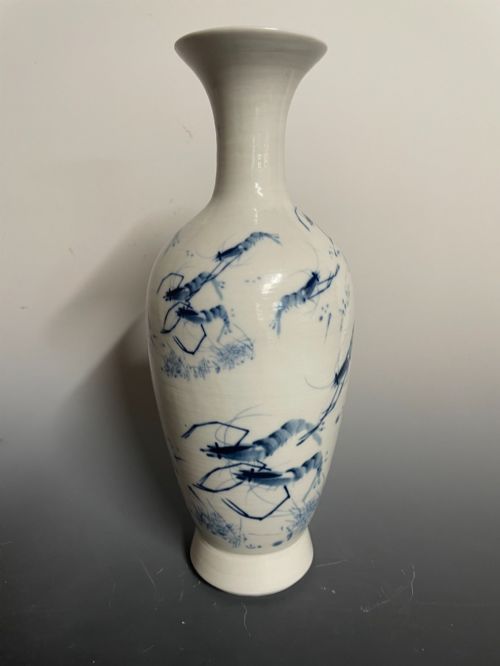
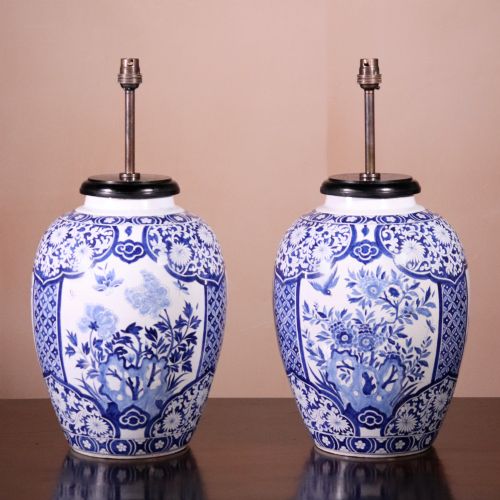
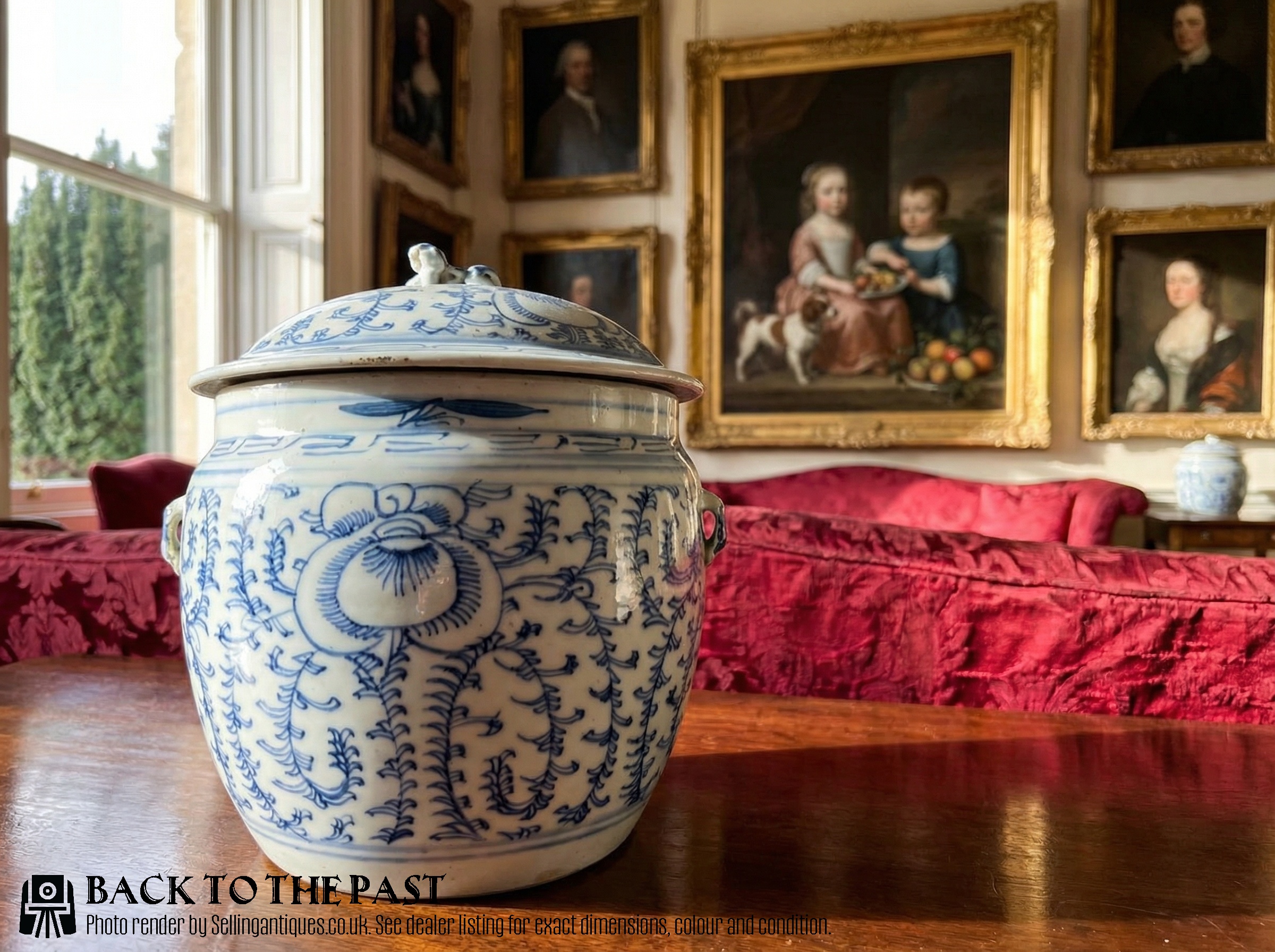
A hand painted chinese jar brings traditional form into a room, taking shape as ginger jars, kamcheng jars, and large decorative vessels. These pieces span the nineteenth century and the early twentieth century, showing the enduring influence of Qing dynasty design.
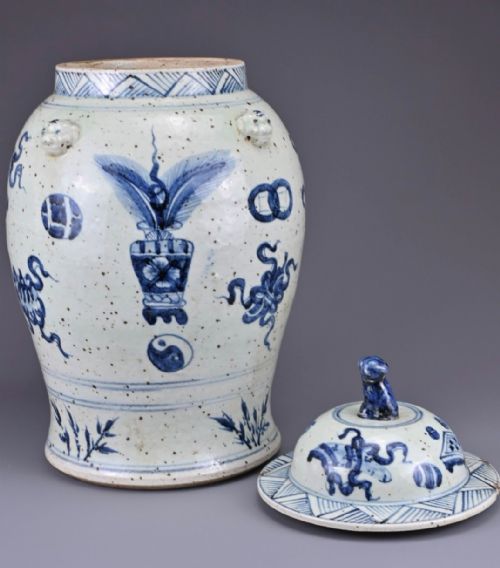
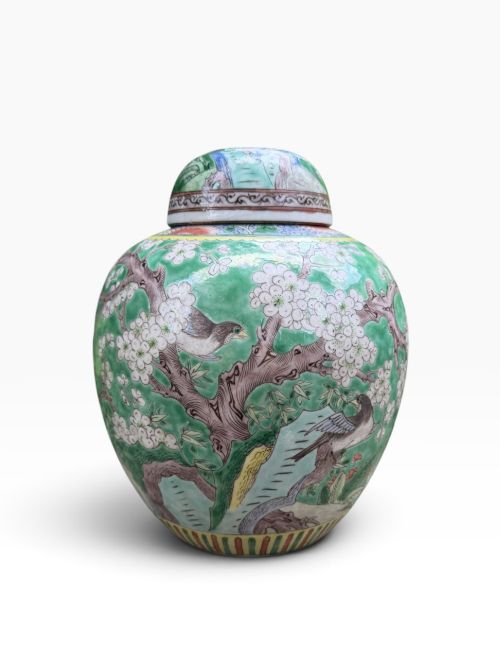
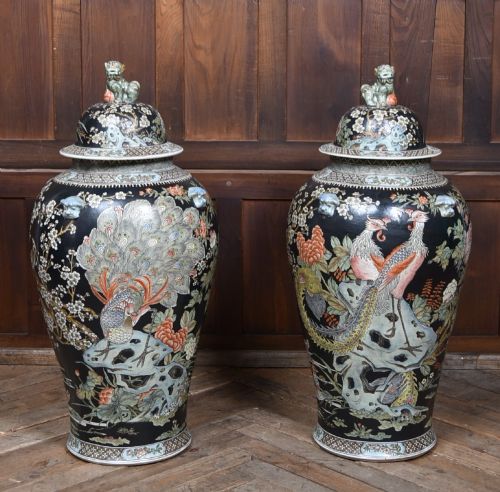
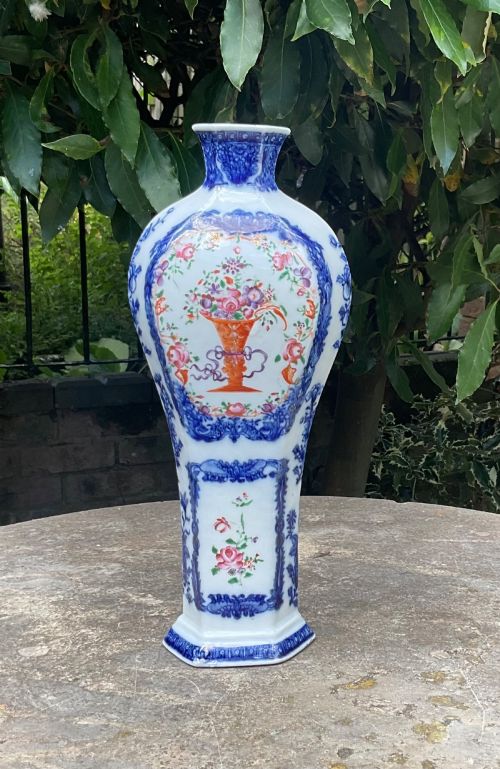
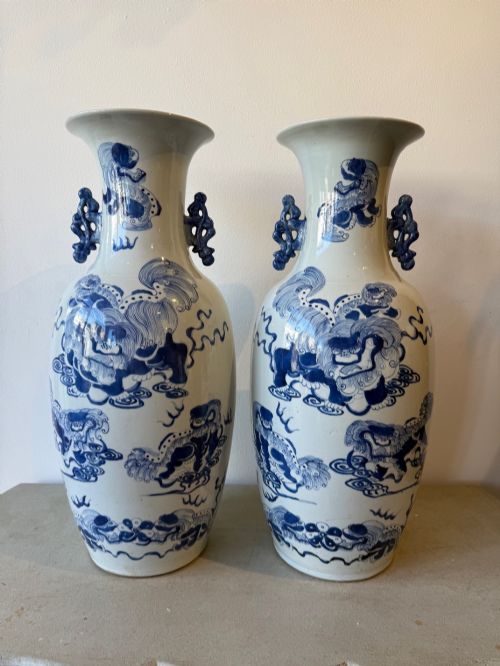
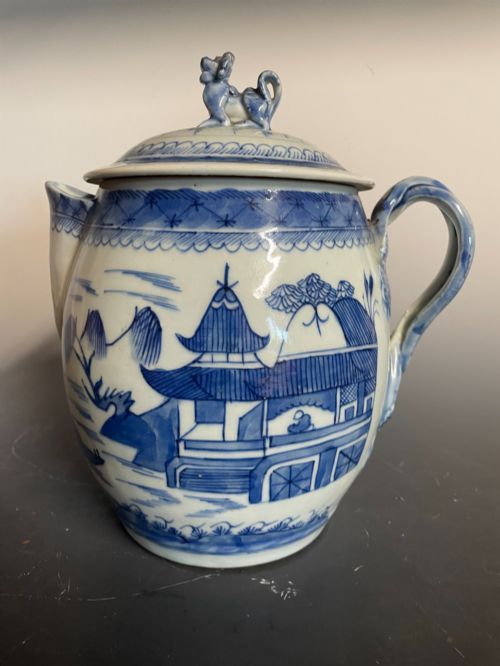
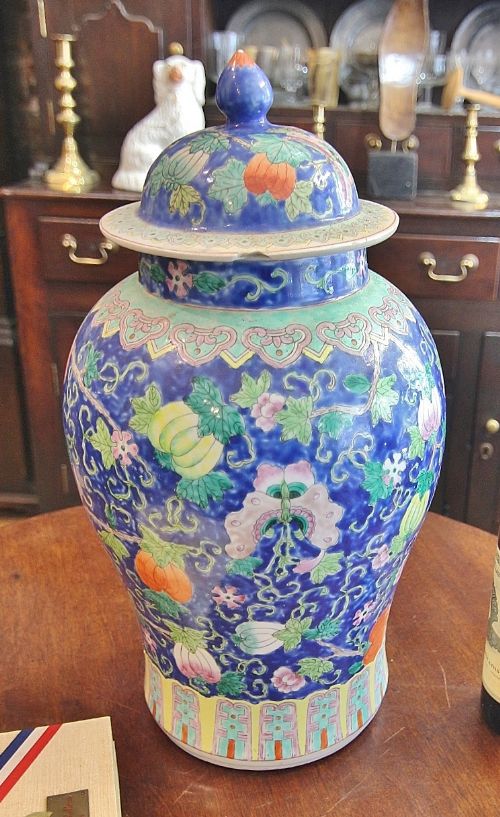
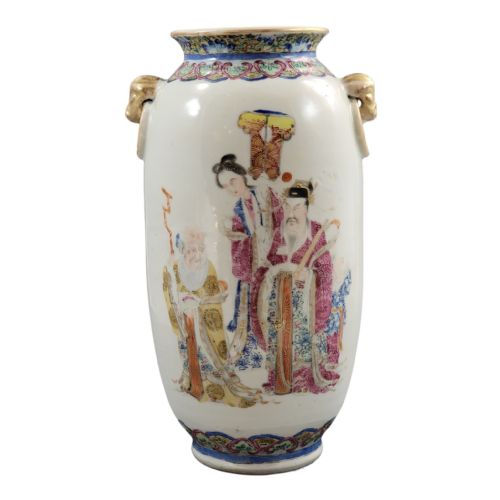
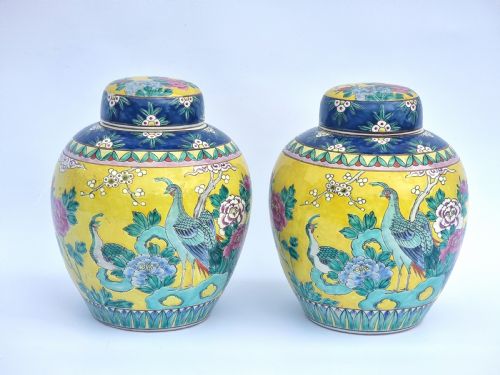
The versions most commonly met on this page include blue and white porcelain lidded jars and colourful famille rose or famille noir examples. Makers shaped these vessels for storage and display, creating forms that range from robust kitchen jars to large decorative palace vases.

How they were made
Potters shaped these vessels from ceramic and fine porcelain, often finishing the rims with metal mounts for protection and contrast. Artisans applied cobalt pigment and cobalt glaze beneath the final surface to achieve the deep blue tones characteristic of traditional wares.
Painters decorated the surfaces by hand using fine brushes, applying detailed pigments to create floral, landscape, and figurative scenes. The pieces then underwent high-temperature firing, fusing the glaze and pigment into a durable, glassy finish.
Retail Price Guide 2026
Typical UK retail prices for hand painted chinese jar, calculated from the Sellingantiques database of over a million retail prices indexed since 2003. This retail price guide relies exclusively on Sellingantiques data; no external sources or auction records are used, so the figures do not describe the wider market.
What varies in quality
Quality rests in the precision of the brushwork and the depth of the pigment, where confident, fluid lines separate superior painting from stiff imitation. The purity of the white porcelain body and the evenness of the glaze also dictate the standing of the vessel.
Proportion and balance define the better examples, ensuring that the lid, body, and collar work together as a cohesive whole. Pieces that retain their original matching covers command greater appreciation than those found paired with replacements later.
The Hand Painted Chinese Jar Glossary
- Kamcheng
- A covered ceramic jar traditionally used in Southeast Asia and made in China for export. These vessels typically feature polychrome enamel decoration and sturdy handles.
- Ginger jar
- A globular porcelain vessel originally designed to store spices and salt. They are defined by their wide shoulders, short necks, and fitted domed lids.
- Famille rose
- A ceramic palette introduced in the Qing dynasty featuring opaque pink enamel derived from colloidal gold. This palette allowed painters to achieve subtle tonal gradations.
- Famille noir
- A ceramic style dominated by a glossy black enamel ground that highlights vibrant green, yellow, and aubergine floral designs. It requires exceptional control during the firing process.
- Cobalt glaze
- A metallic colourant applied to ceramics before firing to produce intense blues under a transparent layer. This pigment withstands high temperatures without losing definition.
Frequently Asked Questions
What were hand painted chinese jars used for originally?
These vessels primarily served as functional containers for preserving spices, tea, ginger, and dry goods in domestic households and mercantile trade. Their secure lids and robust ceramic walls kept contents protected from moisture and pests.
Over time, many of these jars transitioned into purely decorative objects valued for their artistic merit and intricate hand-painted motifs. Wealthy households displayed them on furniture or mantels to signal status and taste.
How can I tell the period of a jar?
Dating relies on observing the quality of the porcelain body, the characteristics of the cobalt or enamel pigments, and the potting style. Nineteenth-century pieces often display heavier bodies and distinct brushwork variations compared to later twentieth-century productions.
Examining the base for footring finish, wear patterns, and any historical glaze characteristics helps confirm the era of manufacture. Comparing the stylistic motifs to established Qing dynasty designs provides further context.
Are lids usually original to the jar?
Many jars survive with their original matching lids, though centuries of handling mean replacements are frequently encountered in the antique market. An original lid matches the ceramic body in paste, glaze tone, and wear patterns.
When a lid is a later replacement, subtle discrepancies in white colouration or fitting can often be detected upon close inspection. Collectors generally prefer pieces that retain their original factory covers.
How do I care for antique porcelain?
Keep these vessels out of direct sunlight to prevent any degradation of overglaze enamels and pigments over extended periods. Dust them gently with a soft, dry cloth rather than using liquid cleaners or abrasive materials.
Display them on stable, level surfaces away from heavy foot traffic to prevent accidental knocks. Handle them by the body rather than the lid or decorative handles.