



Famille Rose Ginger Jar
A famille rose ginger jar brings vibrant enamelled palettes and centuries of Chinese porcelain tradition straight into a modern interior.
Famille Rose Ginger Jar
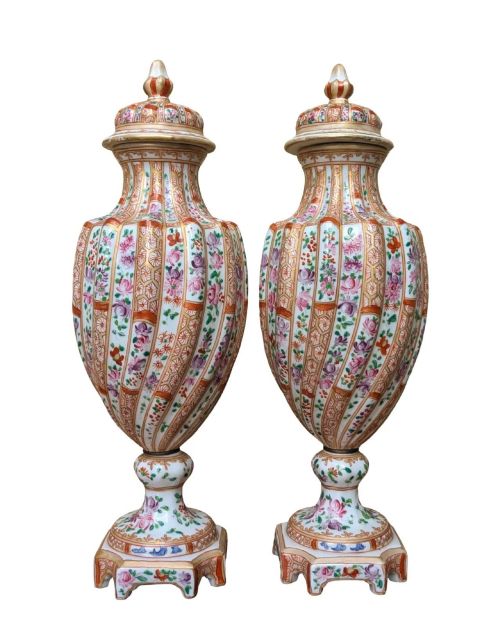
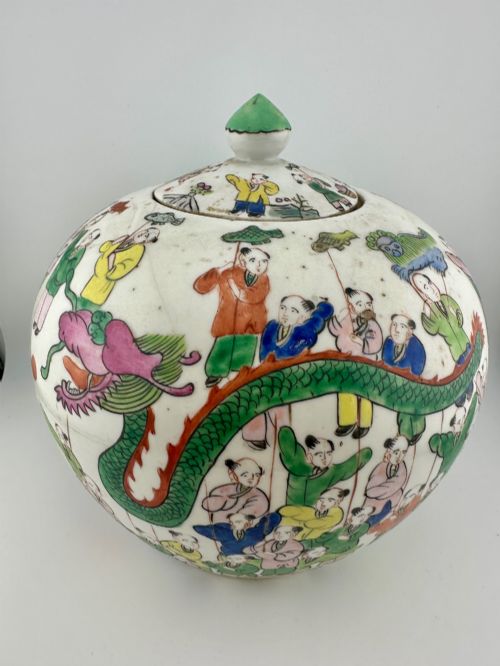
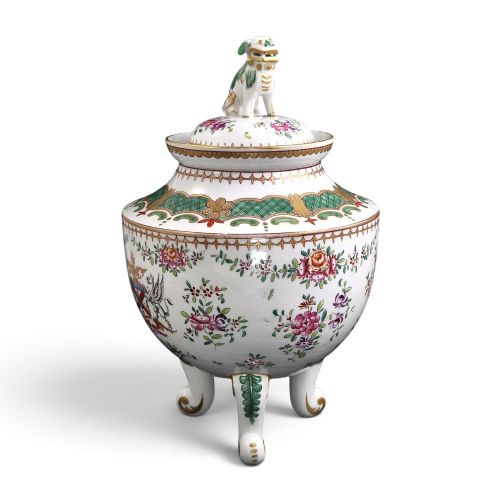
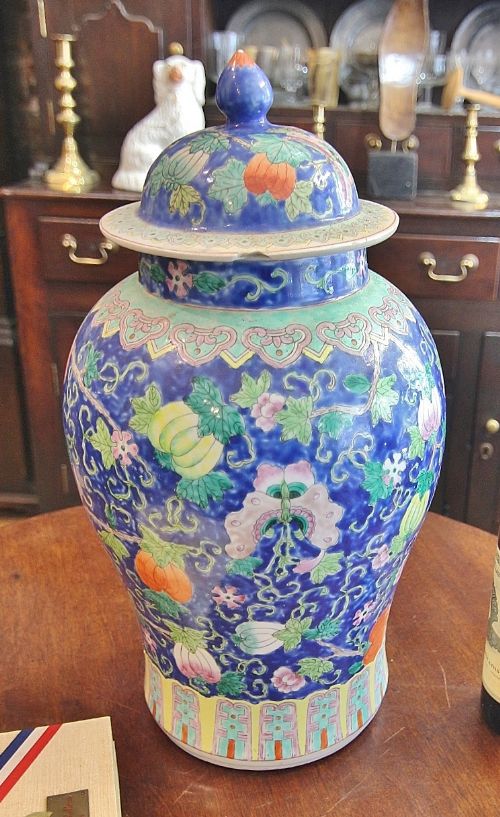
A famille rose ginger jar is a ceramic vessel defined by its distinct pink enamel palette alongside other opaque mineral colours. The examples met on this page span the nineteenth century, nineteen hundred, and nineteen forty, appearing as lidded vases or converted table lamps.
Many items derive from the Qing Dynasty, including pieces bearing nineteenth century dates and specific reign marks. Alongside traditional Chinese porcelain, European interpretations such as Samson Paris emerge in styles spanning Chinoiserie and Chinese Export.
Materials and construction
These pieces utilise hard-paste porcelain and standard porcelain bodies as the primary ceramic base. Skilled artisans applied polychrome enamel and glaze by hand, often incorporating gold leaf highlights to accentuate the painted motifs.
Mounts and secondary structures introduce contrasting media such as brass, ormolu, fabric shades, and carved wood elements like padouk tables. Certain nineteenth century and twentieth century examples show subsequent adaptation into functional lighting.
Listings feature hard-paste porcelain, brass, enamel, and gold leaf across nineteenth century and twentieth century periods.
Assessing quality
Quality rests in the precision and delicacy of the hand-painted birds, flowers, and armorial details across the enamel surface. Superior pieces demonstrate crisp control over the pink enamel and secondary tones, whereas lesser items show coarser brushwork.
The integrity of the porcelain body and the richness of the glaze separate standard production from exceptional examples. Secondary additions like ormolu mounts or period lamp conversions further influence the character of each piece.
Samson Paris
The Famille Rose Ginger Jar Glossary
- Famille rose
- A palette of Chinese porcelain enamels dominated by an opaque pink colour introduced in the eighteenth century. This term translates from French ceramic classification.
- Chinoiserie
- European artistic style reflecting Chinese motifs and decorative techniques. It frequently appears in nineteenth century French and English porcelain production.
- Hard-paste porcelain
- A dense, vitrified ceramic made from petuntse and kaolin fired at high temperatures. It forms the robust body of traditional Chinese ginger jars.
- Ormolu
- Gilded bronze used for decorative mounts on nineteenth century decorative arts. It often frames porcelain vases adapted as lamps.
- TongZhi
- A Qing Dynasty reign period associated with specific nineteenth century ceramic output. Pieces from this era carry distinctive imperial markers.
Famille Rose Ginger Jar: Frequently Asked Questions
What is a famille rose ginger jar?
A famille rose ginger jar is a ceramic storage vessel or decorative vase distinguished by its opaque pink enamel palette. These pieces typically feature hand-painted floral, bird, or figural motifs.
Most examples seen here originate from the nineteenth and twentieth centuries. They appear both as traditional lidded jars and as later table lamp conversions.
How do I date a ginger jar?
Dating relies on examining the porcelain body, the characteristics of the hand-painted enamel, and any reign marks or base signatures. Nineteenth century pieces often show finer artisan brushwork and specific Qing Dynasty markers.
Twentieth century pieces and European revival items, such as Samson Paris porcelain, present different potting techniques and enamel textures. Comparing the glaze and secondary materials helps narrow the period of manufacture.
Were these jars used for ginger?
While originally designed for storing spices and ginger for export and domestic use, many surviving jars served primarily as decorative ornaments. Their generous proportions and secure lids made them practical containers.
Over time, numerous examples lost their original covers or underwent conversion into lamps. This adaptation preserves the decorative ceramic body while suiting modern domestic lighting needs.
How do I style a ginger jar lamp?
A ginger jar lamp works well on side tables, sideboards, or occasional tables made of woods like padouk. The colourful enamel and gilt brass or ormolu mounts introduce rich texture to a room.
Pairing the lamp with a neutral fabric shade allows the painted birds, flowers, and nineteenth century porcelain details to remain the visual focal point. These pieces integrate easily into both traditional and eclectic interiors.