


Large Chinese Ceramic Urn
A large Chinese ceramic urn brings monumental presence to a room, offering striking painted detail and historical weight for any interior.
Large Chinese Ceramic Urn
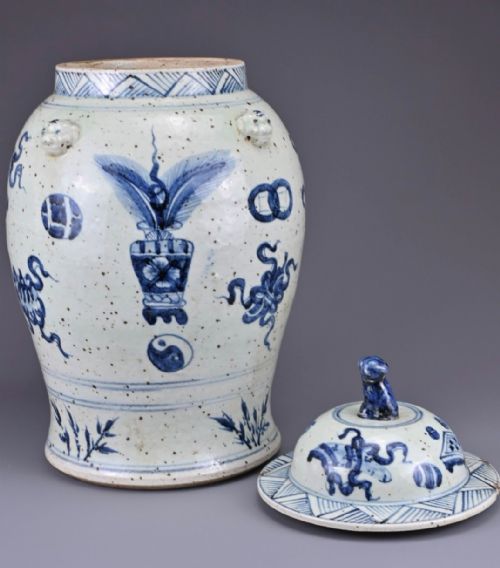
When you search for a large Chinese ceramic urn, you encounter substantial vessels created primarily across the nineteenth and early twentieth centuries. These impressive objects take the form of palace floor jars, decorative ginger jars, tall vases, and jardinières designed to anchor a major space.
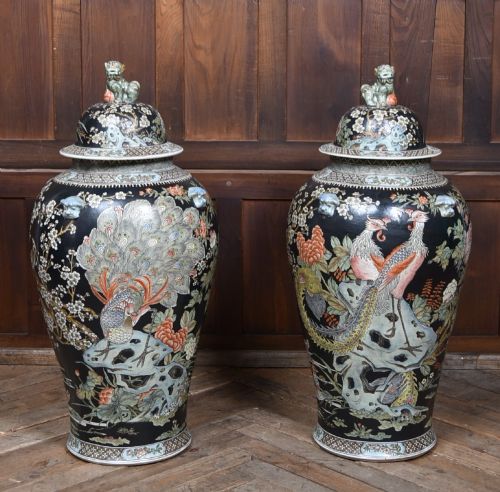
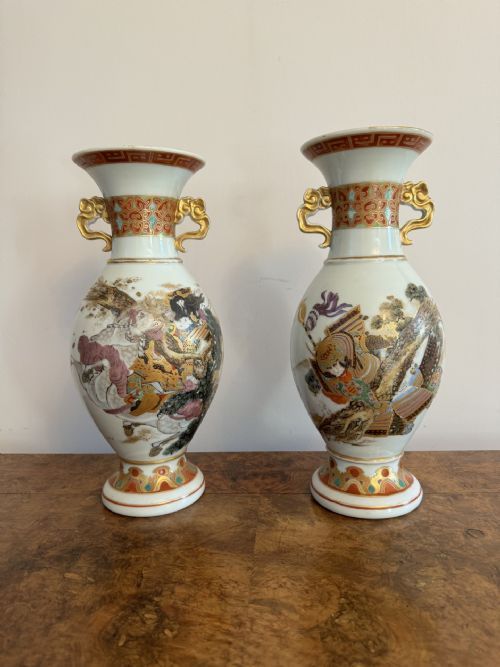
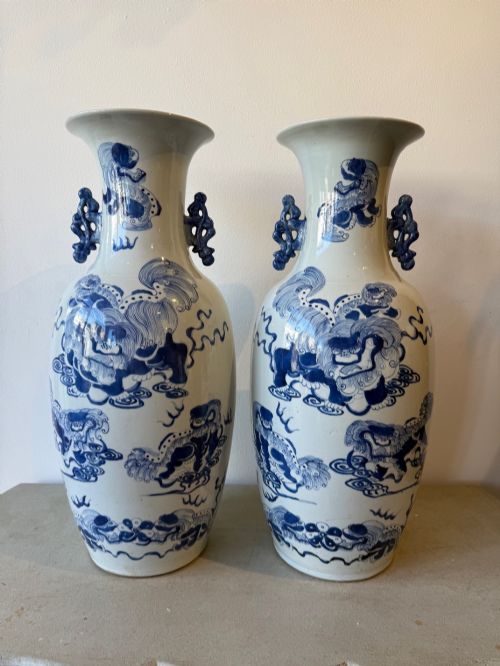
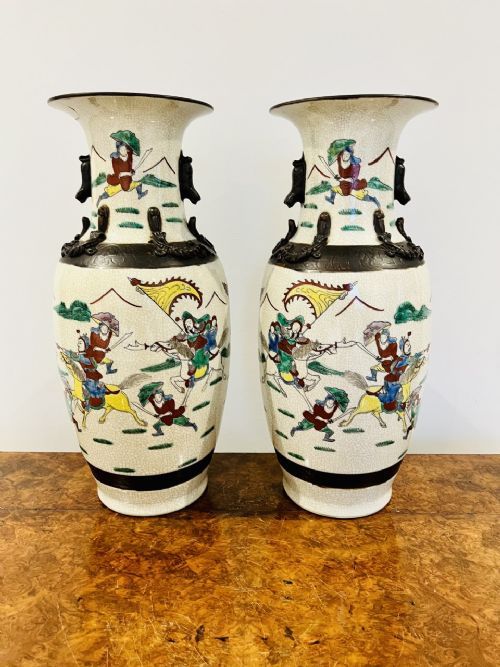
The pieces appearing here span traditional Qing Dynasty aesthetics alongside later interpretations, encompassing distinct forms such as moon flasks and covered jars. Many of these imposing ceramics arrive as matched pairs, standing tall with dominant vertical lines and generous proportions.
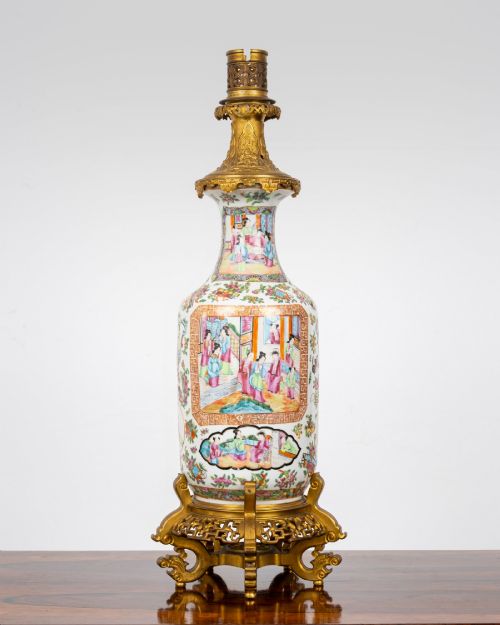
Origins stretch across classic production periods including the nineteenth century and specific decades up to the mid-twentieth century. Buyers find both blue and white cobalt decoration and richly coloured palette designs originating from stylistic traditions like Canton and Rose Medallion.
How they were made
Potters shaped dense ceramic bodies and porcelain clays into monumental vessel forms, often applying crackled glazes or smooth transparent finishes before firing. Artisans then worked pigments directly onto the surface to build complex pictorial narratives and botanical motifs.
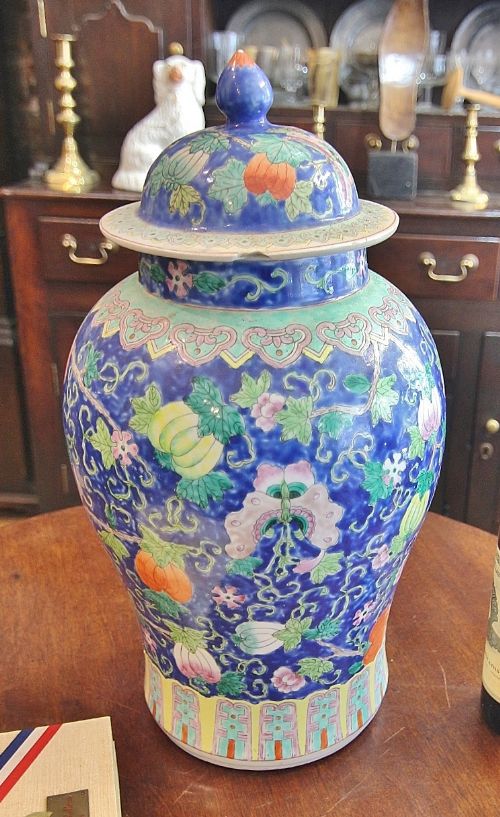
Cobalt pigment provides the deep blue tones found on classic painted jars, whilst enamel colours deliver the vibrant multi-hued scenes characteristic of Cantonese and famille rose decoration. Selected pieces incorporate added elements such as gold leaf accents and carved wood stands to support the heavy ceramic bodies.
Materials recorded across the inventory include porcelain, cobalt glaze, gold leaf, and fitted wood stands.
What varies in quality
The standard of a large Chinese ceramic urn rests upon the precision of the hand-painted brushwork and the depth of the glaze. Master painters executed intricate figures and foliage with sharp control, whilst lesser examples display looser, more hurried application.
Proportion and structural harmony set the finer pieces apart from standard production items, particularly in monumental floor jars where symmetry is difficult to maintain during high-temperature firing. The clarity of the cobalt pigment or the richness of the enamel palette further dictates the visual power of the vessel.
The Large Chinese Ceramic Urn Glossary
- Famille rose
- A major palette of Chinese ceramic enamel colours introduced in the eighteenth century, dominated by opaque pink or rose tones. This technique allowed artists to paint subtle tonal gradations on porcelain.
- Celadon
- A type of transparent green glaze applied over a white body, creating subtle jade-like tones. The finish often reveals fine crackle patterns within the vitreous layer.
- Ginger jar
- A high-shouldered ceramic storage vessel with a domed cover, originally built for spices and tea. These forms became prime canvases for blue and white landscape decoration.
- Canton
- A major stylistic classification originating from the Chinese port city, famous for densely populated panel scenes of figures, birds, and flowers. Pieces from this tradition utilise brilliant enamel colours.
- Jardinière
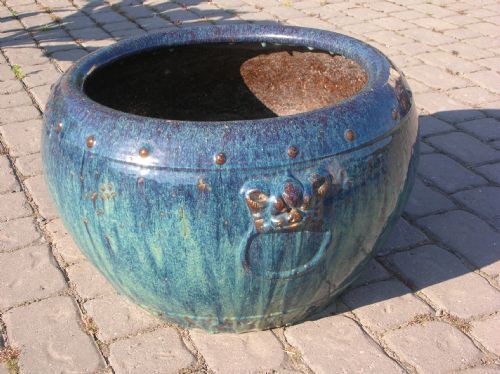
- A large ceramic pot or planter designed to hold growing plants rather than cut flowers. These heavy vessels often feature wide rims and flat bases for stability.
Large Chinese Ceramic Urn: Frequently Asked Questions
How were large Chinese ceramic urns used historically?
These substantial vessels served primarily as decorative focal points within palace halls and grand interiors, marking status and wealth. Many functioned as storage containers for tea or spices before evolving into pure display pieces.
Covered jars and floor vases filled empty architectural spaces, while jardinières held large plants. Their sheer scale meant they occupied prominent floor positions rather than standard furniture surfaces.
How do I identify a nineteenth-century piece?
Nineteenth-century items typically display the heavy potting, deep cobalt blue tones, or rich enamel palettes characteristic of the Qing Dynasty. Look for the physical weight of the ceramic body and the specific stylistic markers of Canton and Rose Medallion production.
Changes in glaze formulation and hand-mixed pigments offer clues to dating, distinguishing these older vessels from later twentieth-century interpretations.
Can these large urns be converted into lamps?
Many large vessels have been adapted into table lamps over the decades to suit domestic lighting needs. This conversion often involves careful drilling or the addition of mounts to secure electrical fittings.
When evaluating a converted piece, consider how the mounting interacts with the original ceramic body and whether the conversion preserves the structural integrity of the jar.
How do I care for antique Chinese ceramics?
Keep these heavy ceramic pieces on stable, level surfaces such as dedicated wood stands or sturdy furniture to prevent tipping. Dust them regularly with a soft, dry cloth to protect the glaze and enamel surfaces from abrasive particles.
Avoid placing them in areas prone to direct sunlight or dramatic temperature fluctuations, which can stress the glaze and underlying clay body over time.