

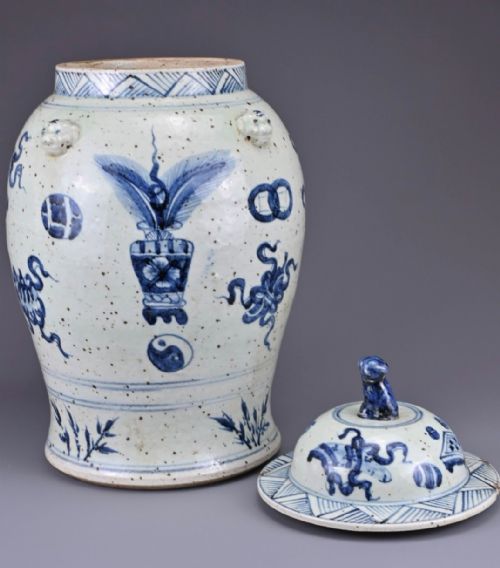
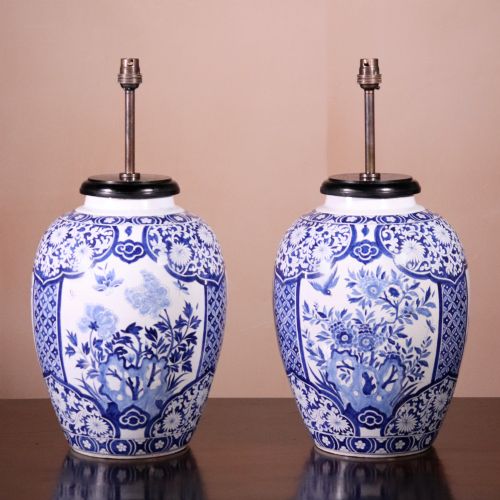


Traditional Chinese Ginger Jar
A traditional Chinese ginger jar brings enduring pattern and rich historical texture to a room, offering the collector a tangible piece of centuries-old craftsmanship.
Traditional Chinese Ginger Jar
When you search for a traditional Chinese ginger jar, you are looking at utilitarian storage vessels and decorative containers that have survived from the nineteenth century. These pieces encompass blue and white porcelain jars, crackleware variants, and larger ceramic forms alongside converted table lamps.
The versions most frequently met on this page date from the nineteenth century, including specific periods like the Qing Dynasty and Victorian eras. You will encounter both direct imports and pieces created for export, alongside related forms such as vases, canisters, and oil paintings depicting the motif.
Beyond standard porcelain jars, the selection includes kamcheng jars and snuff bottle canisters with covers. Many examples from this era show adaptation into lighting, pairing traditional ceramic bodies with brass, wood, and fabric elements.
How traditional Chinese ginger jar items were made
Potters relied on ceramic and porcelain bodies, applying cobalt pigment and cobalt glaze to create intricate blue and white surface patterns. Skilled hands shaped these vessels during the nineteenth century, sometimes incorporating specialised crackle glaze finishes.
Later alterations and mountings introduced brass and wood components to support the transformation of jars into table lamps. Fabric elements commonly complete these lamps, pairing twentieth-century fittings with antique ceramic bases.
Traditional Chinese Ginger Jar Retail Price Guide 2026
Typical asking prices for traditional chinese ginger jar among the pieces listed under this phrase on Sellingantiques today, from the lower quarter to the upper quarter. They describe what is for sale here now, not the wider market.
Listings feature nineteenth-century porcelain alongside brass, wood, and fabric elements, reflecting both original vessels and period lamp conversions.
What varies in quality
The refinement of the cobalt painting determines much of the visual distinction between pieces, with looser brushwork sitting apart from highly detailed floral and figurative scenes. The integrity of the porcelain body and the depth of the glaze also separate standard production from superior examples.
When jars undergo conversion into lamps, the quality depends on how sympathetically the brass and wood mounts integrate with the original antique ceramic. Painted works on canvas introduce another dimension, where the precision of the still life rendering dictates the standing of the piece.
The Traditional Chinese Ginger Jar Glossary
- Cobalt Glaze
- A vitreous coating containing cobalt oxide that turns deep blue during kiln firing. It provides the characteristic coloration for traditional blue and white ceramics.
- Crackle Glaze
- A decorative network of fine intentional cracks within the ceramic surface. This technique creates an aged texture highly prized in traditional pottery.
- Kamcheng
- A traditional covered ceramic jar originating from Southeast Asian trade with China. These lidded vessels often feature polychrome or blue and white decoration.
- Famille Rose
- A palette of opaque enamel colours dominated by pink hues introduced during the Qing Dynasty. This style allowed for softer tonal gradations in floral and figural motifs.
- Chinoiserie
- European artistic interpretation of Chinese decorative styles. This aesthetic influenced nineteenth-century design and the creation of related lamps and furnishings.
Traditional Chinese Ginger Jar: Frequently Asked Questions
Are these jars waterproof?
Most nineteenth-century porcelain and ceramic jars hold water safely, though you should check for hairline cracks or historical repairs before regular use as vases.
Converted lamp bases often feature drilled holes at the base for wiring, which means they cannot hold water and must serve strictly as decorative objects or dry containers.
How do I date a ginger jar?
Dating relies on examining the characteristics of the cobalt blue pigment, the glaze consistency, and any stylistic markers associated with the Qing Dynasty or Victorian periods.
Base markings, potting weight, and the overall wear on the unglazed footrim offer further clues to distinguishing nineteenth-century production from later copies.
Why are many jars now lamps?
During the late nineteenth and early twentieth centuries, imported porcelain jars frequently underwent conversion into table lamps to suit contemporary European domestic interiors.
This practice repurposed decorative storage vessels into functional lighting by adding brass fittings, wooden bases, and fabric shades without destroying the primary ceramic body.
What is crackle glaze?
Crackle glaze is a deliberate firing effect that produces a web of minute fractures across the surface of the porcelain. The technique creates a distinct visual texture that mimics much older dynastic wares.
Potters enhanced these fine lines by rubbing dark pigment into the cracks to accentuate the network pattern.