


Rococo Revival Porcelain Urn
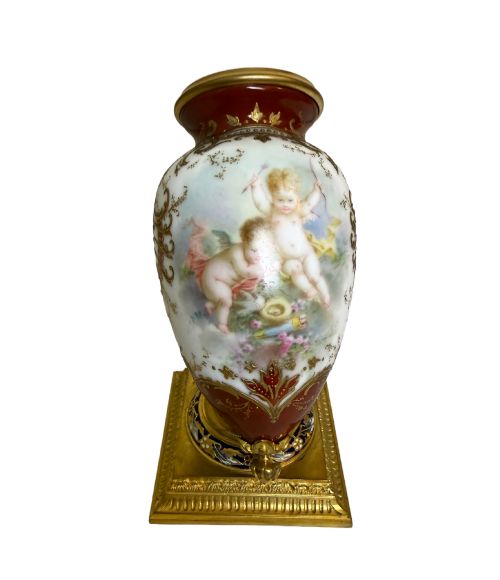
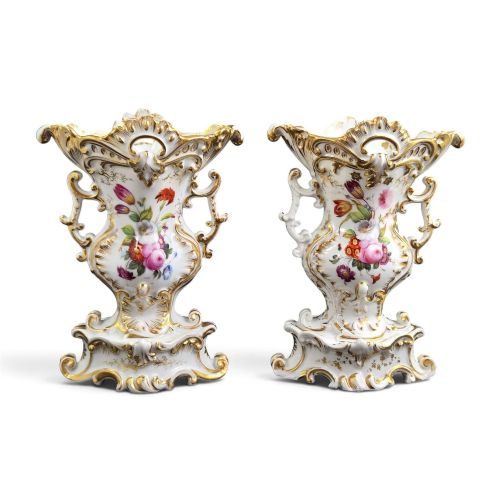
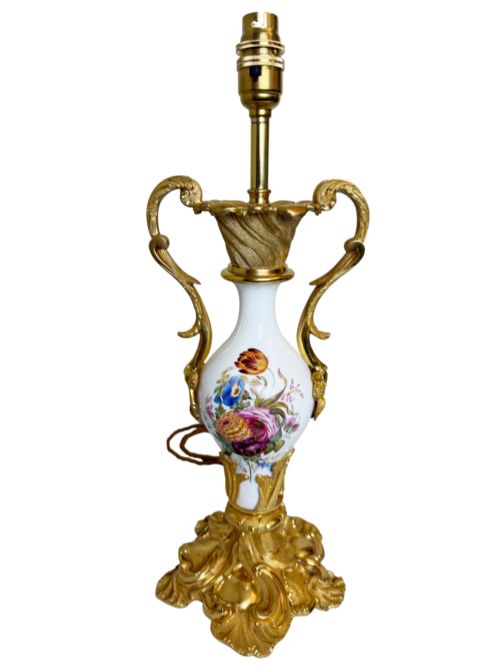
These rococo revival porcelain urn pieces combine ornate ceramic bodies with lavish gilt bronze mounts, bringing high decorative impact to a room.
Rococo Revival Porcelain Urn
When you search for a rococo revival porcelain urn, you encounter 19th-century decorative vessels shaped as lidded vases, ewers, and potpourri jars. These objects draw heavily on French Sevres styles, Meissen traditions, and English factories like Coalport.
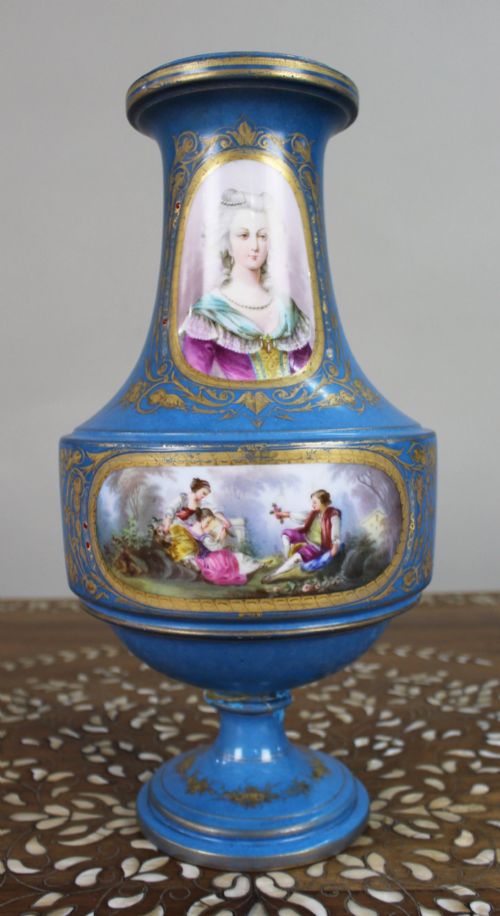
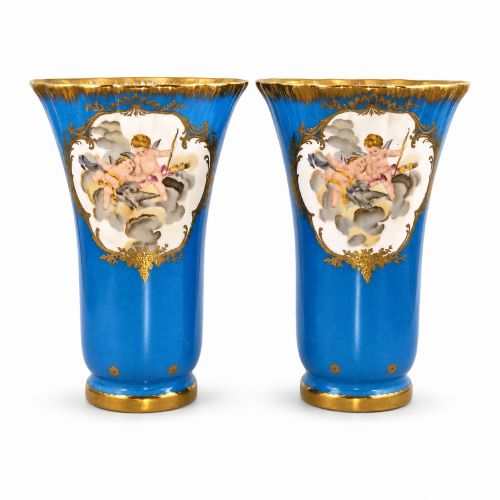
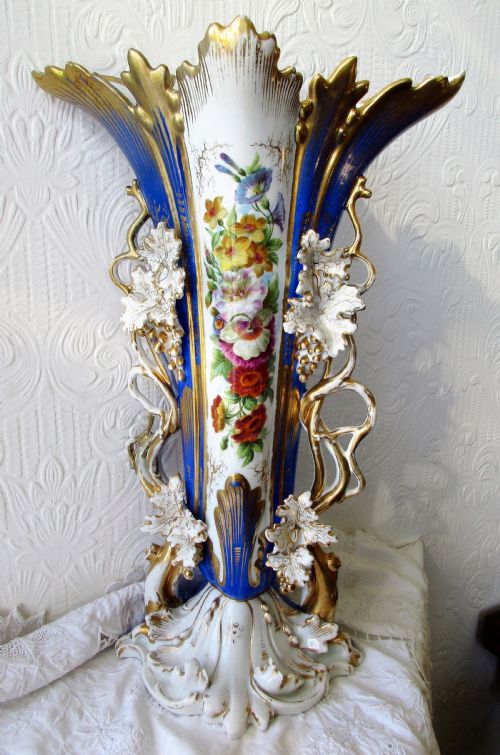
The prevailing form on this page is the pair of lidded vases or garniture pieces, often finished with cobalt blue or bleu celeste grounds. Makers utilised motifs such as hand-painted floral designs and romantic figures to capture the essence of the period.
Originating largely from French and English workshops during the Victorian era, these items served as formal mantelpiece displays and centrepieces. Surviving examples frequently retain their original mounting hardware and painted panels.
Materials and construction
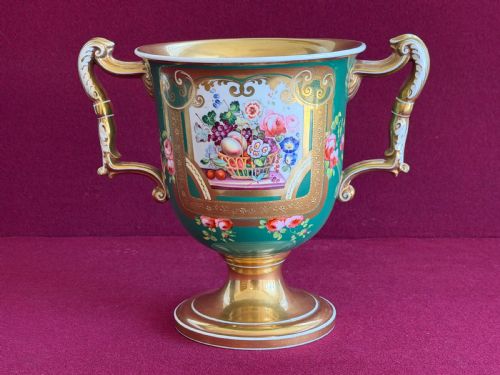
Potters shaped the ceramic bodies from fine paste porcelain before applying enamel pigments, cobalt grounds, and raised white enamel details. Kiln firing fixed the colourful hand-painted scenes, which frequently depicted gallant figures or botanical studies.
Artisans combined the ceramics with cast metal mounts, utilising ormolu, gilt bronze, and brass for handles, bases, and rims. Guilders then applied gold leaf and fine gilding to accent the scrolling asymmetrical forms typical of the design style.
Some nineteenth-century makers signed their work with spurious factory marks to honour earlier traditions.
Assessing quality in 19th-century ceramics
Quality reveals itself in the crispness of the hand-painted brushwork on the porcelain panels and the precision of the gilding. Superior examples display finely rendered figures and botanical details rather than hurried factory decoration.
The metalwork provides another clear indicator, as heavy, well-chased ormolu or gilt bronze mounts demonstrate greater craftsmanship than thin, plain brass fittings. Well-executed mounts fit the ceramic contours seamlessly.
Jacob Petit·Samson Paris·H and R Daniel·Samuel Alcock·Helena Wolfsohn·Sitzendorf Porcelain·KPM Berlin·Vion et Baury·Coalport·Vincenti of Paris
The Rococo Revival Porcelain Urn Glossary
- Ormolu
- Gilded bronze mounts applied to furniture, clocks, and ceramic vessels. This technique was widely utilised by French makers during the nineteenth century.
- Bleu Céleste
- A bright, light blue enamel ground colour associated with Sevres porcelain. It forms the backdrop for many fine hand-painted floral panels.
- Garniture
- A set of matching vases or urns, typically numbering three or five pieces. These were designed for symmetrical display on mantelpieces.
- Potpourri
- A perforated lidded jar or vase designed to hold scented dried plant materials. Examples often feature elaborate handles and painted reserves.
- Ewer
- A large jug with a flared spout and an ornate handle. Ceramic versions served a purely decorative function in nineteenth-century interiors.
Rococo Revival Porcelain Urn: Frequently Asked Questions
What is a rococo revival porcelain urn?
These decorative ceramic vessels reflect the nineteenth-century revival of eighteenth-century French design tastes. They feature curved lines, organic motifs, and often rich metal mounts.
Craftsmen produced them across European factories to satisfy Victorian demand for opulent interior ornaments.
How were garniture sets displayed?
Owners placed them symmetrically across mantelpieces or large pieces of furniture as ornamental focal points. A central lidded urn typically flanked two smaller matching vases.
This arrangement created visual balance within formal nineteenth-century reception rooms.
How do you identify Sevres style pieces?
Look for rich blue ground colours, prominent gilding, and hand-painted panels depicting romantic scenes. Many nineteenth-century continental factories produced work in this specific taste.
Makers often added decorative motifs that recalled earlier royal French workshop aesthetics.
Where should you place these urns at home?
Position them on sturdy surfaces where their delicate painted surfaces and gilded bronze mounts remain safe from accidental knocks. Stable mantelpieces and console tables work best for heavier garniture sets.
Keep them away from direct sunlight to preserve the vibrancy of the enamel colours.