
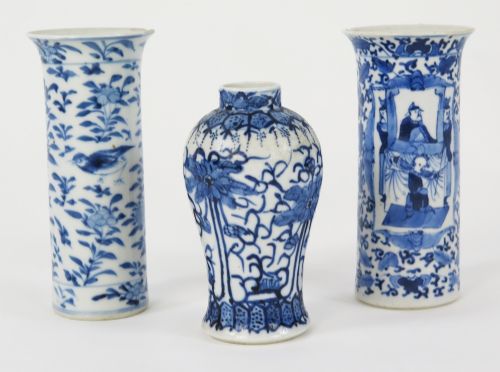
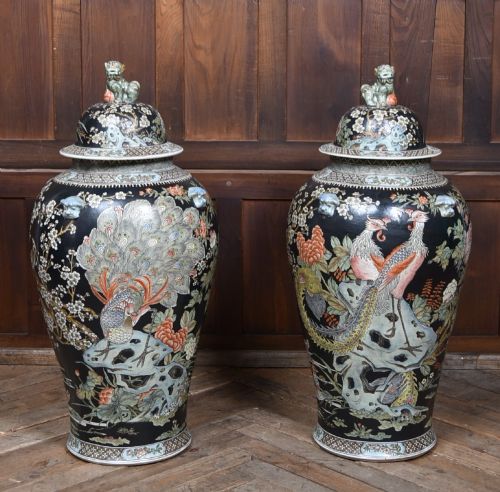
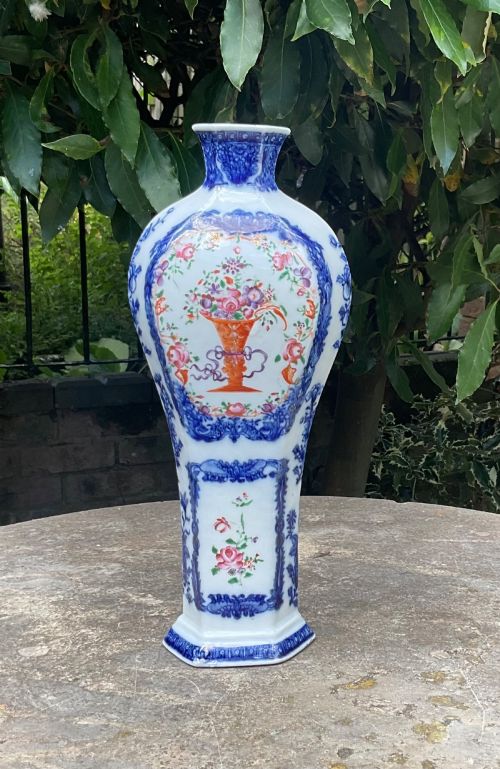
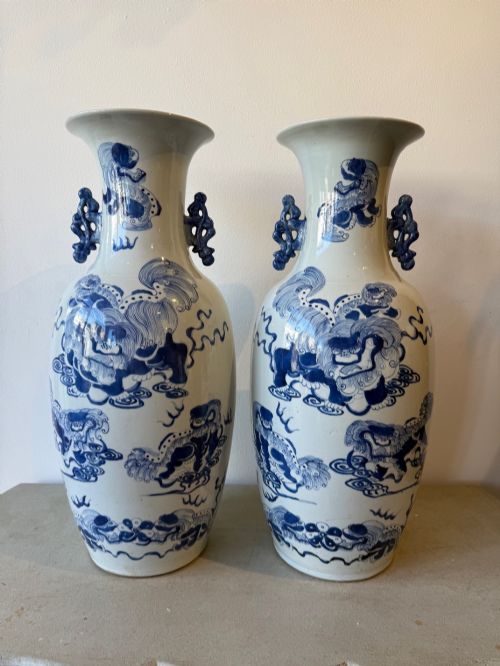



Chinese Baluster Jars
Chinese baluster jars are sweeping ceramic vessels designed with a distinctive curved profile, prized for bringing centuries of traditional craftsmanship into a room.
Chinese Baluster Jars
Chinese baluster jars take their name from their characteristic profile, swelling gracefully near the top before tapering down towards the base. Collectors searching for chinese baluster jars encounter an array of forms, from monumental floor vases to smaller covered vessels.
The pieces appearing on this page span several distinct periods, with nineteenth-century examples dominating alongside eighteenth-century items and later adaptations. Forms range from utilitarian storage shapes adapted for display to grand palace jars and conversion table lamps.
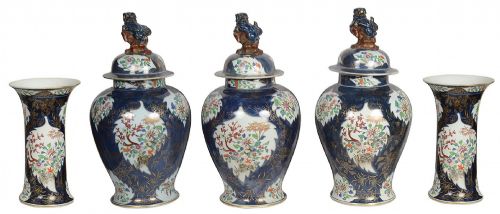
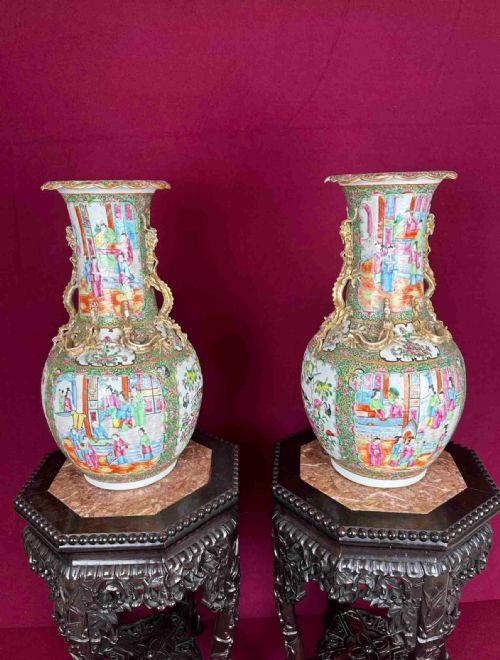
Stylistic influences heavily reflect the Qing Dynasty and Chinese Export traditions, frequently incorporating traditional motifs and hand-painted scenes. Buyers meet both blue and white porcelain and brightly coloured enamel palettes across pairs and individual statement pieces.
Materials and Techniques
Potters shaped these vessels primarily from fine porcelain and ceramic bodies, preparing them to receive intricate hand-painted decoration. Cobalt glaze provided the deep blue tones for underglaze designs, while enamel glaze added vibrant polychrome details to the surface.
Selected vessels received supplementary embellishments such as gold leaf highlights and cast ormolu mounts fitted by later European hands. Wooden components also appear among the mountings, completing the structure of converted lamp bases and display pieces.
The decorative vocabulary spans Qing Dynasty designs, Chinese Export porcelain, Chinoiserie interpretations, and traditional Canton Rose Mandarin motifs.
Defining Quality
Quality rests upon the precision of the hand-painting and the clarity of the underlying porcelain body, distinguishing confident artisan work from more routine output. The depth and vibrancy of the cobalt and enamel glazes dictate the visual impact of each decorated surface.
The presence of period mounts, intact covers, and substantial scale elevate specific pieces above standard examples. Preservation of the original glaze and the crispness of painted motifs determine the overall standing of an individual jar.
The Chinese Baluster Jars Glossary
- Baluster
- A vertical architectural shape resembling a vase or pillar, which gives these curving jars their distinctive profile. This swollen upper section tapering to a narrower base defines the fundamental silhouette.
- Famille Rose
- A prominent palette of opaque enamel colours dominated by rose pink, introduced during the Qing Dynasty. This technique allowed artists to achieve delicate tonal gradations in floral and figural scenes.
- Famille Verte
- A transparent green-dominated enamel palette popular in Chinese porcelain decoration. The style relies on vibrant greens alongside iron red, yellow, and blue pigments.
- Ormolu
- Gilt bronze mounted onto decorative arts, frequently added to nineteenth-century Chinese vases to suit European interiors. These metal mounts frame the porcelain rims and bases.
- Garniture
- A set of matching vases or jars designed to be displayed together on a mantelpiece or cabinet. These groupings typically comprise three or five coordinated vessels.
Chinese Baluster Jars: Frequently Asked Questions
What is a baluster jar?
A baluster jar is a tall ceramic vessel featuring a curved, bulbous upper body that tapers gracefully toward a narrower base. The form derives its name from architectural balusters used in staircases and railings.
These vessels often include fitted covers and were originally produced for storage before evolving into purely decorative display items. Their balanced proportions make them focal points in traditional and modern interiors.
How do I date a Chinese porcelain jar?
Dating relies on examining the characteristics of the porcelain body, the composition of the glazes, and the style of the painted decoration. Reign marks provide clues, though many later pieces bear marks from earlier periods.
Comparing the hand-painting techniques, palette colours, and any European ormolu mounts to documented examples helps narrow down the century of manufacture. Subtle variations in the potting weight also guide the assessment.
Where should I place a floor vase?
Monumental floor vases suit prominent architectural spaces such as entrance halls, wide corridors, or corners of reception rooms. Their scale requires adequate clearance so the painted details remain visible from a distance.
Pairing matching jars symmetrically on either side of a fireplace or doorway creates a formal display. Keeping them away from heavy foot traffic protects the glazed ceramic surface.