


Chinoiserie Porcelain Set
A chinoiserie porcelain set brings together European forms and imagined Eastern motifs across plates, tea wares, and decorative vessels.
Chinoiserie Porcelain Set
A chinoiserie porcelain set comprises matching or service-related ceramic pieces decorated with European interpretations of East Asian scenes, landscapes, and figures. Collectors navigating these listings encounter domestic tablewares, tea services, and decorative groupings originating from periods spanning the eighteenth, nineteenth, and early twentieth centuries.
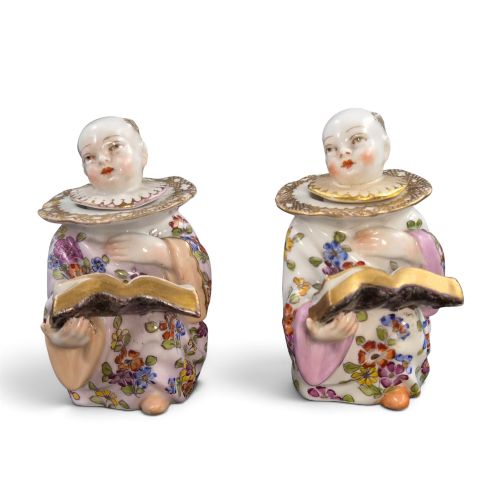
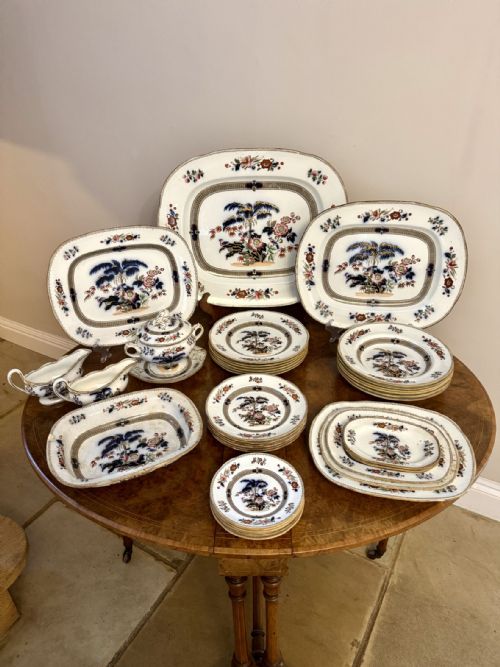
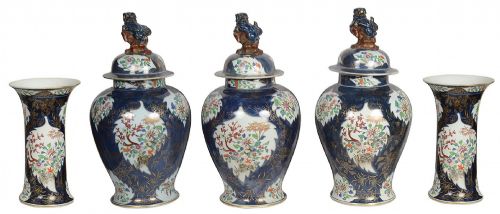
The objects gathered under this description range from ironstone plates and earthenware vessels to refined porcelain tea cups and saucers. Forms vary from complete dinner services and dessert plates to garnitures and specialised desk accessories like figural inkwells.
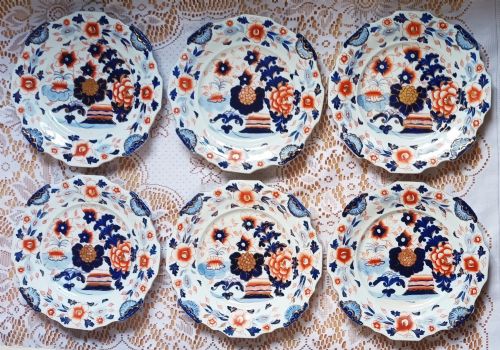
Pieces frequently reflect specific regional patterns such as the Willow pattern, Japan patterns, and Tonquin China, alongside interpretations of Famille Rose palettes. Buyers most often meet nineteenth-century English interpretations alongside eighteenth-century Dutch delft and Georgian ironstone productions.
Materials and construction methods
Makers shaped these sets using porcelain, ironstone, earthenware, and delft ceramic bodies, fired and finished with specialised glaze and enamel layers. Surface decoration frequently incorporates hand-painted pigments alongside transfer printing, particularly visible in multi-plate dinner services and tea sets.
Accents of gold leaf and gilding highlight painted borders and figurative details across nineteenth-century and earlier examples. Potters utilised durable ironstone and stone china for functional tablewares while reserving finer porcelain bodies for cabinet cups, saucers, and decorative vases.
Early nineteenth-century makers occasionally portrayed Chinese singing boys peering out from decorative inkwells.
Factors determining quality
Quality across a chinoiserie porcelain set rests in the crispness of the painted or printed enamel details and the stability of the glaze. Finer examples display precise brushwork in multi-coloured palettes, whereas standard production relies on simpler transfer-printed outlines.
The uniformity of the ceramic body and the preservation of original gilding and gold leaf distinguish superior services from everyday domestic wares. Completeness within a matched service and the clarity of factory marks on the underside further elevate individual pieces.
Edmé Samson·Wedgwood·Flight Barr & Barr·Mason·Davenport
The Chinoiserie Porcelain Set Glossary
- Chinoiserie
- European artistic style reflecting Chinese and East Asian motifs. It appears widely across ceramics, furniture, and textiles from the seventeenth century onward.
- Ironstone
- A heavy, durable type of earthenware patented in the nineteenth century. It offered a strong alternative to porcelain for daily dinner services.
- Famille Rose
- A ceramic palette dominated by opaque pink enamel colours. The style originated in China and influenced European decorators during the eighteenth and nineteenth centuries.
- Garniture
- A set of three or more matching vases or vessels designed for display on a mantelpiece or sideboard. They typically feature graduated sizes.
- Delft
- Tin-glazed earthenware originating from the Netherlands. It often mimics blue and white Chinese porcelain designs.
Chinoiserie Porcelain Set: Frequently Asked Questions
What is a chinoiserie porcelain set?
A chinoiserie porcelain set consists of ceramic tablewares or decorative vessels decorated with European interpretations of East Asian motifs. These groupings include dinner services, tea cups, plates, and garniture vases.
Items span various ceramic bodies including porcelain, ironstone, and earthenware, produced across the eighteenth, nineteenth, and early twentieth centuries.
How do I identify the period of my set?
Dating relies on examining the ceramic body, glaze characteristics, and decorative techniques such as transfer printing versus hand-painting. Factory marks on the underside of pieces often provide direct clues to the maker and decade of production.
Stylistic shifts between Georgian ironstone, Regency porcelain, and Victorian services also help narrow down the manufacturing era.
Were these sets meant for daily use?
Many sets, particularly those made from durable ironstone and stone china, were manufactured for functional dining and tea service. Finer porcelain cups and decorative vases were typically intended for display or lighter social occasions.
Wear patterns and the presence of partial services often reflect their history of active household use over the centuries.
What patterns are common on these pieces?
Common motifs include landscape scenes, figures in traditional dress, dragons in compartments, and floral arrangements. The Willow pattern and Japan-style ironstone designs appear frequently among nineteenth-century English tablewares.
Palettes range from traditional blue and white to polychrome enamels enhanced with gold leaf and gilding.