


Foo Dog Lid Vases
These foo dog lid vases bring together grand nineteenth-century porcelain, earthenware, and intricate hand-painted styles to anchor any mantelpiece.
Foo Dog Lid Vases
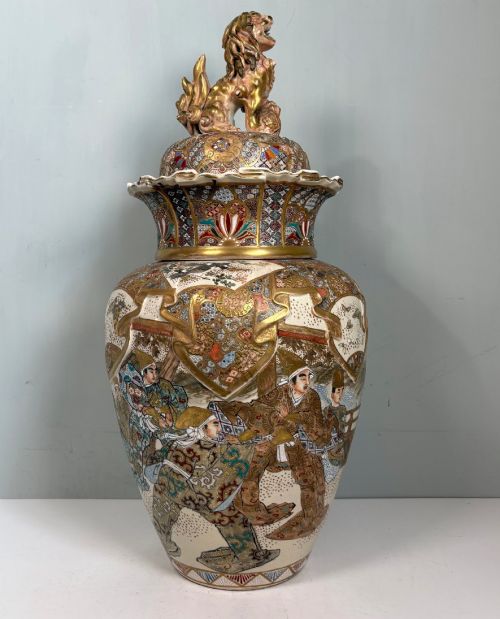
Foo dog lid vases comprise covered vessels topped with guardian lion figures, appearing primarily across nineteenth-century styles. These pieces draw from diverse ceramic traditions, including Chinese Qing Dynasty productions alongside Japanese Satsuma, Imari, and Kutani wares.
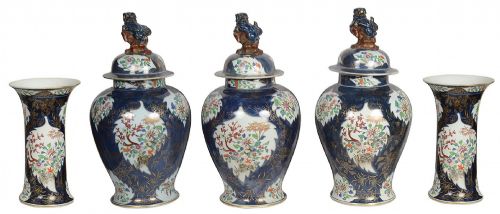
Most examples on this page date to the Victorian era and the late nineteenth century, spanning baluster shapes, jars, and garniture sets. The forms range from grand monumental vessels down to domestic decorative vases.
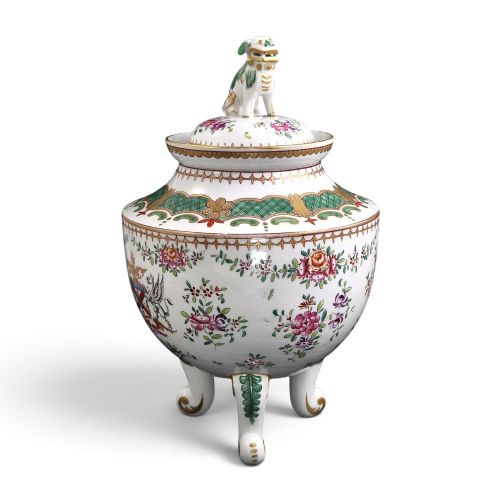
Makers such as Samson of Paris also produced European interpretations emulating earlier Asian designs. Buyers encounter both Chinese export porcelain and Japanese earthenware carrying distinctive mythical beast finials upon their covers.
How they were made
Potters shaped these bodies from hard-paste porcelain and earthenware before applying complex ceramic glazes. Artisans built up the surfaces using enamel painting, underglaze blue, and touches of gold leaf or gilding.
Cover details, including the sculpted guardian lion finials, required separate moulding and careful attachment before the high-temperature firing. Artisans then executed intricate hand-painted motifs across the panels, drawing on Chinoiserie and traditional Asian aesthetics.
Recorded periods among these available vessels include the Qing Dynasty, Meiji period, and the Victorian era, alongside nineteenth-century European revival pieces.
What varies in quality
Quality rests in the crispness of the modelled lid figures and the precision of the hand-painted enamel work. Pieces featuring rich gilding and complex multi-coloured palettes demonstrate superior workshop execution.
The distinction between domestic output and monumental exhibition-scale vessels alters the visual impact within a room. Skilled interpretation by European houses like Samson stands apart from straightforward regional earthenware production.
Samson Paris
The Foo Dog Lid Vases Glossary
- Foo dog
- A traditional guardian lion sculpture serving as the lid finial on these ceramic vessels. These mythical figures symbolise protection and prosperity in East Asian tradition.
- Hard-paste porcelain
- A durable ceramic material fired at high temperatures using kaolin and petuntse. This dense body forms the foundation for many nineteenth-century export vases.
- Garniture
- A matching set of vases and jars designed for decorative display on a mantelpiece or cabinet. These groupings typically comprise three or five matching vessels.
- Imari style
- A decorative scheme originating in Japan featuring iron red, cobalt blue, and gold highlights. Nineteenth-century European potters frequently emulated this vibrant palette.
- Famille rose
- A ceramic palette dominated by opaque pink enamel colours introduced during the Qing Dynasty. This style allowed artists to render delicate floral and figurative scenes.
Foo Dog Lid Vases: Frequently Asked Questions
How were these vases used?
Historically, lidded jars and vases served for storing precious spices, herbs, or dry goods within wealthy interiors. Over time, particularly during the Victorian period, they functioned primarily as prominent decorative ornaments.
Placed on mantelpieces, sideboards, or in pairs flanking larger displays, they demonstrated household taste and global trade connections.
How do I live with them?
These substantial vessels command attention, making them natural centrepieces for a mantelpiece, entrance hall, or large sideboard. Their vibrant enamel palettes and gilt details pair effectively with both period interiors and minimalist modern spaces.
Because the lids are separate elements, placement in low-traffic areas or secure shelving protects the guardian lion finials from accidental knocks.
How do I tell periods apart?
Distinguishing periods relies on examining the ceramic body, glaze consistency, and painting style. Nineteenth-century Chinese Qing pieces often display deep underglaze blue or famille rose enamels, while Japanese Satsuma and Kutani wares show distinct earthenware bodies and dense gilding.
European imitations, such as those by Samson Paris, reveal specific paste characteristics and nineteenth-century interpretations of earlier eighteenth-century aesthetics.