






Polychrome Porcelain Temple Jar
A polychrome porcelain temple jar brings intense colour and weight to a room, drawing the eye with layered enamel and gold.
Polychrome Porcelain Temple Jar
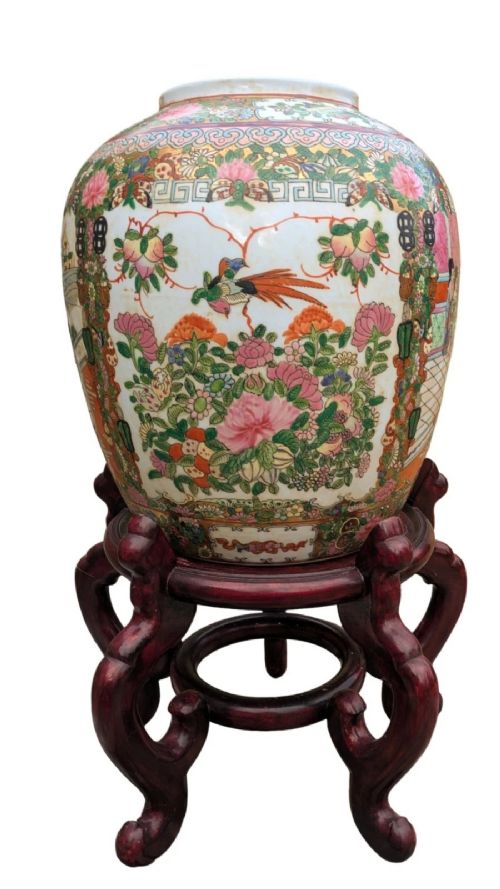
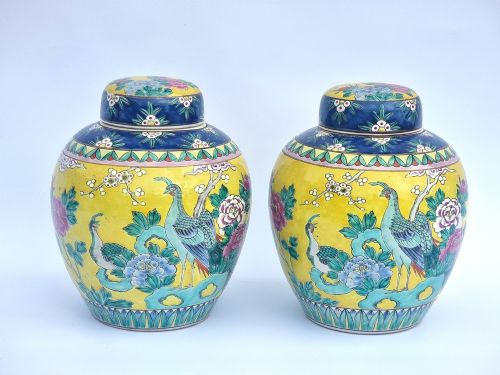
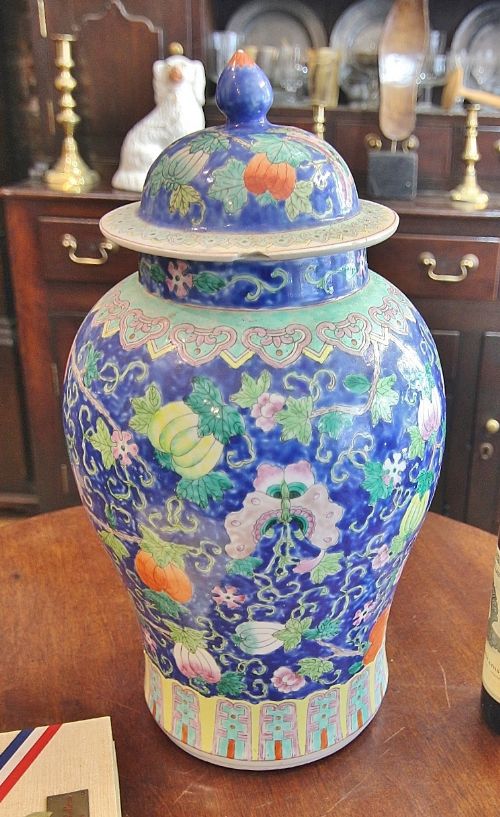
A polychrome porcelain temple jar is a substantial lidded vessel originally created in East Asia for display or storage, appearing here in forms ranging from Chinese ginger jars to Japanese Imari and Satsuma lidded vases.
The pieces on this page span the 18th century through to the mid 20th century, encompassing Qing Dynasty works, Meiji period productions, and later decorative interpretations.
Buyers will encounter both single monumental floor vases and matched pairs, often accompanied by fitted covers or adapted into table lamps.
How they were made
Potters shaped the base bodies from porcelain and earthenware, firing the clay before applying vibrant enamel glazes by hand.
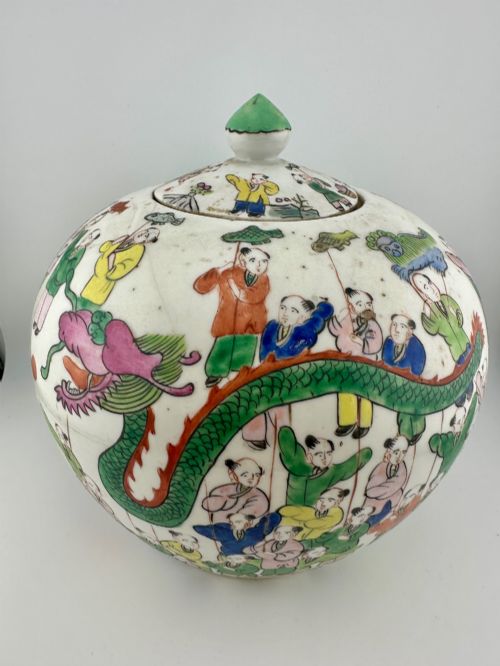
Decorators layered mineral colours alongside gold leaf and gilding to build up intricate narrative scenes, florals, and dragons.
Many examples received a clear protective glaze over the painted surface to lock in the pigment before a final kiln firing.
Polychrome Porcelain Temple Jar Retail Price Guide 2026
Typical asking prices for polychrome porcelain temple jar among the pieces listed under this phrase on Sellingantiques today, from the lower quarter to the upper quarter. They describe what is for sale here now, not the wider market.
The selection includes pieces spanning the 18th century, the Victorian era, and the mid 20th century.
What varies in quality
Quality rests in the precision and density of the hand-painted brushwork across the body, where tightly controlled details distinguish superior pieces from simpler output.
The richness of the enamel palette and the sparing or lavish use of gilding dictate the visual depth of the jar.
The presence of an original matching cover and the crispness of any reign or workshop mark add considerable weight to a piece.
The Polychrome Porcelain Temple Jar Glossary
- Polychrome
- Decorated in several colours. This multi-coloured approach defines the vibrant palettes seen across these jars and vases.
- Imari
- A style of Japanese porcelain featuring underglaze blue and overglaze red, gold, and other colours. It originated in Arita and became widely exported.
- Famille Rose
- A major palette of Chinese ceramic glaze introduced in the Qing dynasty, characterised by opaque pink or rose enamel. The style allowed for subtle shading of floral and figural motifs.
- Satsuma
- A type of Japanese earthenware with a ivory-coloured, crackle glaze, typically finished with elaborate polychrome and gilt enamel decoration. These pieces were often produced for export from the late 19th century onwards.
- Baluster
- A vase form with a rounded body that tapers toward the base and swells near the middle, resembling the architectural shape of a stair baluster.
Polychrome Porcelain Temple Jar: Frequently Asked Questions
What is a polychrome porcelain temple jar used for?
These large lidded vessels were originally designed to hold spices, oils, or ceremonial items in East Asian interiors. Today, they serve primarily as striking decorative focal points on tables, pedestals, or converted into lamp bases.
Their substantial scale and rich palette mean they hold their own in large rooms or traditional entrance halls.
How do I tell Chinese from Japanese jars?
Chinese pieces often feature narrative court scenes, Famille Rose pinks, and imperial symbols like dragons or the hundred boys motif. Japanese examples frequently display Imari blues and oranges or the distinctive crackle glaze of Satsuma.
Examining the underlying clay body and the specific style of the brushwork helps clarify the origin.
Are lids usually original to the jar?
Many surviving jars retain their original fitted covers, which were shaped and fired alongside the base vessel. Because lids are fragile and easily separated over centuries, replacements do occur.
Matching the glaze wear and decorative borders helps confirm whether the cover belongs to the base.
How do I clean a painted porcelain jar?
Dust the surface gently with a soft, dry brush to prevent abrasive particles from scratching the delicate overglaze enamels and gold leaf. Avoid using water, chemical cleaners, or damp cloths, as older pigments can be sensitive to moisture.
Keeping the piece out of direct sunlight preserves the intensity of the polychrome colours.