



Chinese Ceramic Urn Lid
These Chinese ceramic urn lid selections comprise covers belonging to ginger jars, temple jars and lidded vases across multiple periods.
Chinese Ceramic Urn Lid
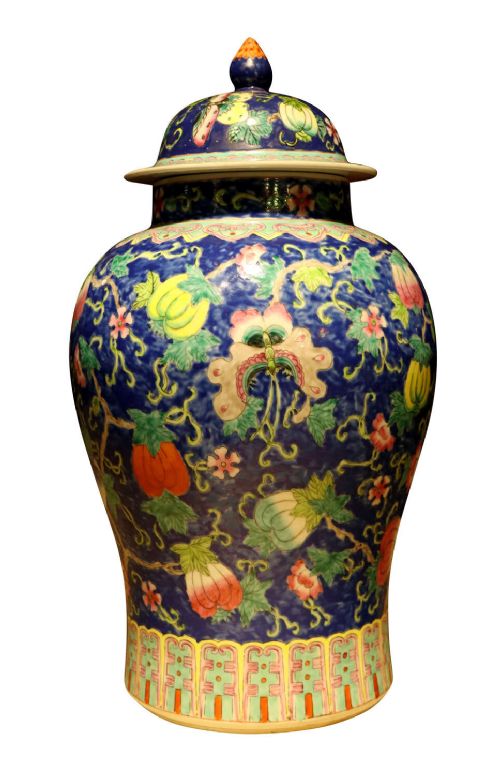
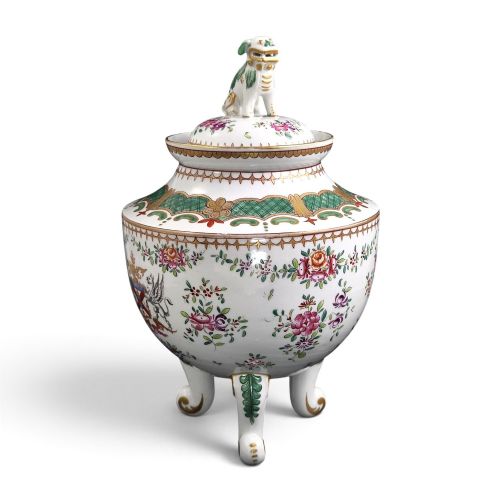
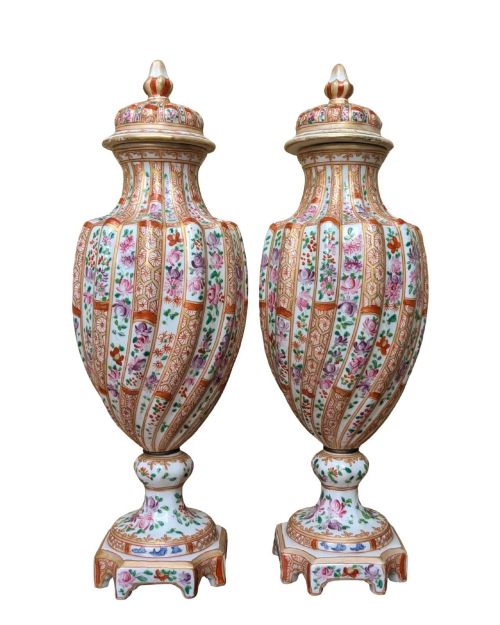
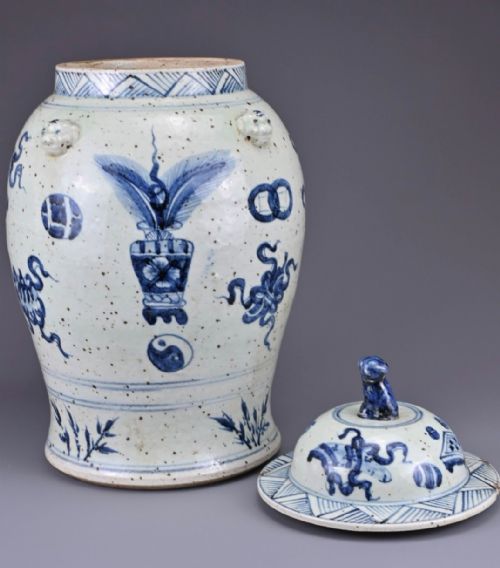
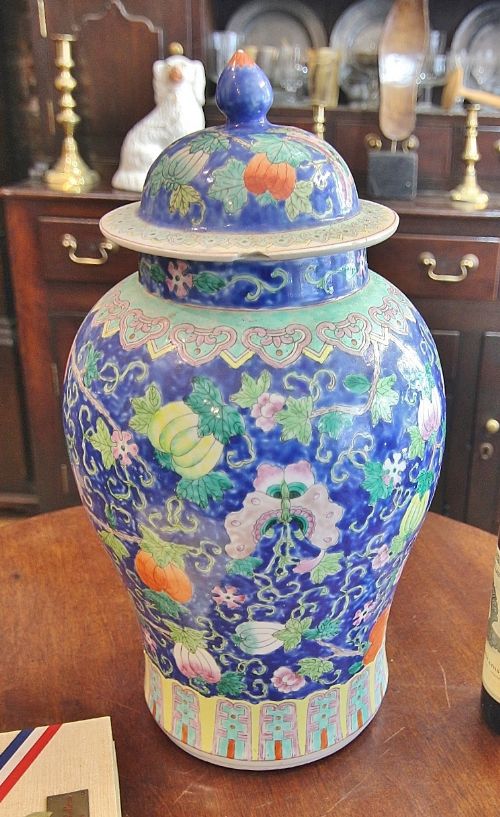
A Chinese ceramic urn lid completes a lidded vessel such as a ginger jar, decorative jar or urn, often rendered in porcelain or stoneware. When searching for a Chinese ceramic urn lid, buyers typically encounter covers associated with blue and white porcelain, famille rose decoration and celadon or sang de boeuf glazes. The examples recorded here span the eighteenth, nineteenth and twentieth centuries, encompassing genuine Qing dynasty pieces alongside nineteenth century European interpretations like Samson Paris porcelain and Mason's stoneware.
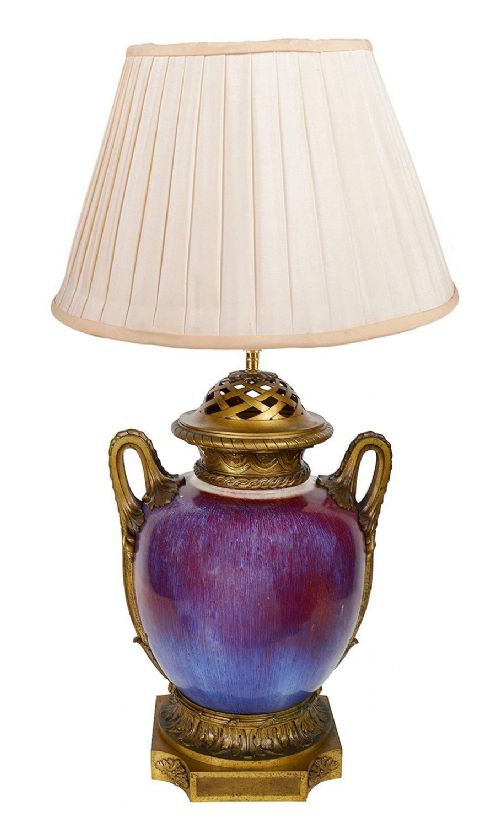
The forms range from flat disks to domed caps with tiered finials, designed to fit securely over the neck of a jar or vase. Many listings pair these covers with ginger jars, lidded vases and table lamps, reflecting how vessels have been adapted over time. Collectors often seek out matching lids for antique jars or acquire individual covers that mirror traditional styles such as Kangxi period design and Chinese export ware.
How They Were Made
Makers utilised hard-paste porcelain and stoneware as the primary body materials, shaping them on the wheel or in moulds before firing at high temperatures. Cobalt pigment was applied under the glaze for classic blue and white designs, while enamel and gold leaf were added over the glaze for famille rose and armorial patterns.
Glazes vary from clear and crackled finishes to rich monochrome tones like sang de boeuf. Workshops in both China and Europe employed traditional techniques to achieve the smooth surfaces and precise fits required for lidded vessels.
Chinese Ceramic Urn Lid Retail Price Guide 2026
Typical asking prices for chinese ceramic urn lid among the pieces listed under this phrase on Sellingantiques today, from the lower quarter to the upper quarter. They describe what is for sale here now, not the wider market.
Listings feature hard-paste porcelain and stoneware bodies decorated with cobalt pigment, enamel, and gold leaf across nineteenth and twentieth century periods.
What Varies in Quality
Quality in a Chinese ceramic urn lid depends on the fineness of the porcelain body, the crispness of the cobalt painting or enamel work, and whether the lid retains its original glaze and form. Early pieces display precise hand-painted details and well-balanced proportions that mark them out from later or mass-produced alternatives.
The fidelity of the decorative style also influences distinction, as seen in the careful execution of Qing dynasty motifs or the meticulous imitation work by European makers like Edme Samson. A harmonious match between lid and jar, where the glaze and paste correspond closely, elevates the integrity of the ensemble.
Edme Samson·Samson Paris
The Chinese Ceramic Urn Lid Glossary
- Porcelain
- A hard, white, vitrified ceramic material made from kaolin and petuntse. It forms the impermeable and resonant body of most traditional Chinese urn lids.
- Cobalt Pigment
- A metallic blue colouring agent used under the glaze. It yields the deep blue designs seen on traditional Chinese jars and their covers.
- Famille Rose
- A palette of opaque enamel colours dominated by pink or rose hues. Introduced in the eighteenth century, it adorns many lidded vases and jars.
- Hard-Paste Porcelain
- A durable ceramic fired at very high temperatures. It is distinguished by its vitreous fracture and resistance to scratching.
- Kangxi
- A regnal period of the Qing dynasty associated with exceptional blue and white porcelain. Later pieces frequently replicate these iconic seventeenth-century designs.
- Enamel
- A glass-like substance fused to the surface of fired porcelain during a secondary low-temperature firing. It provides vibrant decorative colours above the glaze.
Chinese Ceramic Urn Lid: Frequently Asked Questions
How do I know if a lid is original?
Examine the glaze consistency, wear patterns, and the colour of the ceramic paste where it meets the jar. An original lid usually shares the exact material composition and ageing characteristics of the base vessel.
Differences in crazing or blue pigment tone often suggest a replacement cover from a later date or a European workshop.
Can I use these lids on table lamps?
Many urns and ginger jars fitted as table lamps retain their original lids, perched above the electrical fittings or adapted with a central aperture. You should check the mounting method to ensure the lid sits securely without damaging the ceramic body.
Displaying a lidded jar as a lamp base preserves the silhouette of the original vessel while serving a modern lighting function.
What is the difference between Chinese export and traditional pieces?
Chinese export ceramics were manufactured specifically for Western markets, frequently incorporating European heraldry or shapes alongside traditional motifs. Traditional pieces were created primarily for domestic use or imperial patronage within China.
Both categories utilise similar hard-paste porcelain bodies and cobalt or enamel decoration techniques.
How should I clean antique porcelain lids?
Clean porcelain lids gently with lukewarm water and a mild, non-abrasive soap using a soft cloth. Avoid soaking pieces with exposed enamel, gold leaf or unglazed rims.
Dry the ceramic thoroughly with a lint-free towel to prevent moisture from settling in any micro-cracks or glaze crazing.