




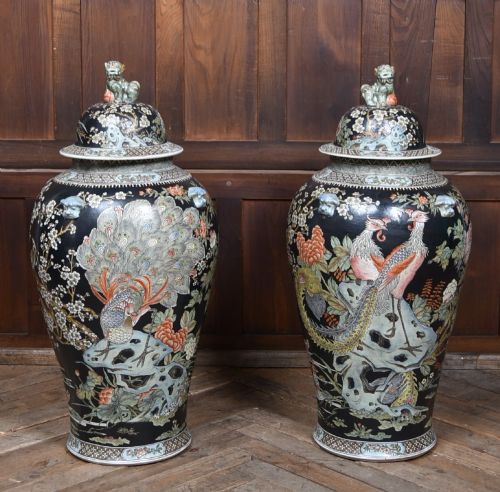
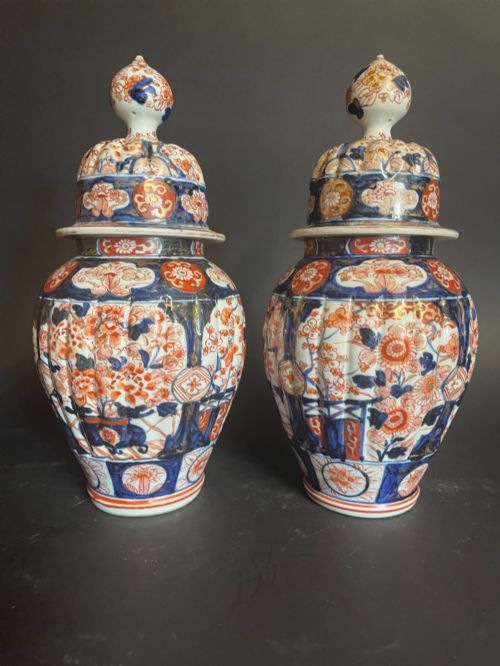
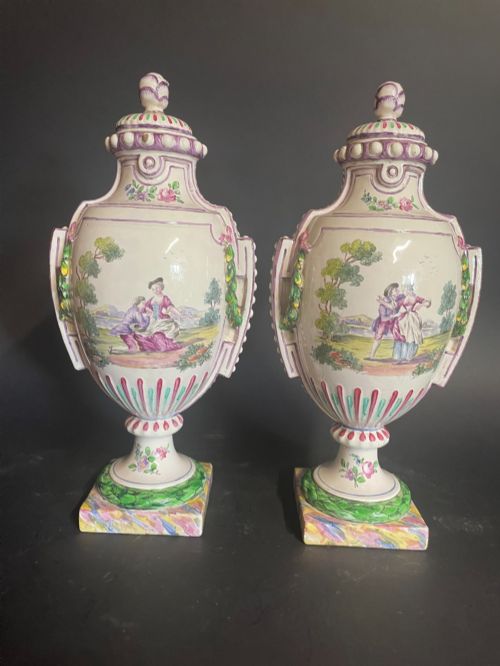
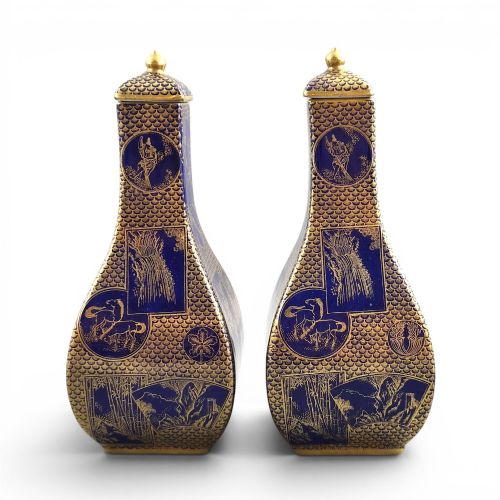


Pair Covered Porcelain Vases
A pair covered porcelain vases brings symmetry and historic weight to a room, offering matching lids and painted surfaces that anchor mantelpieces and side tables.
Pair Covered Porcelain Vases
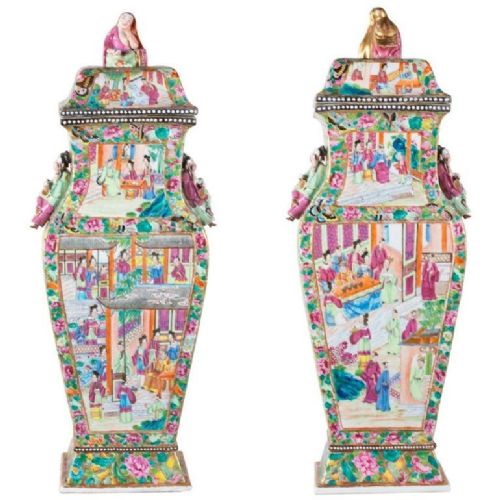
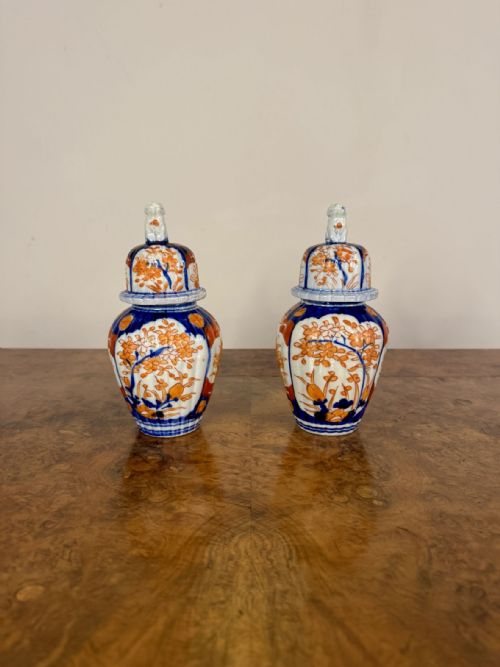
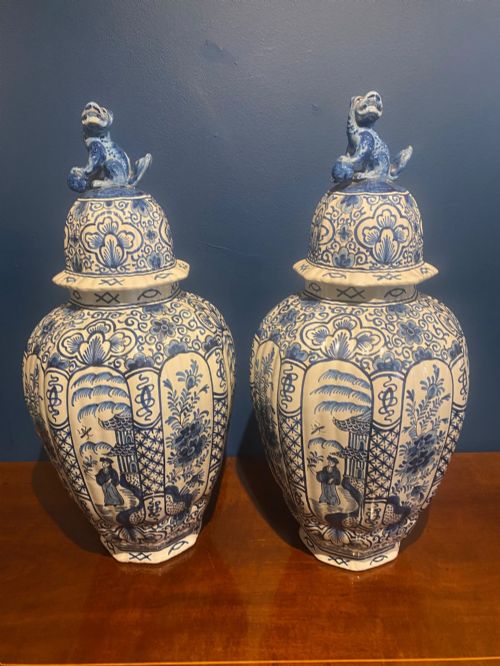
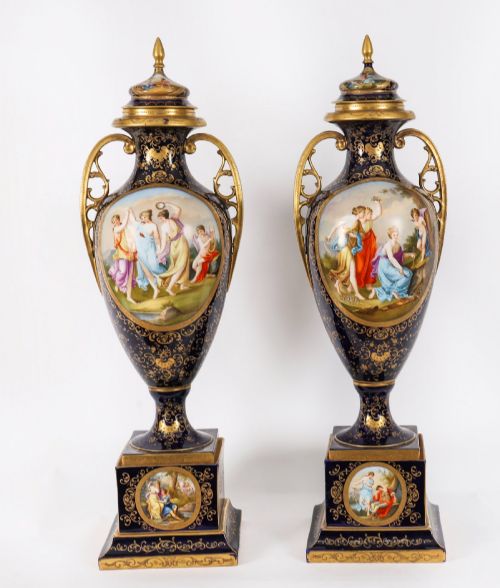
A pair covered porcelain vases consists of two matched ceramic vessels equipped with their original or corresponding lids, designed for balanced display in interiors. When exploring a pair covered porcelain vases, one encounters pieces originating from European manufactories and Asian export kilns alike.
The selections span centuries, featuring 17th-century blue and white jars alongside robust 19th-century productions in styles ranging from Japanese Imari to French Rococo Revival. Forms include tall floor jars, ovid containers, and pot pourri urns intended for both ornament and function.
How They Were Made
Potters shaped fine clay bodies on the wheel or in moulds before firing them at high temperatures to vitrify the material into durable porcelain and ironstone. Artisans then applied underglaze blue, hand-painted polychrome enamel pigments, and gilded highlights to the surfaces prior to a final glaze firing.
Mountmakers frequently added cast ormolu and gilt bronze mounts to European and Asian bodies, securing collars, handles, and bases that elevated the status of the vessels.
Pair Covered Porcelain Vases Retail Price Guide 2026
Typical asking prices for pair covered porcelain vases among the pieces listed under this phrase on Sellingantiques today, from the lower quarter to the upper quarter. They describe what is for sale here now, not the wider market.
Some lidded jars survived centuries of house moves because their heavy bronze ormolu mounts acted as accidental shock absorbers.
What Varies in Quality
The standard of painting distinguishes standard factory output from exceptional studio work, evident in the precision of brushwork on hand-painted floral and figural scenes. Crispness in the modelling of the porcelain body and the sharpness of relief moulding determine the definition retained beneath glossy glazes.
The integration of metal elements, such as fitted ormolu mounts, separates basic ceramic containers from lavishly ornamented presentation pieces that required specialised metalworking skill.
Royal Worcester·John Smith·Mason's
The Pair Covered Porcelain Vases Glossary
- Imari
- A style of Japanese porcelain decorated in underglaze blue, iron red, and gold, named after the port of export. This aesthetic heavily influenced European kilns during the 17th and 18th centuries.
- Ormolu
- Gilded bronze mounts applied to the rims, bases, or handles of ceramic vessels. The technique involves coating cast bronze with a mercury-gold amalgam and heating it to drive off the mercury.
- Faience
- Tin-glazed earthenware produced in France and other European regions, often mimicking the appearance of fine porcelain. Artisans painted directly onto the porous white glaze before a final firing.
- Ironstone
- A type of heavy, durable ceramic patented in the 19th century to bridge the gap between earthenware and true porcelain. It withstands heavy daily use while accepting vibrant enamel colours.
- Pot pourri
- A vessel featuring a pierced or perforated lid designed to diffuse scent from dried flower petals and spices contained within. These items combined decorative painting with functional domestic use.
Pair Covered Porcelain Vases: Frequently Asked Questions
How were lidded vases used historically?
These vessels served as ornamental centrepieces on mantelpieces, sideboards, and architectural brackets within grand rooms. Their matching covers kept contents protected while contributing to strict interior symmetry.
Larger floor jars stood directly in hallways or reception rooms to display wealth and refined taste through imported porcelain. Smaller examples held dried aromatics or simply stood as sculptural statements.
How do I care for antique porcelain?
Dust the surfaces regularly with a soft, dry brush to prevent dirt accumulation in crevices and hand-painted details. Avoid using harsh chemical cleaners or abrasive cloths that can strip delicate enamel colours and gilding.
Keep the pieces away from direct sunlight to protect pigments from fading over time. Handle the lids with two hands separately from the body to prevent accidental drops.
How can I tell Japanese Imari from European copies?
Japanese Imari pieces from the 17th and 18th centuries typically feature a greyish-white body with characteristic spur marks on the base from kiln stacking. The iron red and underglaze blue pigments sit differently within the glaze compared to later European reinterpretations.
European factories like Samson and various English kilns produced imitative styles using whiter, more uniform paste bodies. Examining the weight, foot ring, and iron red hue helps separate imported Asian goods from domestic revival pieces.
What does ormolu mounting indicate?
Ormolu mounts point to high-status commission work where porcelain bodies received gilt bronze additions in European workshops. These mounts often served to secure damaged rims or to adapt Asian export jars into fashionable Western decorative objects.
The quality of the chasing on the bronze work generally matches the artistic value of the ceramic vessel it supports.