


Pair Dog Figures
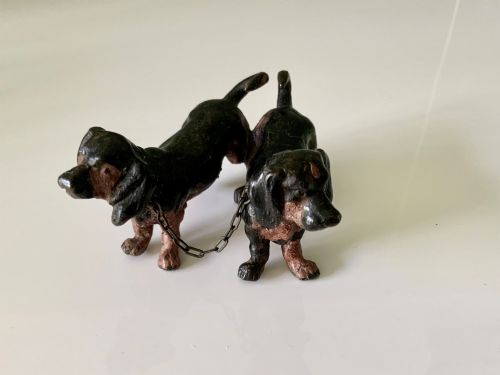
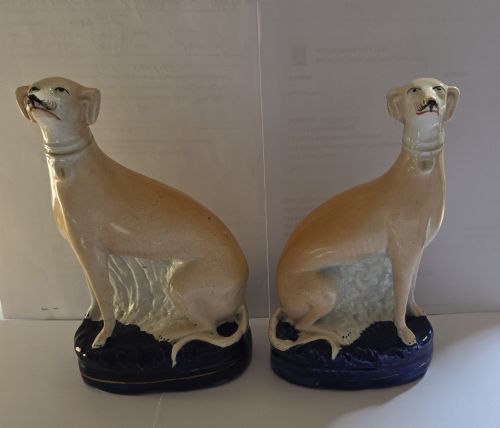
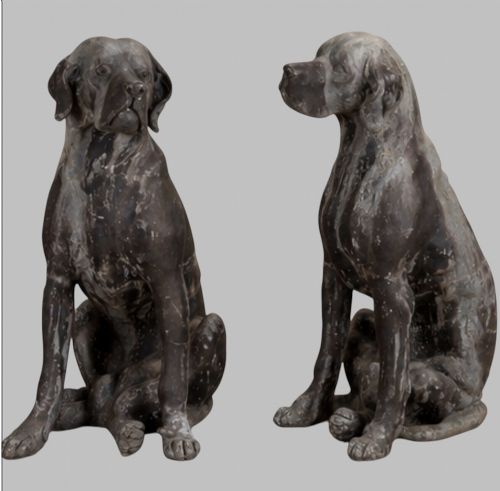
These pair antique dog figures bring domestic charm and sculptural presence to a room, spanning earthenware pottery, bronze, and carved stone.
Pair Dog Figures
When you search for pair antique dog figures, you encounter a diverse range of decorative animals shaped from clay, cast in metal, or carved from stone. These companions served various household roles, from mantelpiece ornaments and fireside comforters to practical desk accessories, inkwells, and bookends.
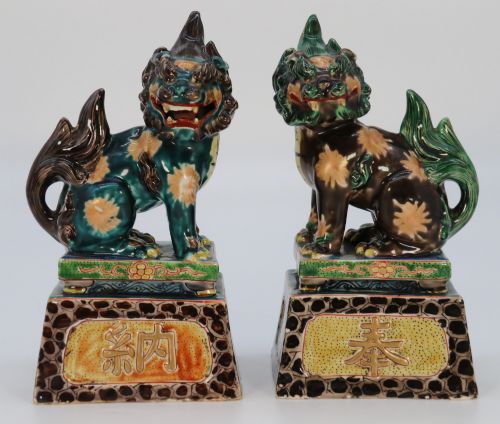
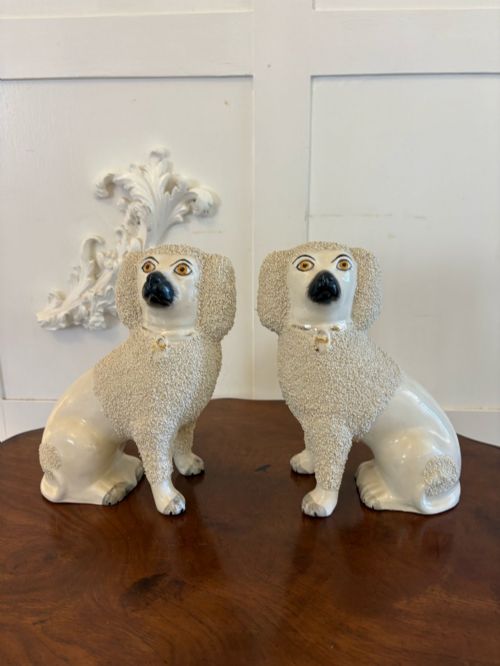
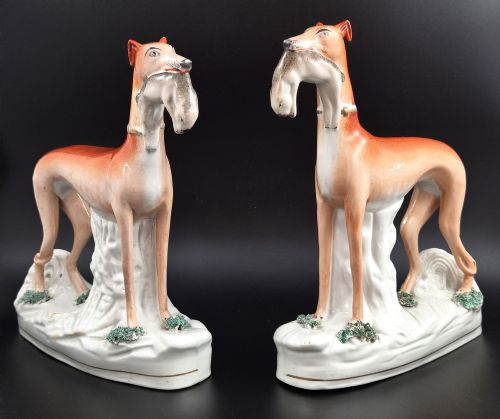
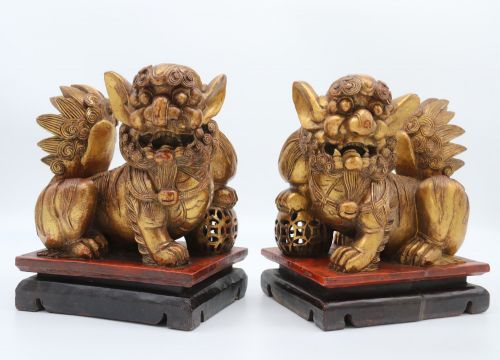
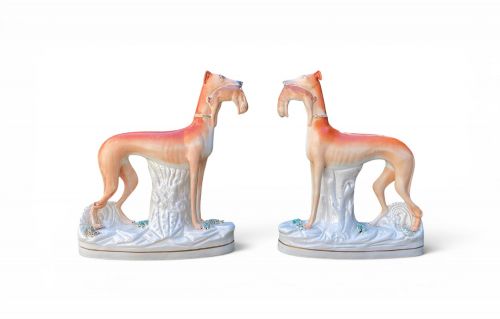
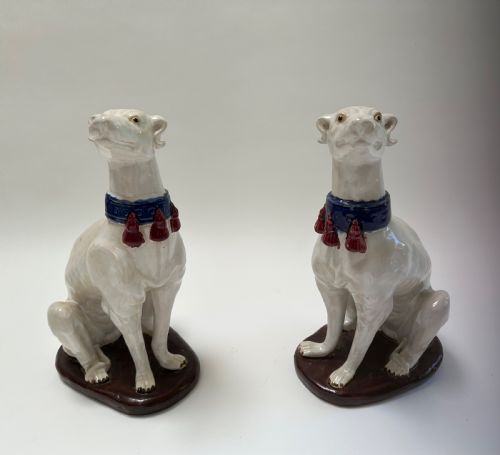
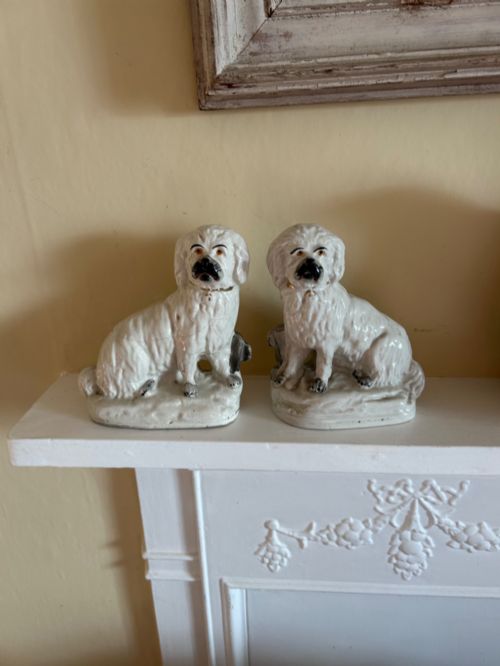
The most common examples on this page are Victorian Staffordshire earthenware figures, particularly spaniels, poodles, and greyhounds produced in England during the nineteenth century. Alongside these ceramic pairs appear continental bronzes, carved marble models, and Asian temple lions.
Makers and foundries across Europe and Asia interpreted canine subjects through distinct regional lenses, utilising local clays and casting traditions. Whether modelled as seated watchdogs or lively terriers, these duplicates were designed to display symmetrically on ledges and sideboards.
How they were made
Pottery figures were typically pressed into earthenware moulds, left to dry, and hand-painted with underglaze colours, enamel, or copper lustre before kiln firing. Staffordshire potters often applied textured clay to represent fur, creating woolly coats on poodles or smooth surfaces on greyhounds.
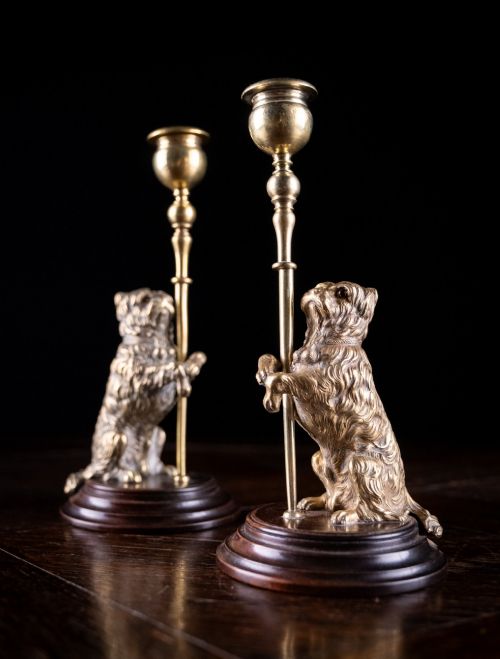
Metal versions rely on foundry techniques such as lost-wax casting in bronze or cold-painting over cast metal. Other pairs demonstrate stone-carving skills, shaping Derbyshire alabaster, green serpentine marble, or gilt wood into matching sculptural guardians.
Object forms include decorative figurines, quill holders, inkwells, bookends, temple lions, and candlesticks.
What varies in quality
Quality rests in the precision of the modelling and the crispness of the painted or patinated surface. Master modellers captured realistic posture and alert expressions, whereas lesser examples appear stiff and generalized.
The survival of original glaze colours, gilding, and enamel details without extensive restoration determines the desirability of ceramic and bronze pairs alike. Heavier casting in metals and finer detail in hand-carved stone also separate standard decorative items from superior works.
Thomas Parr·Bright And Sons·Karl Hagenaur·Royal Capodimonte Factory
The Pair Dog Figures Glossary
- Earthenware
- A porous pottery body fired at lower temperatures, commonly used for nineteenth-century Staffordshire figures. It requires a glaze to become impermeable to liquids.
- Comforter spaniels
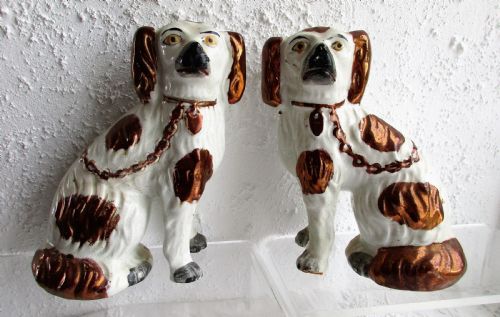
- Staffordshire earthenware dog figurines traditionally placed on mantelpieces facing inwards towards the hearth. They often feature gold chain markings and painted facial details.
- Cold-painted bronze
- A metal sculpture technique where paint is applied over a cold bronze surface rather than fired in a kiln. This finish is susceptible to flaking if handled improperly.
- Quill holder
- A desk accessory fitted with small apertures or hollows designed to hold writing feathers. Dog figures were frequently adapted for this functional desktop role.
- Foo dog
- A traditional stylistic representation of a guardian lion, often found in pairs outside East Asian temples. They are frequently rendered in pottery, bronze, or stone.
Pair Dog Figures: Frequently Asked Questions
What are Staffordshire comforter spaniels?
Staffordshire comforter spaniels are earthenware dog figures made in England during the Victorian era. Potters designed them in matching pairs to sit on either end of a mantelpiece.
These figures usually depict Cavalier King Charles Spaniels with white coats, patch markings, and gilt lockets. They served a purely decorative purpose in nineteenth-century parlours.
How were antique dog bookends used?
Antique dog bookends were manufactured to support rows of heavy books on library shelves or desks. Materials range from carved bamboo to cast metal.
Pairs were weighted to withstand the pressure of leaning volumes while introducing sculptural animal forms to functional spaces.
What is the difference between porcelain and earthenware dogs?
Porcelain dogs are fired at much higher temperatures using refined white clay, resulting in a vitrified, non-porous body. They often originate from continental factories like Meissen.
Earthenware dogs, such as those from Staffordshire potteries, use coarser clay bodies fired at lower heats and covered in an opaque glaze.
Where should I place antique dog figures?
Antique dog figures suit placement on mantelpieces, bookshelves, sideboards, and entrance consoles. Symmetrical pairs look best when framing a central object.
Desk accessories like inkwells and quill holders function well on writing tables where their original utility can be appreciated.
How do I identify nineteenth century greyhound figures?
Nineteenth-century greyhound figures typically display slender, muscular bodies often modelled alongside captured hares. Staffordshire examples frequently rest on moulded bases.
Makers utilised underglaze painting or sponged decoration to render brindle coats, while bronze and marble versions emphasise sleek anatomical contours.