





Antique Dog Inkstand
An antique dog inkstand brings character and canine charm directly to the writing desk.
Antique Dog Inkstand
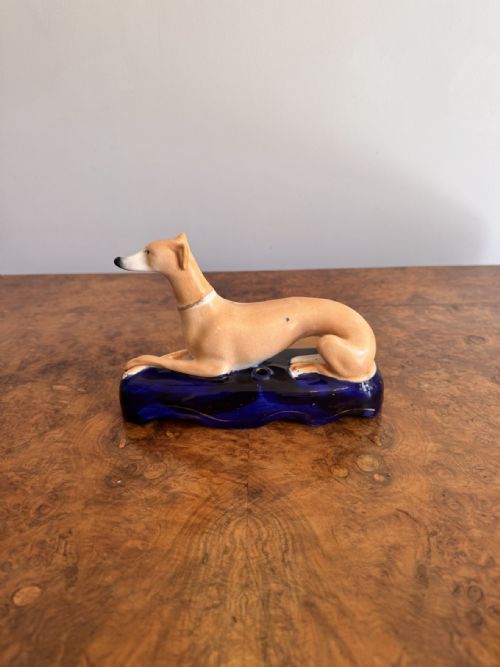
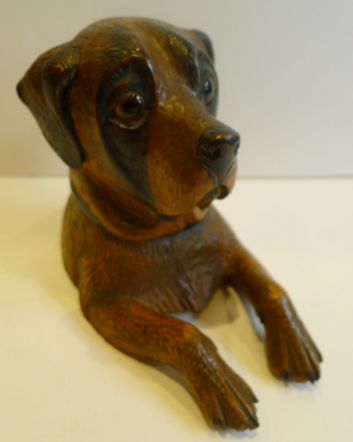
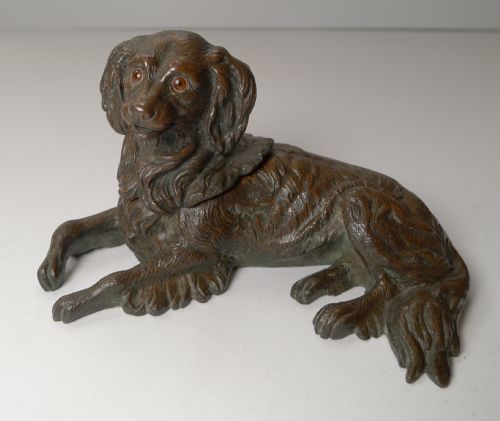
An antique dog inkstand combines practical desk utility with figural canine sculpture, taking forms such as single inkwells, quill holders, and desk tidies. These pieces range from ceramic Staffordshire figures to carved wooden Black Forest boxes and cast metal bronzes.
Most items date from the nineteenth century, particularly the Victorian era and the decades around eighteen-ninety, reflecting a period when desk accessories doubled as decorative ornaments.
How they were made
Wooden desk accessories employ linden wood and other carved woods, shaped into realistic or novelty dog figures that conceal inkwell compartments and pen trays. Bronze items rely on metal casting, with some Austrian bronzes receiving cold-painted colour finishes.
Glass inserts function as the internal ink reservoirs within the ceramic, wood, and metal housings, keeping the fluid contained safely away from the surrounding materials.
Antique Dog Inkstand Retail Price Guide 2026
Typical asking prices for dog inkstand among the pieces listed under this phrase on Sellingantiques today, from the lower quarter to the upper quarter. They describe what is for sale here now, not the wider market.
Several wooden novelty dog inkstands feature inlaid glass eyes that peer up attentively from the desktop while you write.
What varies in quality
The precision and life in the carving or moulding separate standard production from superior work. Finer wooden pieces display detailed fur texture and expressive glass eyes, while better ceramic examples show crisp modelling and careful hand-painting.
The complexity of the desk accessory dictates its tier, moving from simple single inkwells to elaborate triple inkstands, hunting scenes with game birds, and combination pieces that hold quills, pens, and ink simultaneously.
Maison F. Mack
The Antique Dog Inkstand Glossary
- Staffordshire pottery
- Earthenware figures produced in the Staffordshire potteries of England. These ceramics include dogs modelled as companions or working animals alongside quill holders.
- Black Forest carving
- Woodcarving originating from the mountainous region of central Europe, particularly Switzerland and Germany. Artisans carved domestic and wild animals, including dogs, into functional desk boxes and inkstands.
- Cold-painted bronze
- Bronze sculptures finished with oil-based paint applied without heat. This technique was popular in Austrian workshops for colouring small animal figures.
- Quill holder
- A small ceramic or metal support designed to keep writing quills close to the inkwell. These holders often accompany dog figures on Victorian desk sets.
- Desk tidy
- A compartmentalised desk accessory used to organise writing implements and stationery. Examples often incorporate carved wooden dog figures and lidded ink wells.
Antique Dog Inkstand: Frequently Asked Questions
What is an antique dog inkstand?
An antique dog inkstand is a desk accessory that combines a container for ink with a sculpted figure of a dog. These pieces were standard desktop equipment for holding writing fluid and pens.
Peculiar to the nineteenth century, they served as both useful office tools and decorative ornaments for the home or study.
How were dog inkstands used?
Owners used these stands to dip their quills or pens into ink while writing letters and documents. The attached reservoirs held the liquid safely.
Many examples included integrated channels or ceramic loops specifically designed to rest quill pens when not in active use.
What materials are common?
The listings show glazed earthenware, carved linden wood, and cast bronze as the primary structural materials. Glass appears frequently as the removable liner inside the inkwell.
Enamel and gold leaf sometimes accent the pottery pieces, while bronze models occasionally feature cold-painted surface decoration.
How do I tell Victorian from later pieces?
Victorian items often rely on Staffordshire ceramic production featuring breeds like greyhounds and whippets. Stylistic markers include glazed earthenware and hand-painted details.
Later nineteenth-century pieces, particularly from eighteen-ninety onwards, frequently lean towards Swiss Black Forest carved wood designs and novelty bulldog or St Bernard motifs.