


Victorian Carved Desk Accessory
A victorian carved desk accessory brings character to a writing space through organic forms and tactile materials.
Victorian Carved Desk Accessory
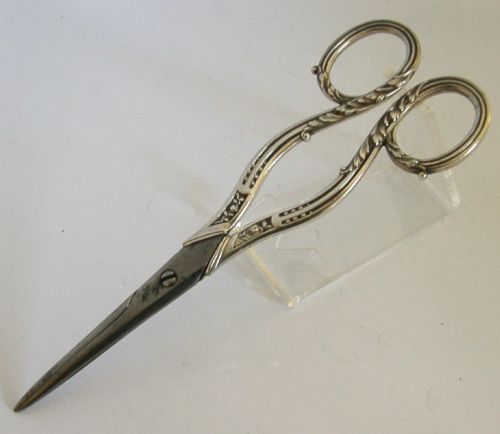
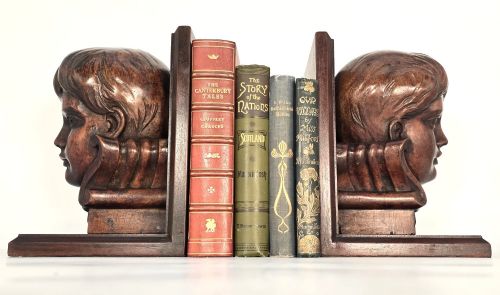
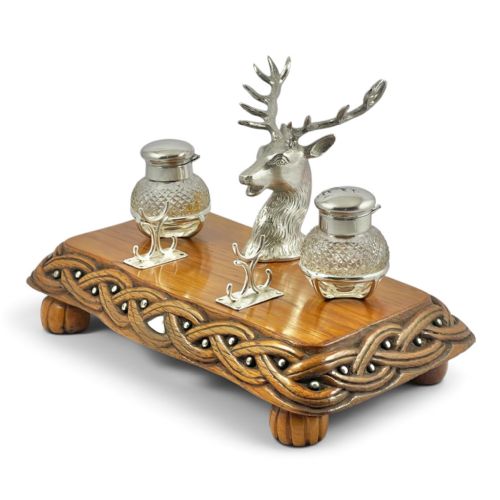
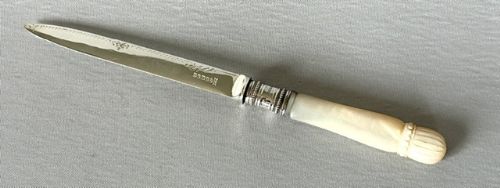
A victorian carved desk accessory encompasses items designed to organise and equip the nineteenth-century writing table, spanning inkstands, bookends, letter openers, and paperweights. These objects frequently emerge from the Black Forest or British workshops, employing regional motifs such as animals, foliage, and architectural revival styles.
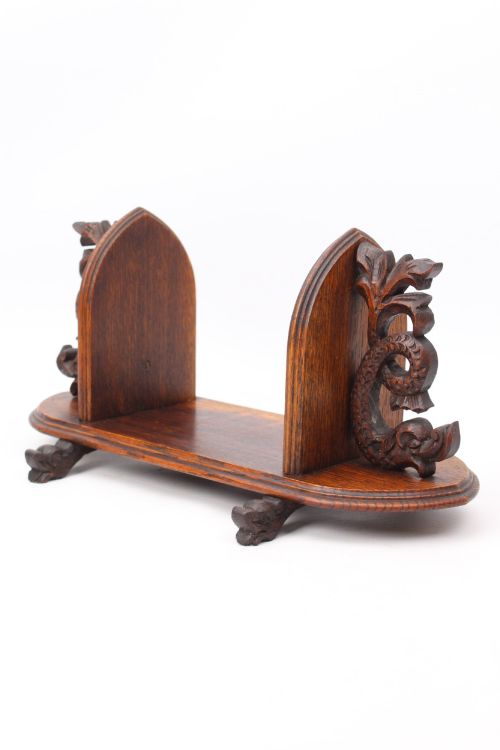
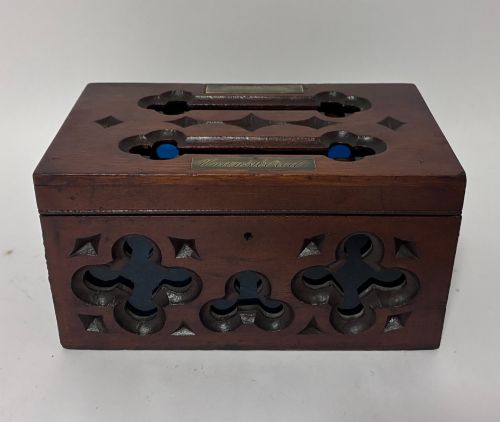
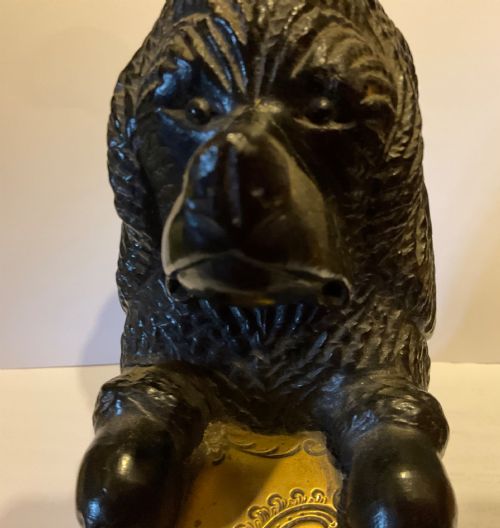
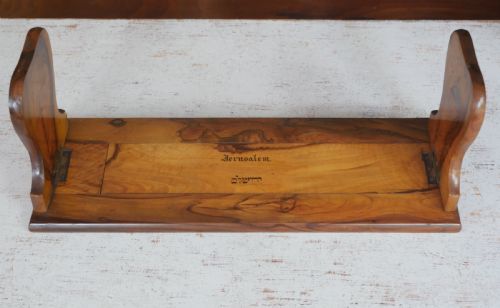
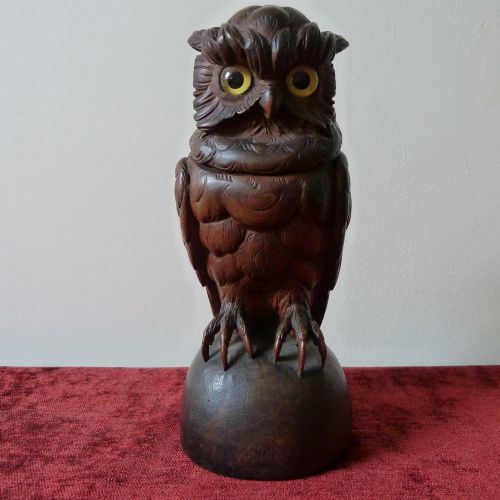
The most common formats on this page include carved wooden inkwells featuring animals like bears, cats, and owls, alongside extending book slides and correspondence boxes in oak, mahogany, or walnut. Buyers encounter both utilitarian desk tidies and decorative novelties produced across the Victorian and Edwardian periods.
Materials and construction
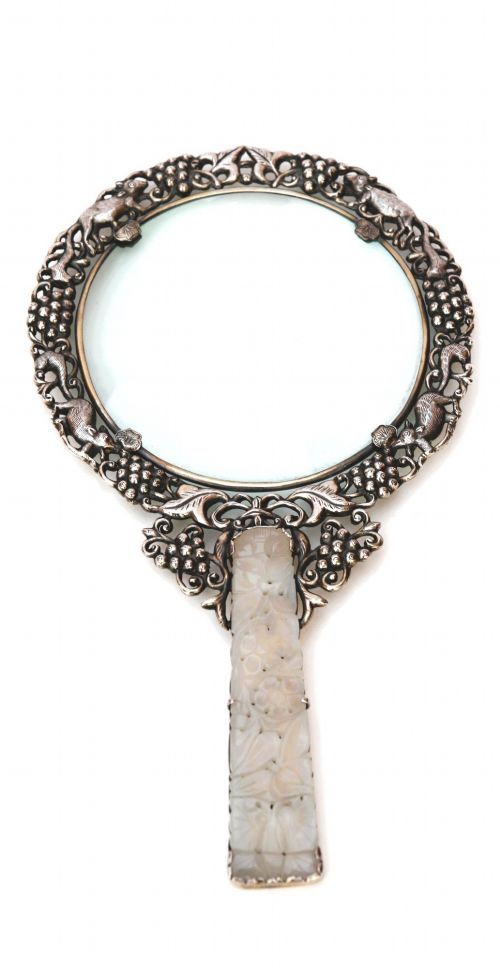
Makers utilised a wide range of timber, predominantly oak, mahogany, olive wood, maple, and linden wood for hand-carved animal figures and architectural book stands. These woods were often combined with glass ink inserts, brass mounts, silver hardware, pewter, marble, and jade to form functional desktop pieces.
Carving technique defines these objects, with artisans applying deep relief work, pierced detailing, and naturalistic modelling to create textured surfaces on animals, leaves, and Gothic tracery. Joinery methods such as dovetails secure smaller drawers in desk tidies, while metal hinges and pins anchor extending book slides.
Assessing quality
Quality rests in the depth and vitality of the carving, distinguishing stiff, repetitive incisions from fluid, lifelike animal forms and crisp architectural mouldings. Superior examples display anatomical precision in figures like bears or owls and careful grain selection in woods such as coromandel or yew.
The integration of secondary materials dictates overall execution, separating standard production from exceptional pieces furnished with heavy sterling silver mounts, intact original glass liners, and detailed pewter or bronze elements.
A. MARIONNET·Mabie Todd & Co
The Victorian Carved Desk Accessory Glossary
- Book slide
- An adjustable desktop rack designed to hold a row of books upright, often featuring expanding scissor mechanisms or sliding wooden sections.
- Inkstand
- A desktop tray or stand fitted to hold one or more inkwells, frequently incorporating pen rests and small storage compartments or drawers.
- Black Forest
- A style of wood carving originating from the mountain region in Germany, renowned for naturalistic representations of wildlife, particularly bears, birds, and dogs.
- Correspondence box
- A desk box partitioned to organise writing paper, envelopes, and incoming mail, often detailed with carved lids or Gothic revival panels.
- Page turner
- A handheld implement fashioned from materials like wood, ivory, or pewter, used to turn book pages without damaging the paper.
Victorian Carved Desk Accessory: Frequently Asked Questions
How were inkwells used?
Inkwells held liquid ink for dip pens in an era before ballpoint pens existed, usually sitting within a fitted stand on the desk.
Many featured removable glass inserts to contain the ink safely and prevent spills onto wooden desktop surfaces.
How do I identify Black Forest carvings?
Black Forest carvings are identified by their naturalistic animal subjects, deep relief work, and use of European timbers like linden wood.
Common motifs include bears, owls, cats, and dogs integrated into inkwells, tobacco boxes, and desk tidies.
Can I use an antique inkstand today?
Antique inkstands function well on modern desks for holding pens, small stationery, or as decorative objects.
While original glass inserts can hold ink, care should be taken with fragile materials and historic metal components during cleaning.