




Dark Brown Desk Inkwell
These dark brown desk inkwell pieces bring utility and character to a writing surface, combining period materials with figurative carving.
Dark Brown Desk Inkwell
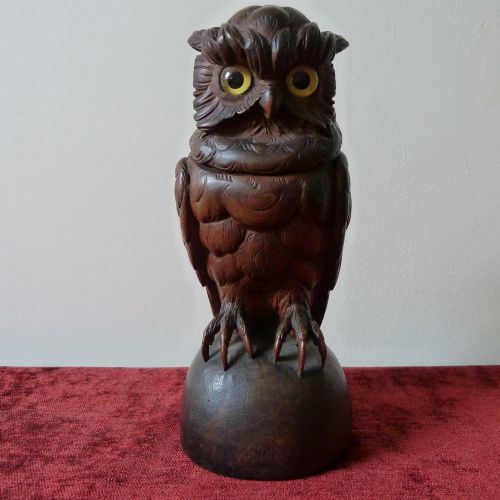
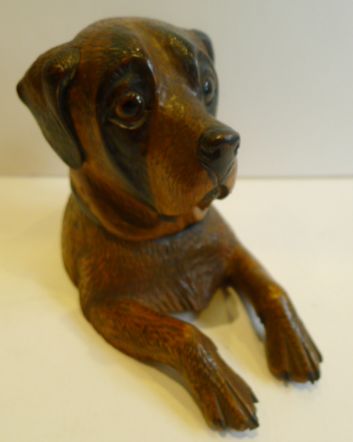
A dark brown desk inkwell is primarily represented here by Victorian Black Forest wooden pieces and novelty animal designs. Buyers encounter carved owls, bears, dogs like the St. Bernard and bullmastiff, and cats in boots alongside architectural models and bronze casts.
These desk accessories date mainly from the late nineteenth century and the early twentieth century, spanning periods from eighteen sixty to nineteen hundred. The forms function as inkstands, penholders, and triple inkwells designed for daily nineteenth-century correspondence.
How They Were Made
Carved wood predominates, utilising linden wood shaped into elaborate animal figures and architectural models associated with the Black Forest style. Artisans combined carved timber with fitted glass inserts to hold liquid ink securely.
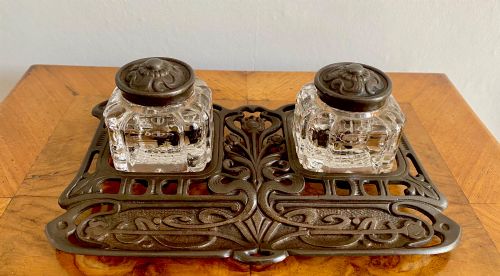
Bronze and cast metal appear alongside carved wood, frequently paired with glass eyes or marble bases to build substantial desk tidies. Neoclassical and Art Nouveau details were cast or hand-carved to finish the desk stands.
The listings feature wood, bronze, marble, and glass materials across Victorian and Edwardian periods.
What Varies in Quality
The degree of anatomical detail in the carved wood separates standard production from finer workmanship, particularly in facial expressions on animal subjects like dogs and owls. Superior pieces retain original glass bottles and intact pen stands.
Material combination also distinguishes the range, where heavy bronze casting or substantial marble and linden wood elements provide greater presence than simpler turned timber bodies.
The Dark Brown Desk Inkwell Glossary
- Black Forest style
- A nineteenth-century carving tradition originating in Switzerland and Germany, known for realistic representations of animals and foliage in dark linden wood.
- Desk tidy
- A combined desk accessory incorporating inkwells, penholders, and sometimes stamps or blotters into a single station.
- Novelty inkwell
- An inkwell shaped to resemble an animal, human figure, or building rather than a standard geometric pot.
- Grand Tour
- A nineteenth-century practice where travellers collected architectural models and antiquities, such as the Temple of Hercules Victor.
- Triple inkwell
- A larger desk stand featuring three separate reservoirs, often used for different coloured inks or sealing wax.
Dark Brown Desk Inkwell: Frequently Asked Questions
What periods do these inkwells come from?
The listings span the nineteenth century up to the early nineteen hundreds, taking in the Victorian and Edwardian eras. Most examples cluster around eighteen ninety and nineteen hundred.
Craftsmen produced these items during the height of decorative desk accessory manufacturing in Europe.
What materials were used?
Wood is the primary material, specifically linden wood shaped into carved animal and architectural forms. Bronze, cast metal, marble, and glass also appear across the selection.
Many wooden pieces utilise glass inserts to contain the ink while protecting the carved timber structure.
Are original glass bottles common?
Some pieces retain their original glass bottles, which adds to the completeness of the desk accessory. Specific listings highlight when these original glass components survive.
Finding an inkwell with its matching bottles preserves the intended function of the piece.
How do I identify Black Forest carvings?
Black Forest carvings are typically characterised by dark brown linden wood shaped into naturalistic subjects like bears, dogs, owls, and eagles. The carving style emphasises deep relief and realistic textures.
These objects often double as functional inkstands or penholders designed for Victorian desks.