

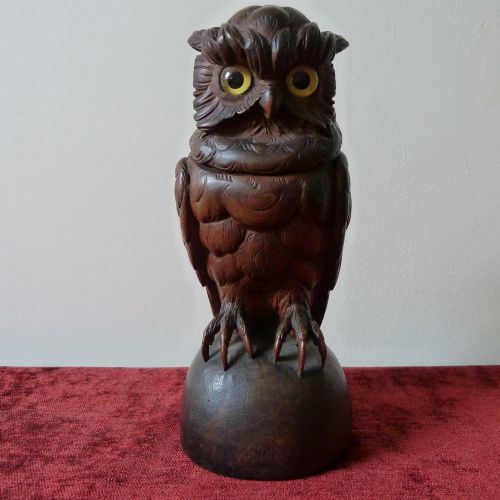


Swiss Carved Inkwell
A swiss carved inkwell brings the dense animalier sculpture of the Black Forest directly to the Victorian desk.
Swiss Carved Inkwell
A swiss carved inkwell is a desk accessory that combines practical utility with detailed figural wood carving, most commonly encountered in the Black Forest style. These nineteenth-century pieces take the form of animals such as bears, owls, dogs, cats, and eagles paired with logs, boots, or boxes.
The objects span the Victorian era, specifically the decades around eighteen-eighty, eighteen-ninety, and nineteen-hundred. Buyers encounter both single inkwells and larger inkstands designed to hold pens alongside the ink reservoir.
Makers focused on domestic and wild creatures rendered with glass inserts for the ink and occasionally brass chain details. The form functions as both a functional desktop item and a display piece of carved wood sculpture.
How they were made
Carvers shaped these pieces primarily from linden wood, lime wood, and general carved wood, utilising the soft grain to achieve deep relief and realistic fur textures. Artisans selected timber that could take fine detail without splitting during the carving process.
Metal elements such as brass chain components were integrated to secure lids or hinged parts, while fitted glass vessels served as the removable inkwells within the wooden housings.
Swiss Carved Inkwell Retail Price Guide 2026
Typical asking prices for swiss carved inkwell among the pieces listed under this phrase on Sellingantiques today, from the lower quarter to the upper quarter. They describe what is for sale here now, not the wider market.
Materials recorded across the inventory include linden wood, lime wood, glass, metal, and brass chain.
What varies in quality
Quality rests in the anatomical accuracy of the carved animal and the depth of the overall wooden sculpture, moving from simple boxes to complex figural groupings like cats in boots or eagles with prey. The naturalism of the fur, feathers, and facial expressions dictates the standing of each piece.
The integration of the inkwell container within the wooden sculpture affects the success of the design, where superior examples maintain sculptural harmony without letting the utilitarian function disrupt the animal figure.
The Swiss Carved Inkwell Glossary
- Black Forest
- A regional style of wood carving originating in Central Europe, known for realistic depictions of animals and foliage. This aesthetic defines the majority of nineteenth-century desk accessories.
- Inkstand
- A desk stand holding one or more inkwells along with space for pens and other writing implements. These larger desk accessories often incorporate multiple carved animal figures.
- Desk Tidy
- A compartmented desk accessory intended for holding small stationery items, frequently combined with an inkwell in these carved wooden pieces.
- Linden Wood
- A pale timber with a fine, uniform grain favoured by carvers for detailed figural work. It allows for intricate cuts without splintering.
Swiss Carved Inkwell: Frequently Asked Questions
What animals appear on these inkwells?
Carvers depicted domestic and wild animals, including bears, owls, dogs such as terriers and St Bernards, cats, and eagles.
These creatures often interact with objects like logs or boots to form the container for the ink.
How do I date a carved inkwell?
Pieces originate from the Victorian period, specifically between eighteen-eighty and nineteen-hundred.
Style conventions and material wear help indicate the late nineteenth-century origin of each desk accessory.
What timber was used for the carving?
Wood carvers utilised linden wood and lime wood for their soft grain and suitability for detailed sculptural work.
These timbers allowed artisans to render realistic fur and feather textures across the figures.
Where does the ink go inside the carving?
Removable glass inserts fit securely inside the carved wooden enclosures to hold the ink safely.
Some examples also feature hinged wooden lids or brass chain attachments to secure the components.