


Staffordshire Porcelain Dogs
Staffordshire porcelain dogs are characterful ceramic figures that bring traditional charm and historic presence to any room.
Staffordshire Porcelain Dogs
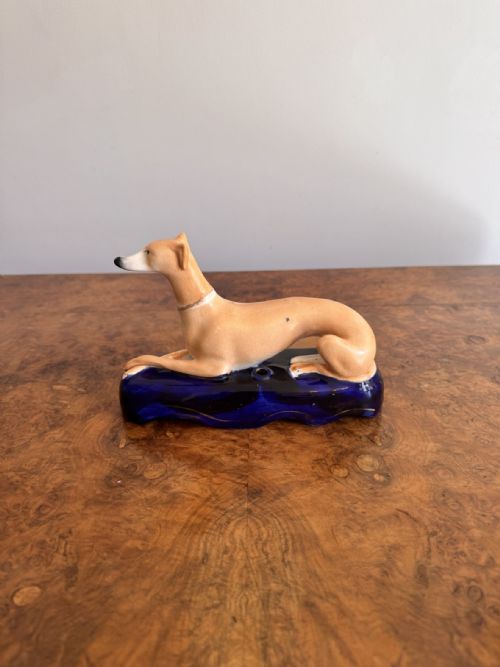
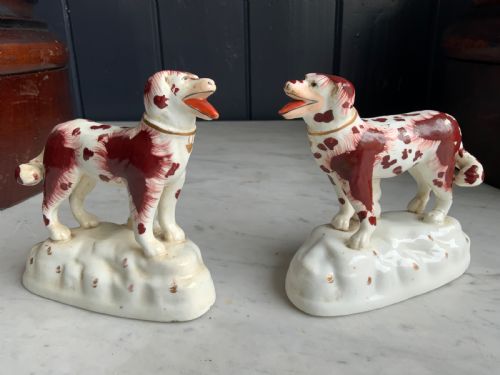
Staffordshire porcelain dogs appear primarily as pairs of seated spaniels, poodles, and greyhounds from the nineteenth century. These decorative figures serve as ornamental mantelpiece companions and desk accessories, including inkwells and quill holders.
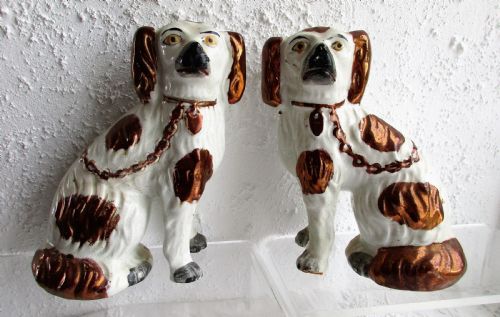
Makers produced these ceramic figures across various Victorian styles, ranging from simple white and gilt examples to detailed hand painted models with copper lustre or blue cushions. Miniature versions and larger figure groups also emerge within the selection.
Victorian Staffordshire pottery traditions shape the majority of these ornaments, spanning periods from the Regency era through to the early twentieth century. Collectors encounter both single specimens and multi piece collections reflecting traditional English pottery subjects.
Materials and methods
Potters utilised earthenware, porcelain, and glazed ceramic as the foundational bodies for these figurines. Artisans applied lead glaze to seal the surfaces, achieving a smooth and protective finish across the moulded forms.
Decorators applied enamel colours, gilt highlights, and gold leaf by hand to define facial expressions, collars, and fur details. Certain pieces incorporate copper lustre techniques or textured encrusting to create visual depth.
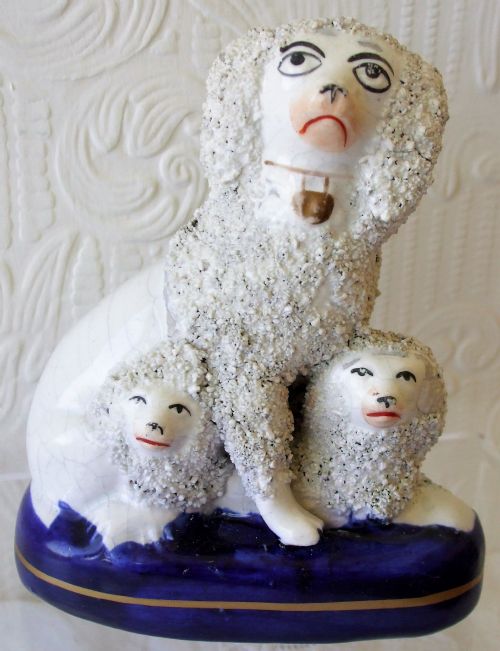
Poodles occasionally bring along their tiny pups or hidden inkwells, proving even porcelain guard dogs enjoyed a busy family life.
Standards of craftsmanship
Complexity of form separates standard pairs from elaborate compositions featuring pups, baskets, or functional elements like inkwells. Intricate modelling and successful firing without warping demonstrate superior kiln work.
Thomas Parr·Wedgwood and Co Ltd·James Dudson·Beswick
The Staffordshire Porcelain Dogs Glossary
- Comforter spaniel
- A popular nineteenth century Staffordshire pottery figure type modelled after Queen Victoria's own pets. These seated dogs traditionally occupied mantelpieces in pairs facing inwards.
- Lead glaze
- A glossy coating containing lead oxide applied to ceramics before firing. This technique produces a smooth, reflective surface that enhances the underlying enamel colours.
- Enamel
- Opaque glass derived colours painted over the fired ceramic glaze. Artisans fixed these pigments through a subsequent low temperature firing.
- Bisque
- Unglazed pottery fired once to a porous state. This matte surface offers a chalky texture distinct from glossy glazed ceramics.
- Copper lustre
- A metallic glaze application that produces a coppery, reflective sheen. Potters used this finish to create decorative borders and highlights on nineteenth century figures.
Staffordshire Porcelain Dogs: Frequently Asked Questions
Why do Staffordshire dogs face each other?
Makers designed these canine figures in mirrored pairs intended to sit at either end of a mantelpiece or fireplace. This traditional arrangement created a balanced and symmetrical display in Victorian parlours.
Historically, owners positioned them looking inward toward the centre of the hearth to mimic real pets keeping watch by the fire.
Were these dogs used for anything besides decoration?
While primarily decorative ornaments, certain nineteenth century figures incorporated practical functions into their design. Examples include inkwells for writing desks and quill holders fitted with small baskets.
These functional pieces combined ornamental appeal with everyday utility for the Victorian desk space.
How do I identify a Victorian Staffordshire dog?
Look for characteristic nineteenth century potting traits such as earthenware or porcelain bodies finished with lead glazes and hand painted enamel details. Many pieces feature distinct elements like moulded gold chains, lockets, or textured fur encrusting.
Forms typically include seated spaniels, poodles with pups, and greyhounds, often produced as matched pairs.
What is the difference between spaniels and poodles in these figures?
Spaniels appear with smooth coats, floppy ears, and solemn expressions, often modelled as the popular comforter dogs of the Victorian era. Poodles feature distinct curly fur textures, sometimes shown with clipped bodies or accompanied by pups.
Poodles also frequently appear in miniature sizes or as components of inkwells and quill holders.