




Victorian Hound Statues
Victorian hound statues capture the muscular tension and noble posture of hunting dogs in bronze, parian ware, and earthenware.
Victorian Hound Statues
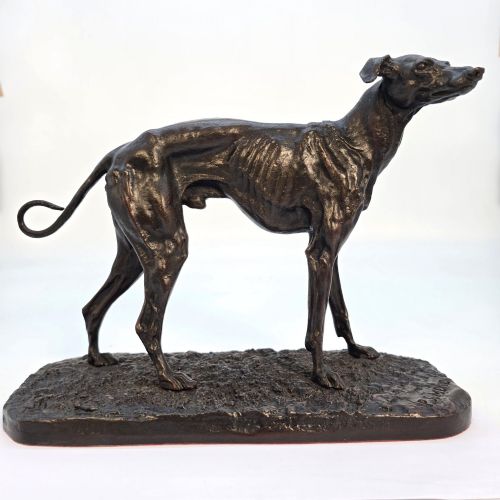
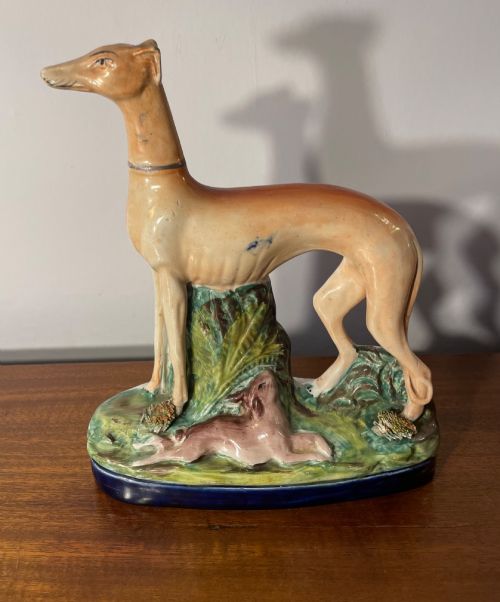
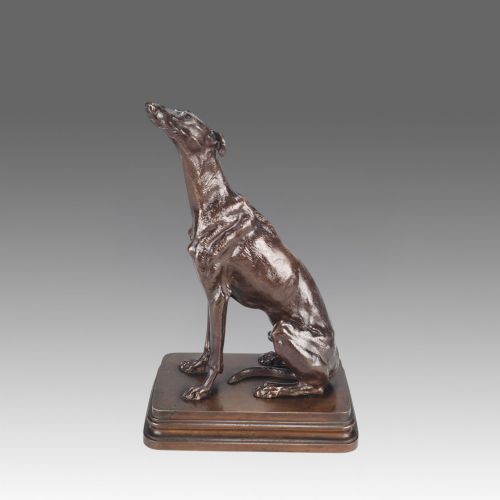
Victorian hound statues encompass sculptural depictions of hunting dogs, greyhounds, and sighthounds produced during the nineteenth century. These pieces emerge in materials ranging from cast bronze and marble to earthenware, parian ware, and porcelain.
Collectors encounter both small decorative tabletop figures and substantial garden statues or lifesize terracotta dogs. The animalier style dominates these works, focusing intently on the realistic anatomy and behaviour of the animals.
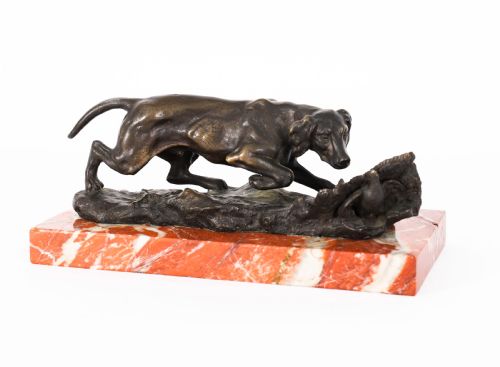
Many examples capture hounds alone, while others depict hunting scenes involving hares, birds, or pheasants. The forms bridge domestic decorative objects and fine art sculptures created by prominent European and English ateliers.
Materials and construction
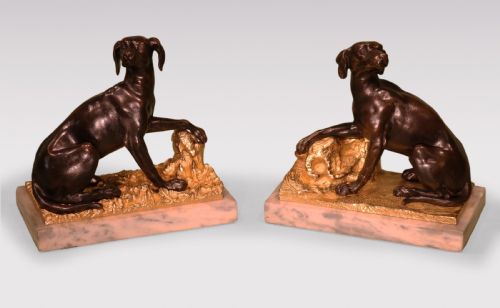
Bronze sculptures utilise the lost-wax casting method to achieve fine detail in the musculature and fur of the hounds. Founders frequently combined bronze with marble bases, and occasionally incorporated ormolu mounts to enrich the presentation.
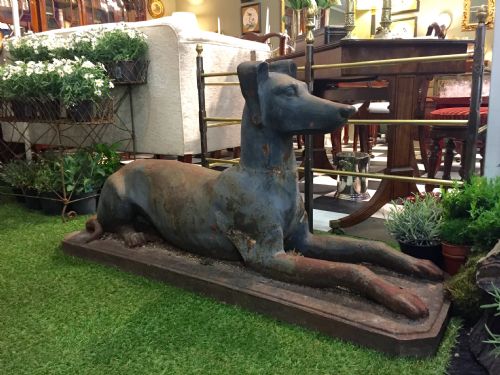
Ceramic figures employ earthenware, porcelain, and parian ware, often finished with lead glaze or left as unglazed biscuit porcelain to mimic carved marble. Larger garden and architectural pieces rely on heavy terracotta and cast iron.
Listings feature nineteenth-century works spanning bronze, terracotta, parian ware, and cast iron.
Judging quality and execution
Quality rests upon the precision of the casting or modelling, where superior bronzes retain crisp details in the hound's coat and expression without excessive post-casting chasing. The naturalism of the posture and the correct anatomical proportions distinguish superior animalier works from standard commercial production.
The choice of secondary materials, such as heavy variegated marble plinths or finely chased ormolu details, elevates the standing of bronze groups. Ceramic versions depend on the subtlety of the glaze or the purity of the parian body to display the sculptor's intent.
Carl Kauba·Alfred Dubucand·Pierre Jules Mene·Auguste Nicholas Cain·Arthur Waagen·Joseph Francois Victor Chemin·John Willis Good
The Victorian Hound Statues Glossary
- Animalier
- A nineteenth-century artistic movement dedicated to the realistic depiction of animals, particularly in sculpture. Practitioners focused on capturing the authentic movement and anatomy of wildlife and domestic beasts.
- Parian Ware
- A fine biscuit porcelain developed in the nineteenth century that resembles carved white marble. It is frequently utilised for smooth, neoclassical figural groups and animal sculptures.
- Lost-wax casting
- A metal casting technique where a molten metal is poured into a mould that has been created by means of a wax model. This method allows for intricate undercut details and fine textures in bronze figures.
- Ormolu
- Gilded bronze ornamentation applied to furniture, clocks, and sculptures during the eighteenth and nineteenth centuries. The technique involves fusing a mixture of gold and mercury onto a copper alloy base.
Victorian Hound Statues: Frequently Asked Questions
What materials are used for Victorian hound statues?
These sculptures appear in cast bronze, marble, earthenware, parian ware, porcelain, terracotta, and cast iron. Bronzes often sit upon stone or marble plinths.
Ceramic examples utilise lead glaze or unglazed parian bodies to achieve different surface textures.
How do animalier bronzes differ from other sculptures?
Animalier sculptures focus specifically on the realistic representation of animals in naturalistic or dramatic poses. The genre gained prominence in nineteenth-century France and England.
Artists studied live animals to render accurate musculature, tension, and texture.
Where were these dog figures displayed?
Smaller bronze and porcelain figures served as decorative objects on tables, mantelpieces, and desks within Victorian homes. Larger terracotta and cast iron hounds were placed in gardens or entrance halls.
Group sculptures often commemorated specific hunting scenes or rural pursuits.
How can I identify a nineteenth-century hound statue?
Look for stylistic markers of the animalier movement alongside period casting techniques and foundry marks. The combination of materials, such as bronze paired with marble, often points to nineteenth-century production standards.
Signatures or foundry stamps embedded in the base help attribute the work to specific sculptors.