


Cobalt Ceramic Inkstand
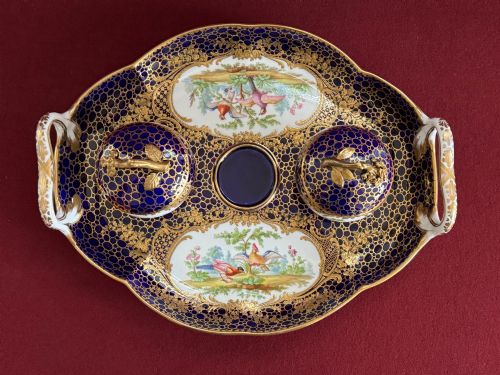
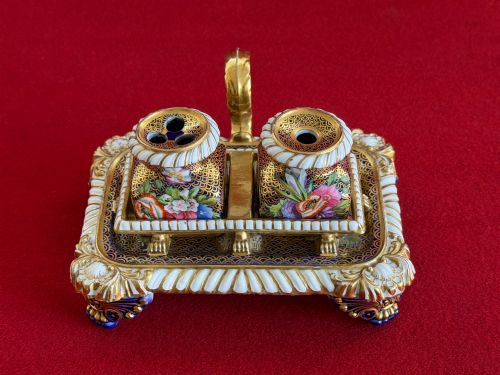
These cobalt ceramic inkstand pieces are substantial desk accessories designed for the writing table, offering rich blue colour and practical form.
Cobalt Ceramic Inkstand
A cobalt ceramic inkstand combines practical desk utility with decorative ceramic form, bringing deep blue glaze and functional inkwells or quill holders to the writing table. When you search for this phrase, you encounter desk accessories, inkwells, and quill holders designed to hold writing instruments and ink.
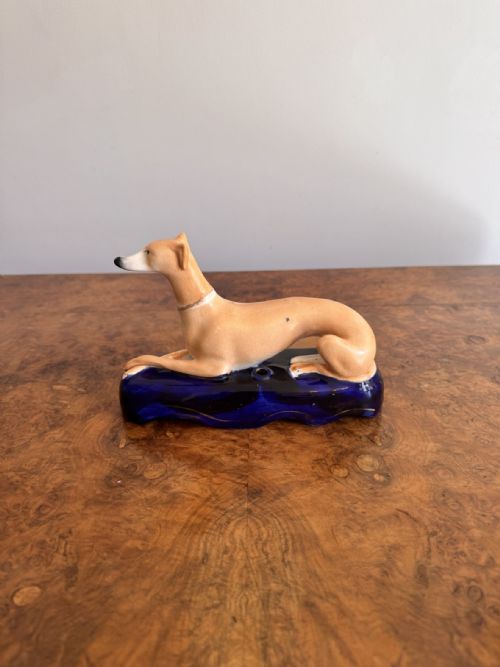
The pieces appearing on this page span several distinct periods including Regency, Victorian, 19th Century, and Edwardian eras. Forms range from utilitarian inkstands to figural quill holders and desk accessories modelled as dogs with baskets or greyhounds.
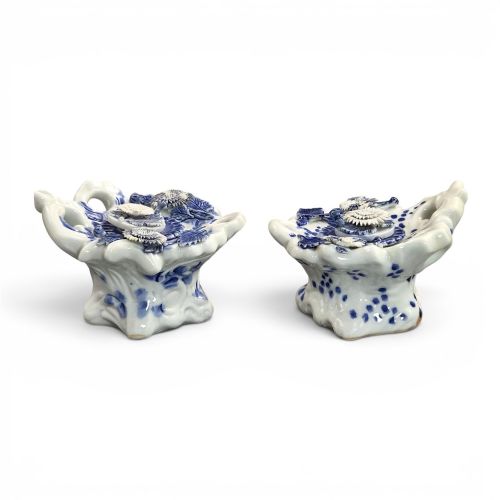
Origins vary across English factories such as Spode, Minton, and Victorian Staffordshire potteries, alongside Japanese Meiji period porcelain from Hirado Mikawachi and Chinese style Edwardian pieces. Buyers meet both grand Regency porcelain inkstands and charming Staffordshire earthenware dog figures.
How they were made
Potters shaped these items from earthenware, porcelain, and bone china, applying rich cobalt glaze to achieve the characteristic deep blue surface. Many examples incorporate gold leaf, enamel, and gilt highlights to accentuate moulded details and decorative motifs.
Makers utilised techniques ranging from careful porcelain throwing and painting to Staffordshire earthenware moulding. Details such as chrysanthemum decoration, Rococo Revival scrolls, and Chinoiserie patterns complete the surface decoration.
Listings incorporate porcelain, bone china, and earthenware, spanning Regency, Victorian, and Edwardian periods with cobalt glaze and gold leaf.
What varies in quality
Quality depends upon the crispness of the modelling in figural pieces like whippets, dalmatians, and greyhounds, alongside the precision of the cobalt glaze application. Finer examples show careful control over enamel painting and gold leaf detailing rather than hurried production.
The distinction between standard utility items and high-end cabinet pieces rests in the sophistication of the ceramic body, whether fine porcelain or robust earthenware, and the ambition of the design, such as Rococo Revival scrolls or Sèvres style decoration.
Spode·Minton·Victorian Staffordshire
The Cobalt Ceramic Inkstand Glossary
- Cobalt glaze
- A metallic oxide colourant fired into the ceramic body or glaze to produce a deep, durable blue shade. It remains stable at high temperatures.
- Earthenware
- A porous ceramic fired at lower temperatures than porcelain, commonly used for nineteenth-century Staffordshire figures and utilitarian desk wares. It requires a glaze to hold liquids.
- Quill holder
- A desk accessory designed with channels or slots to rest writing feathers when not in use. They often accompany inkwells on domestic writing tables.
- Gilt
- A thin layer of gold applied to the ceramic surface or glaze for decorative emphasis. It adds warmth and contrast to the blue cobalt ground.
Cobalt Ceramic Inkstand: Frequently Asked Questions
What is a cobalt ceramic inkstand?
A cobalt ceramic inkstand is a desk accessory made from glazed pottery or porcelain designed to hold ink and writing implements.
These pieces use deep blue glazes and often feature gilt or enamel decoration suited for nineteenth-century writing tables.
How do I date a ceramic inkwell?
Dating relies on stylistic clues, paste composition, and manufacturing marks associated with periods like the Regency or Victorian eras.
Form analysis helps distinguish early nineteenth-century porcelain pieces from later Staffordshire earthenware figures.
Were these items used daily?
Desk accessories served a practical function in households and offices for holding ink and resting quills.
Many figural pieces combined decorative animal subjects with functional holders for everyday correspondence.
What styles appear in these listings?
Listings feature items from the Victorian, Regency, and Edwardian periods alongside styles like Rococo Revival and Chinoiserie.
Japanese Meiji period porcelain also appears alongside traditional English Staffordshire earthenware.