


Antique Pottery Whippet Pair
These antique pottery whippet pairs capture the domestic devotion and hunting spirit of the mid-nineteenth century in durable earthenware.
Antique Pottery Whippet Pair
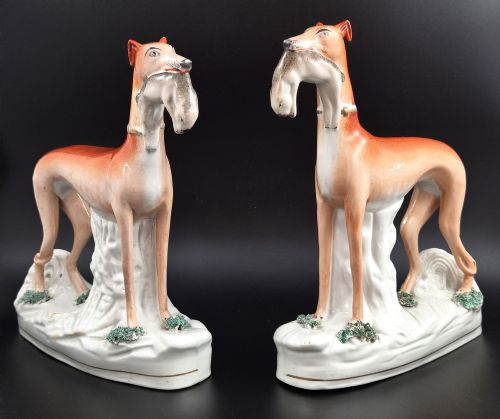
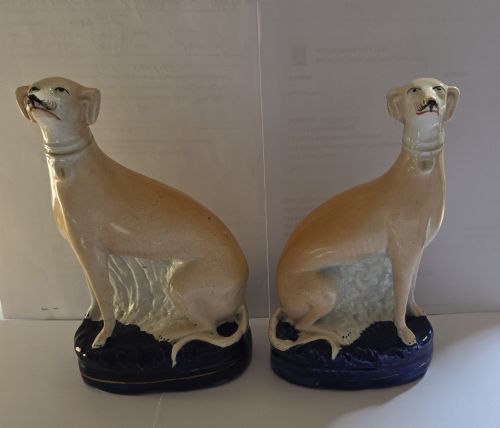
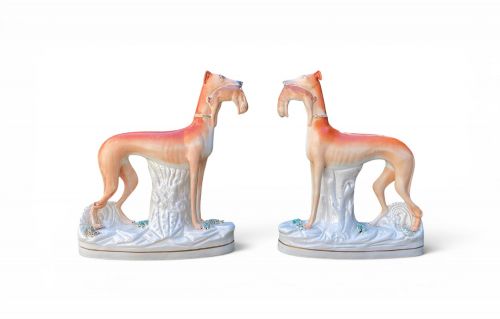
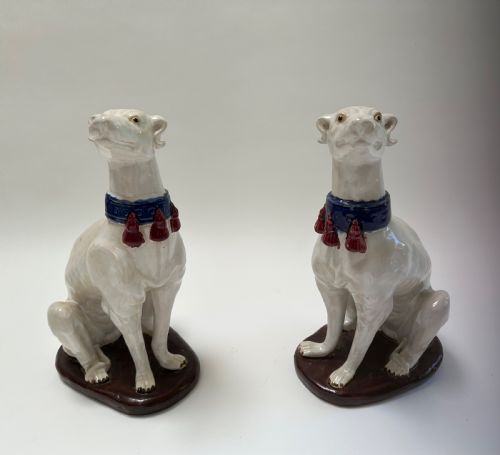
When you search for an antique pottery whippet pair, you encounter mid-nineteenth-century ceramic mantel ornaments modelled as seated or recumbent dogs. These Staffordshire figures often depict greyhounds or whippets alongside hares, serving purely as decorative ornaments or taking functional forms.
The selections available here span the Victorian era, specifically concentrating around the decades from eighteen-fifty to eighteen-eighty. Makers produced these pairs to sit symmetrically on a fireplace mantelpiece, sometimes incorporating practical desk accessories into the ceramic sculpts.
You meet both standard decorative figurines and specialised variants such as inkwells and quill holders within these listings. The underlying earthenware body connects every example, reflecting the prolific output of nineteenth-century English country potteries.
How they were made
Potters shaped these figures from earthenware clay, utilising press-moulding techniques common in nineteenth-century Staffordshire workshops before finishing the surfaces by hand. The raw ceramic body received coats of glaze to seal the material and provide a smooth foundation for subsequent decoration.
Workers applied enamel paint and cobalt glaze to render the markings of the dogs and the surrounding foliage, occasionally adding gold leaf highlights for decorative emphasis. Firing in kilns set the lead glaze and fixed the painted details permanently onto the pottery.
Listings feature Victorian earthenware pottery shaped into whippet pairs, greyhound inkwells, and quill holders using lead glaze and enamel paint.
What varies in quality
The presence of functional elements like inkwells or quill holders alongside the dogs introduces an extra dimension of craftsmanship. Larger dimensions and complete, matched pairings from the mid-nineteenth century distinguish the more ambitious examples on offer.
Thomas Parr
The Antique Pottery Whippet Pair Glossary
- Earthenware
- Porous pottery fired at lower temperatures than stoneware or porcelain. It requires a glaze to hold liquids and provides the standard body for nineteenth-century Staffordshire figures.
- Lead glaze
- A shiny coating containing lead oxide applied to pottery before firing. This technique produces a glossy, reflective surface characteristic of Victorian ceramic ornaments.
- Cobalt glaze
- A metallic colourant producing deep blue tones under the glaze. Potters used this pigment to add dark markings and depth to the ceramic dogs.
- Enamel paint
- Opaque colours applied over the fired glaze and subjected to a lower heat fixing process. This method allowed makers to introduce varied naturalistic shades to the coats of the whippets.
- Quill holder
- A desk accessory featuring moulded slots or apertures designed to hold writing feathers. In these listings, they form part of the base or setting beside the ceramic dogs.
- Inkwell
- A small container built into the ceramic base to hold liquid writing ink. These desk accessories combine practical function with ornamental Staffordshire animal sculpture.
Antique Pottery Whippet Pair: Frequently Asked Questions
What is an antique pottery whippet pair?
These items are nineteenth-century ceramic mantel figures shaped as matching dogs, typically depicting whippets or greyhounds.
Potters in Victorian England produced them in large numbers to ornament domestic hearths and living spaces.
How were these ceramic dogs used originally?
Victorian households placed them symmetrically on mantelpieces as decorative ornaments to display animal fondness and sporting tastes.
Certain variations incorporated practical desk items like inkwells and quill holders for use in studies.
How do I date a Staffordshire whippet figure?
Stylistic traits, modelling techniques, and glaze types help indicate the period of manufacture during the nineteenth century.
Most examples on this page date from the middle decades of the Victorian era, roughly between eighteen-fifty and eighteen-eighty.
Why do some whippet figures have hares?
The inclusion of hares reflects the popularity of coursing and hunting themes in Victorian Staffordshire pottery.
These paired compositions told a visual story of the chase, anchoring the decorative dogs in a traditional rural landscape.