




Painted Wood Screen
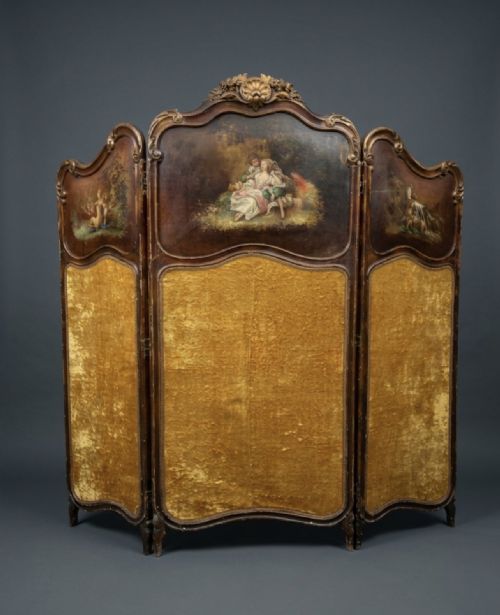
A painted wood screen divides a room or shields a hearth while displaying rich figurative or floral artwork across multiple folding panels.
Painted Wood Screen
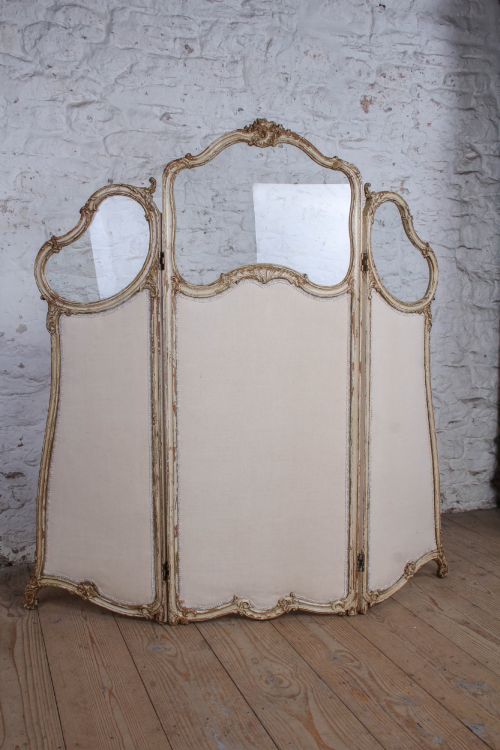
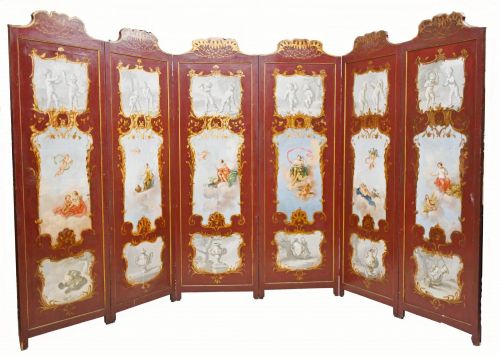
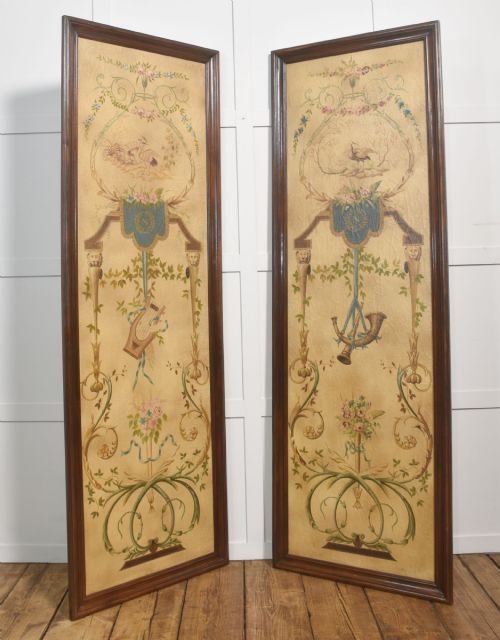
A painted wood screen groups multiple panels together to form large room dividers, privacy screens, and folding screens, or stands as single decorative panels and wall art.
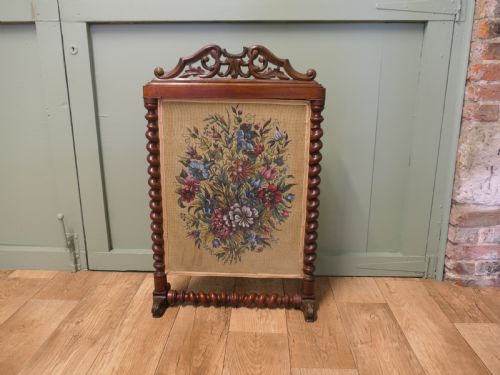
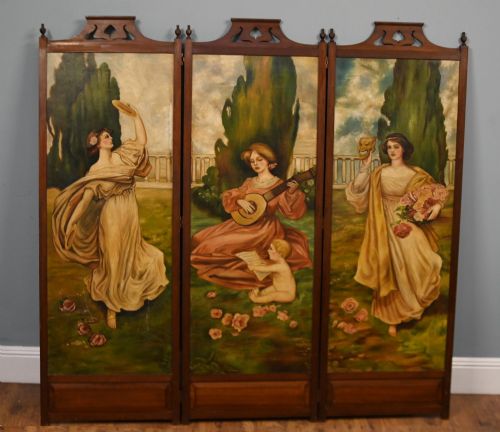
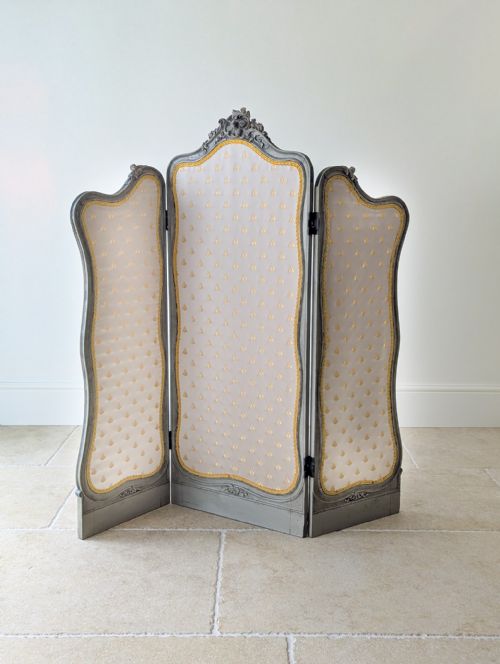
Buyers meet Victorian three-panel and four-fold room screens alongside smaller pole screens on spade feet, modesty screens, and distinctive life-size dummy boards depicting figures.
Origins span English Regency and Victorian workshops to French Napoleonic styles, Chinese folding formats, fretwork Indian pieces, and Burmese lacquered examples.
Materials and construction
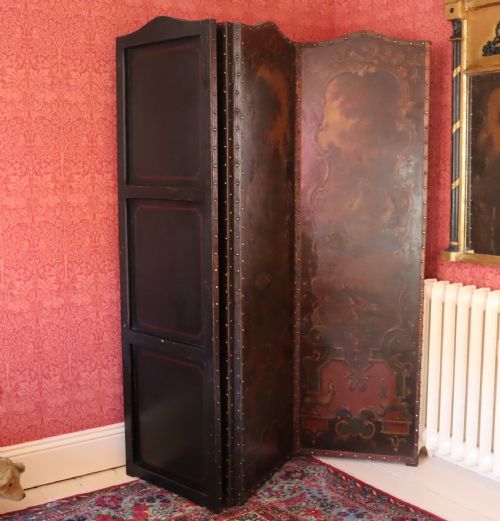
Makers built these pieces primarily from solid woods such as mahogany, applying oil paint and lacquer directly onto wooden panels, canvas, or fretwork structures.
Hardware components like brass hinges connect the individual folds, while pole screens utilise slender wooden stands supported on feet.
Painted Wood Screen Retail Price Guide 2026
Typical asking prices for painted wood screen among the pieces listed under this phrase on Sellingantiques today, from the lower quarter to the upper quarter. They describe what is for sale here now, not the wider market.
Materials appearing across the inventory include mahogany, brass hinges, canvas, lacquer, and oil paint.
Judging quality and execution
Superior examples demonstrate refined brushwork and detailed figurative or floral compositions executed in oil paint or lacquer, whereas simpler items rely on plain surfaces or basic decorative motifs.
The integrity of the wooden frames, the smoothness of the folding mechanism, and the preservation of the original painted surface dictate the overall standard of a piece.
The Painted Wood Screen Glossary
- Dummy board
- A painted wooden figure cut out to life-size proportions to simulate a person or animal standing in a room. These curious pieces often date to the eighteenth and nineteenth centuries.
- Pole screen
- A small vertical panel mounted on an adjustable wooden pole with a tripod or spade foot base. It stood before a hearth to shield a person's face from the fire's heat.
- Modesty screen
- A low folding screen historically placed to conceal a person or to block draughts around specific seating areas. They feature painted decoration across their panels.
- Chinoiserie
- European artistic style reflecting Chinese and East Asian motifs, frequently applied in lacquer and paint on furniture and screens. It gained popularity during various nineteenth-century revivals.
Painted Wood Screen: Frequently Asked Questions
What is a painted wood screen used for?
These screens served historically to divide large rooms, create privacy, or block intense heat radiating from open fireplaces.
Today, buyers use them primarily as striking decorative room dividers or mount individual panels as wall art.
How do I clean a painted wood screen?
Dust the surfaces gently with a soft, dry cloth to prevent accumulation without disturbing fragile paint or lacquer.
Avoid liquid cleaners, moisture, or chemical polishes, as these substances can damage nineteenth-century oil paint and historical finishes.
What is a pole screen?
A pole screen consists of a small adjustable panel mounted on a vertical wooden stand with support feet.
Placed near a fireplace, the panel could be slid up or down the pole to shield a person's face from the flames.
Are all screens folding?
Many examples feature multiple hinged folds that allow the piece to accordion or stand flat against a wall.
Other formats include single decorative panels, wall art pieces, and flat dummy boards that do not fold at all.